How to check what motherboard you have: 3 quick, practical methods
how to check what motherboard you have
If you have ever wondered how to check what motherboard you have, you are in the right place. Whether you are planning a CPU or RAM upgrade, installing a faster SSD, flashing a BIOS update, or simply diagnosing an issue, knowing your exact motherboard make and model saves time, avoids compatibility problems, and helps you follow the right guides.
This straightforward guide explains how to check what motherboard you have on Windows, Linux and macOS, how to find the printed model on the board itself, how to read manufacturer naming conventions, and which common mistakes to avoid. We will also walk through a concise checklist so you can confirm the details in minutes, even if you are not particularly technical.
By the end, you will know multiple safe and accurate ways to identify your board, as well as how to use the information to make better upgrade and troubleshooting decisions.
What your motherboard is and why it matters
Before you jump into how to check what motherboard you have, it helps to know what it actually does. The motherboard (also called the mainboard or system board) is the large circuit board that everything else plugs into: the CPU, memory (RAM), storage, graphics card, power connectors and case I/O. It also provides the chipset that governs what CPUs and features the system supports, the slots and ports available, and the power delivery that stabilises performance.


When you know your exact motherboard model, you can:
- Confirm CPU and RAM compatibility before upgrading.
- Download the correct chipset drivers and BIOS/UEFI updates.
- Check supported storage types (SATA, NVMe) and PCIe generations.
- Verify form factor (ATX, Micro-ATX, Mini-ITX) for case upgrades.
- Search for board-specific guides or fixes.
In short, learning how to check what motherboard you have is the first step to reliable, cost‑effective upgrades and troubleshooting.
How to check what motherboard you have in Windows (fast methods)
If you are on Windows, there are several quick software routes to learn how to check what motherboard you have without opening your PC. The goal is to find the manufacturer (e.g., ASUS, MSI, Gigabyte) and the exact model (e.g., B550 Tomahawk, PRIME Z790‑A).
Method 1: System Information (msinfo32)
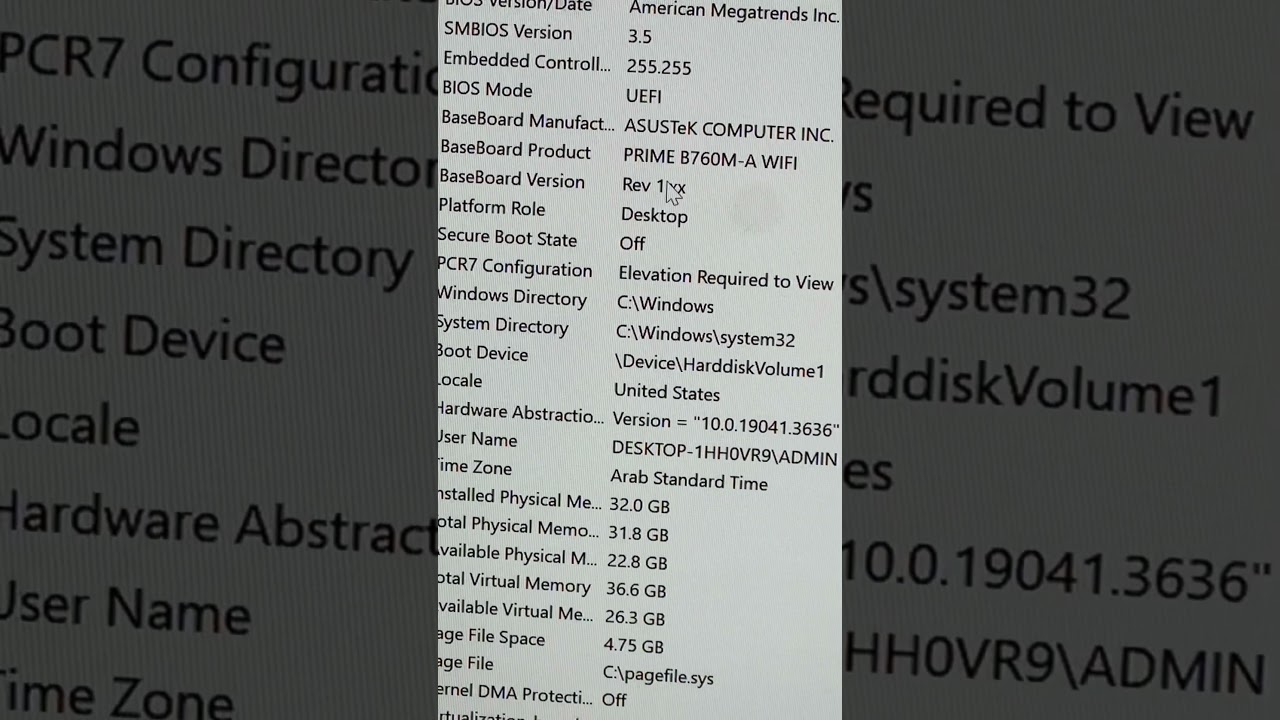
System Information is built into Windows and is often the easiest way to check. Press Windows key + R, type “msinfo32”, and press Enter. In the summary, look for “BaseBoard Manufacturer” and “BaseBoard Product”. These lines usually show the brand and model. If they are blank in your system, try the next methods below.
For more detail on this Windows tool, see Microsoft’s documentation on System Information. You can also consult the Get‑CimInstance PowerShell cmdlet reference for a scriptable approach.
Method 2: Command Prompt (WMIC)
Open Command Prompt and enter:
wmic baseboard get product,manufacturer,version,serialnumber
This command typically returns the manufacturer and product (model), and often a serial number. It is a fast way to check how to check what motherboard you have without installing anything.
Method 3: PowerShell (recommended)
Open PowerShell and run:
Get-CimInstance Win32_BaseBoard | Format-List Manufacturer,Product,Version,SerialNumber
This uses modern system calls and usually provides reliable output. It is excellent when you want a scriptable, repeatable way to confirm how to check what motherboard you have across multiple PCs.
What about the Windows Settings “About” page?
The Settings > System > About page shows CPU, RAM and Windows version, but not typically the motherboard model. If you need to check how to check what motherboard you have quickly, stick to System Information, PowerShell or a trusted third‑party utility.
How to check what motherboard you have with third‑party tools
When built‑in methods are inconclusive, hardware information tools are a simple answer to how to check what motherboard you have. They also present details in a friendly interface.
CPU‑Z
CPU‑Z is a tiny, trusted utility that shows motherboard manufacturer, model and BIOS/UEFI version on its “Mainboard” tab. It also identifies chipset and PCI‑Express details, which helps when you are comparing upgrades.
HWiNFO
HWiNFO provides a deeper dive. It lists board information, sensor readings, memory configuration and more. If you want an answer to how to check what motherboard you have plus thermal, voltage and fan data for tuning or troubleshooting, HWiNFO is very capable.
Speccy
Speccy offers a clean summary of system hardware including motherboard identifiers. It is handy for quick snapshots you can share or save for reference.
How to check what motherboard you have by looking inside the case
If software does not give a clear answer, or you want to visually verify the exact model and revision, opening the case is another straightforward way to confirm how to check what motherboard you have. This is normal for desktop PCs; for laptops, see the notes below.
Safety first
- Shut down the computer and switch off the power supply. Unplug the power cable.
- Discharge static electricity by touching a grounded metal object before you reach inside.
- Work in good light so you can read small printing on the board.
Where to look for the model and revision
Manufacturers typically print the model name directly on the PCB in large, clear letters, often between the PCIe slots or near the RAM slots. You may also find a label near the 24‑pin power connector or around the CPU socket. Some boards include a “Rev.” (revision) number silk‑screened on the PCB or on a small sticker—keep this handy for BIOS updates.
While you are there, note the chipset heatsink (often labelled, e.g., “Z790”, “B550”) and the number and type of M.2 slots, which help with future upgrades.
Laptops and prebuilt desktops
Laptops rarely expose a readable motherboard model without removing the back cover, and some are not user‑serviceable. For these, your best route to how to check what motherboard you have is your device’s support page. Enter your service tag or serial number on the manufacturer’s site. For example, browse the support sections at Dell Support or HP Support to find board details, BIOS updates and compatible parts.
How to check what motherboard you have on Linux or macOS
If you use Linux, the system exposes hardware data through DMI/SMBIOS. A quick terminal command can settle how to check what motherboard you have in seconds.
Linux: dmidecode
Open a terminal and run:
sudo dmidecode -t baseboard
Look for “Manufacturer” and “Product Name” for the model details. You can find more about this tool in the dmidecode manual page.
macOS
Apple does not typically expose a neat “motherboard model” name like PC vendors. macOS identifies a logic board with an internal “Board ID” tied to the Mac model. If you are maintaining a Hackintosh or need service information, third‑party tools and Apple’s service documentation may reference the Board ID, but conventional methods for how to check what motherboard you have do not apply the same way on Mac hardware.
Understanding model names, chipsets and form factors
Once you have learned how to check what motherboard you have, it helps to interpret what the model string means. Manufacturers use a pattern that includes brand series, chipset, generation, and features. For example, “ASUS PRIME Z790‑A” tells you it is an ASUS board, part of the PRIME series, using the Intel Z790 chipset. A name like “MSI B550 Tomahawk” is an MSI board on AMD’s B550 platform, with “Tomahawk” indicating the specific feature tier.
- Chipset: Identifies the CPU family and features (e.g., Intel B760, Z790; AMD B550, X670). Do not confuse the chipset with the board model.
- Form factor: ATX, Micro‑ATX (mATX), Mini‑ITX affect case compatibility and expansion slots.
- Generation and memory: Look for DDR4 vs DDR5 in the model or spec sheet to match your RAM.
- Revision: Some models have multiple revisions with minor changes. Use the exact revision for BIOS and manuals.
Some model names also include Roman numerals or abbreviations to indicate version steps. If you see numerals in a board name and want a refresher, this brief guide to Roman numerals explained can help you interpret what you are reading, especially on packaging or spec sheets.
Common mistakes when identifying your motherboard
When you are working out how to check what motherboard you have, avoid these pitfalls:
- Confusing chipset with model: “Z790” or “B550” is not the full model; you still need the series name (e.g., “PRIME Z790‑A”, “MAG B550 TOMAHAWK”).
- Trusting the box alone: If your PC was prebuilt, the motherboard inside could differ from the box or original retailer listing. Always verify in software or on the board.
- Ignoring revision numbers: BIOS files, manuals and features can differ between revisions. If you flash the wrong BIOS, you can brick your board.
- Reading the wrong label: Power supply, graphics card and case often have stickers near the board area. Make sure the label you are reading is truly on the motherboard PCB.
- Assuming laptops expose the model: Many do not. Use the vendor support page with your serial or service tag.
Step‑by‑step checklist: how to check what motherboard you have
Use this short sequence to confirm how to check what motherboard you have with minimal effort:
- Windows quick check: Run PowerShell and enter Get‑CimInstance Win32_BaseBoard to capture Manufacturer, Product and SerialNumber.
- Alternative on Windows: Try “msinfo32” (System Information) or the WMIC command in Command Prompt.
- Third‑party confirmation: Open CPU‑Z and check the “Mainboard” tab to verify the same model and BIOS version.
- Linux: Use sudo dmidecode -t baseboard for the baseboard manufacturer and product name.
- Visual verification (desktops): Power down, open the case and read the silk‑screened model and revision on the PCB.
- Record details: Note manufacturer, full model, chipset, revision and BIOS version. Save a photo or text file for future upgrades.
Following this checklist ensures you fully confirm how to check what motherboard you have and capture the exact details required for drivers, BIOS updates and compatible parts.
Recommended external resources
- CPU‑Z official download and documentation for quick motherboard identification on Windows.
- dmidecode manual page for Linux commands that reveal baseboard data.
- Microsoft documentation: Get‑CimInstance for a robust PowerShell method to query motherboard details.
- Wikipedia: Motherboard overview for background on components, chipsets and form factors.
Related articles
Frequently asked questions about how to check what motherboard you have
Can I find my motherboard model without opening the PC?
Yes. On Windows, use PowerShell (Get‑CimInstance Win32_BaseBoard), System Information (msinfo32), CPU‑Z or HWiNFO. On Linux, run sudo dmidecode -t baseboard. These are reliable ways to tackle how to check what motherboard you have without removing the case panel.
Where can I find the motherboard serial number?
Software methods may show it: WMIC and PowerShell often return a serial in addition to the model. Physically, the serial is usually on a sticker on the board—commonly near the 24‑pin power connector, PCIe slots or the edge of the PCB. Remember to record the exact serial if you need warranty service.
Is the chipset name the same as the motherboard model?
No. The chipset (e.g., Intel Z790, AMD B550) indicates the CPU platform and feature set, but you still need the specific model name (e.g., PRIME Z790‑A, MAG B550 Tomahawk). When you work out how to check what motherboard you have, always capture both the model and the chipset for clarity.
Does the BIOS/UEFI screen show the motherboard model?
Often, yes. Many BIOS/UEFI splash screens or system information pages list the motherboard model, BIOS version and serial number. This can be a handy secondary method in your process for how to check what motherboard you have.
What if System Information shows blank baseboard fields?
Some OEM systems do not populate those fields. Try PowerShell, WMIC, CPU‑Z or HWiNFO instead. If all else fails, open the case (desktop) or check your device’s support page using its serial number.
How do I use the model information for upgrades?
After you learn how to check what motherboard you have, visit the manufacturer’s support page for your exact model. Download the latest BIOS and chipset drivers, read the CPU and RAM compatibility lists (QVL), and confirm supported PCIe and storage standards before buying new parts.
Conclusion on how to check what motherboard you have
You now have several dependable ways to confirm how to check what motherboard you have: built‑in Windows tools like System Information and PowerShell, third‑party utilities such as CPU‑Z and HWiNFO, Linux’s dmidecode, and a quick visual check inside a desktop case. Each method can stand alone, but using two of them is the best way to verify your findings.
Once you have the exact manufacturer, model, chipset, revision and BIOS version, you can make confident upgrade decisions, download the right drivers, and follow model‑specific guides. This is the practical outcome of learning how to check what motherboard you have: fewer surprises, better performance and smoother troubleshooting.
Whether you are preparing a CPU upgrade, choosing compatible RAM or pairing the right SSD with the right slot, keep a note of your board details. With a simple checklist and the tools covered here, it is easy to revisit how to check what motherboard you have any time you need a quick confirmation.
