Where Do Muslims Worship: 7 Key Places Explained
Respuesta Rápida
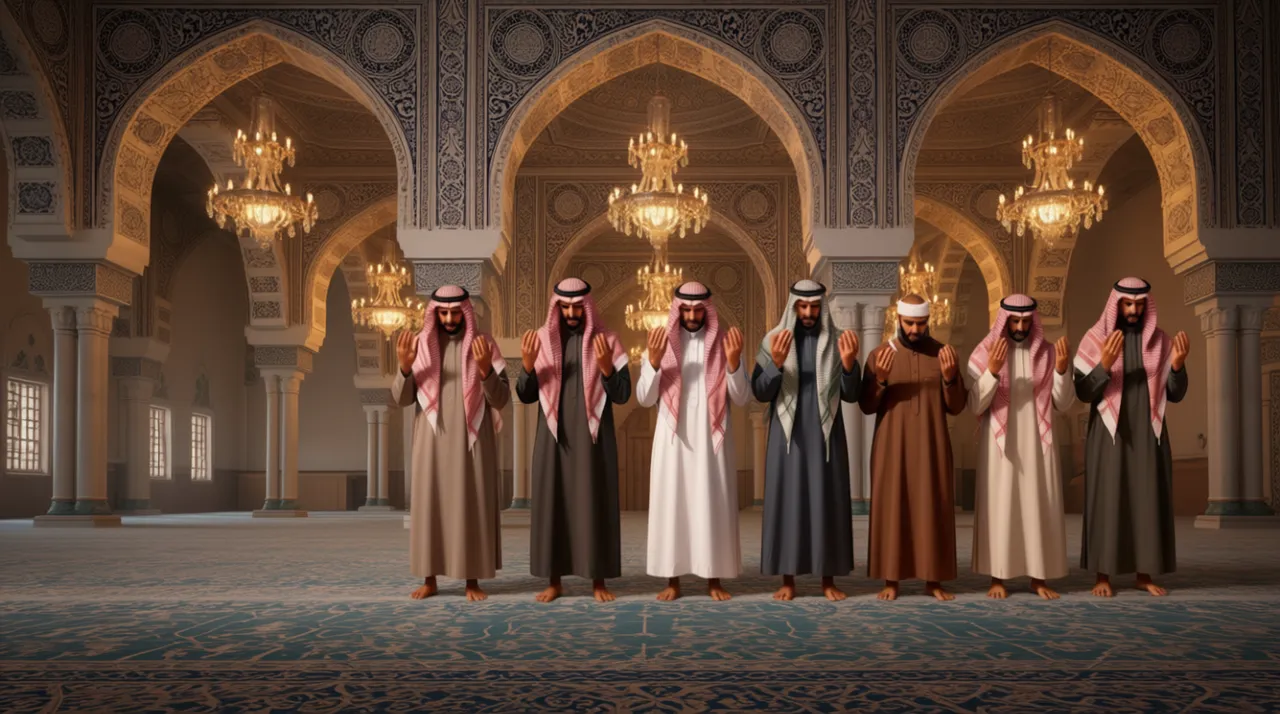
Muslims primarily worship in a mosque (Arabic: masjid), which is far more than just a building; it’s a vibrant community hub for prayer, learning, and fostering strong social bonds. While daily prayers can be performed anywhere clean, communal worship in a mosque, especially the Friday Jumu’ah prayer, holds immense spiritual significance.
Seven key places and practices of Muslim worship include:
- Mosques: Central spiritual and community centers.
- Facing Mecca (Kaaba): All prayers are directed towards this holy site.
- Home: Daily prayers often take place at home.
- Nature: Any clean place can be a prayer mat.
- Community Centers: Often house prayer spaces and educational facilities.
- Workplace/Schools: Designated prayer rooms facilitate daily rituals.
- Pilgrimage Sites: Mecca and Medina for the Hajj and spiritual journeys.
Have you ever seen a mosque, perhaps with its elegant dome and towering minarets, and wondered: “Where do Muslims really worship? Is it just inside that building, or is there more to it?” 🤔 It’s a natural question, and one that opens the door to understanding a rich, dynamic faith tradition practiced by over a billion people worldwide. For Muslims, worship is a deeply personal and communal journey, and the places they connect with the Divine are as diverse as their global community.
The mosque (or masjid in Arabic) stands as the undeniable heart of Islamic worship, but it’s far more than just a physical structure. It’s a sanctuary of peace, a beacon of learning, and a vibrant hub where faith comes alive through collective prayer, fellowship, and service. Understanding where Muslims worship isn’t just about geography; it’s about grasping the depth of their spiritual devotion, their commitment to community, and the practical ways they integrate faith into every aspect of their lives.
So, let’s embark on this enlightening exploration. Here at oracioncristiana.org, we believe that understanding other faiths fosters mutual respect and broadens our own spiritual horizons. Let’s uncover the 7 key places and practices that explain where Muslims worship and why these spaces hold such immense significance today.


1. The Mosque (Masjid): The Heart of Islamic Community
Let’s begin with the most prominent and recognized place of worship. The mosque, known as masjid (مَسْجِد) in Arabic, is the primary and most significant place where Muslims gather for communal worship, prayer, education, and community life.
The word masjid literally means “place of prostration”—a place where one bows down to God. It is deliberately designed to be a clean, sacred space conducive to prayer and spiritual reflection. While mosques vary greatly in architectural style across the globe (from the intricate designs of Istanbul to the minimalist aesthetics of modern centers), their core function remains universally the same.
Mosques serve as:
- Primary Prayer Space: A designated area, often carpeted, where Muslims perform their daily prayers.
- Community Hub: Far beyond just prayer, mosques are vibrant centers for social gatherings, educational classes (for all ages), charitable initiatives, and community support.
- Educational Centers: Providing religious instruction, Quranic studies, and lectures.
- Social Services: Many mosques offer food banks, counseling, and assistance to the needy.
The mosque is not just a building; it symbolizes the very heart of the Muslim community (Ummah), fostering a profound sense of belonging, unity, and collective purpose. It is where Muslims come together to strengthen their faith and support one another in their journey of submission to God. You can learn more about the diverse functions of mosques from the Wikipedia page on Mosques.
2. Facing Mecca (The Kaaba): A Global Direction of Prayer
While Muslims worship in countless locations worldwide, all their prayers are united by a single direction. All Muslims, regardless of where they are on Earth, direct their prayers (Salah) towards the Kaaba (الكعبة), a cube-shaped building located in the city of Mecca, Saudi Arabia, which is the holiest site in Islam.
The direction of prayer is known as the Qibla (قِبْلَة). This practice ensures profound unity among Muslims across the globe:
- Symbol of Unity: Facing the same direction connects every Muslim, from every corner of the world, in a single, unified act of worship towards one God.
- Holiness: The Kaaba itself is believed to be the first house of worship built by Abraham and his son Ishmael, a sacred focal point for all Muslims.
- Not Idolatry: Muslims do not worship the Kaaba; they worship Allah through the Kaaba as a sacred point of orientation and unity.
Every mosque has a mihrab (a niche in the wall) indicating the Qibla. Before prayer, Muslims use tools (like compasses or prayer apps) to correctly orient themselves. This global orientation is a powerful testament to the universal brotherhood and sisterhood of Islam, fostering a deep sense of connection and collective purpose, no matter the physical distance. You can explore a virtual tour of Mecca and the Kaaba from resources like Google Maps Street View.
3. At Home: Building Personal Devotion and Family Faith
While mosques are central for communal worship, much of a Muslim’s daily devotion takes place in the most intimate of settings: their own home. Muslims frequently worship at home, performing their daily prayers and engaging in personal spiritual practices that strengthen individual faith and foster family devotion.
The beauty of Islam is that it encourages a continuous connection with God throughout the day. The Five Daily Prayers (Salah), a fundamental pillar of Islam, can be performed anywhere that is clean and appropriate. For many, the home is a primary place for this spiritual discipline.
At home, Muslims engage in:
- Daily Prayers: Performing Salah at prescribed times (dawn, noon, mid-afternoon, sunset, night).
- Quran Recitation & Study: Reading, memorizing, and reflecting on verses from the Quran.
- Personal Supplication (Dua): Making personal requests and having private conversations with Allah.
- Family Worship: Families often pray together, teaching children about faith and reinforcing spiritual values.
The home transforms into a personal sanctuary, a place where faith is nurtured, and the presence of God is invited into daily life. This emphasis on individual and family worship underscores the holistic nature of Islam, where spirituality permeates every aspect of existence, blurring the lines between “religious life” and “secular life.” It’s like a constant, gentle spiritual rhythm guiding the household.
4. Anywhere Clean: The World as a Prayer Mat
This is a liberating and inclusive aspect of Islamic worship. For Muslims, any clean place on Earth can serve as a place of prayer, reflecting the belief that the entire world is a masjid (mosque) and God is everywhere.
Prophet Muhammad taught: “The earth has been made for me (and for my followers) a place for praying and a thing to perform purification with” (Sahih Bukhari 1:331). This means that a Muslim doesn’t need a special building to pray. As long as the spot is clean, they can:
- Lay down a prayer mat.
- Perform the necessary ablutions (wudu).
- And turn towards the Qibla (Mecca).
This flexibility allows Muslims to perform their Five Daily Prayers (Salah) wherever they are:
- In a park or natural setting.
- At a roadside rest stop.
- In an airport terminal.
- At their workplace or school.
This concept is incredibly empowering, integrating prayer seamlessly into daily life and reminding believers that God is not confined to sacred buildings, but is present throughout His creation. It transforms the mundane into the sacred, making every part of the world a potential place of worship. You can find more about the concept of places of worship in Islam.
5. Workplaces and Schools: Designated Prayer Rooms
In many modern, multicultural societies, the flexibility of Islamic prayer has led to practical accommodations in public and private spaces. Many workplaces, universities, airports, and public institutions now provide designated prayer rooms or multi-faith spaces for Muslims (and other faiths) to perform their daily prayers.
This is a recognition of the importance of daily prayer in a Muslim’s life and an effort to foster inclusivity. These prayer rooms typically include:
- A Clean Space: Often carpeted and well-maintained.
- Qibla Direction: Usually marked with an arrow or sign indicating the direction of Mecca.
- Ablution Facilities: Sometimes include specific facilities for wudu (ritual washing before prayer).
These spaces are crucial for:
- Facilitating Daily Worship: Allowing Muslims to observe their prayer obligations during work or study hours.
- Promoting Inclusivity: Demonstrating respect for religious diversity in secular environments.
- Building Community: Offering a place for Muslims to connect with colleagues or fellow students who share their faith.
The presence of such dedicated spaces reflects a growing understanding and accommodation of Islamic practices in contemporary global society, fostering an environment where faith can be integrated into daily routines without conflict.
6. Islamic Centers: Beyond the Mosque, a Cultural Hub
Beyond traditional mosques, a broader institution serves a multifaceted role in Muslim communities. Islamic Centers are comprehensive facilities that often house prayer spaces but also function as vibrant cultural, educational, and social hubs, serving the diverse needs of the Muslim community.
These centers are particularly important in Western countries or areas where Muslim communities are growing. They often include:
- Prayer Hall (Masjid): For daily and communal prayers.
- Classrooms: For Quranic studies, Arabic language classes, and religious education for children and adults.
- Libraries: Housing Islamic texts and scholarly resources.
- Community Halls: For social gatherings, lectures, interfaith dialogues, and community events.
- Youth Programs: Activities for young Muslims to connect with their faith and peers.
Islamic Centers provide vital services, fostering strong community bonds and offering a welcoming space for Muslims and non-Muslims alike to learn about Islam. They are powerful centers for cultural preservation, education, and outreach, demonstrating the dynamic nature of Muslim communal life. You can find information on local Islamic centers through resources like IslamicFinder.
7. Pilgrimage Sites: Mecca and Medina (The Hajj and Beyond)
Finally, for those who are able, specific pilgrimage sites hold unparalleled spiritual significance. Mecca and Medina in Saudi Arabia are the two holiest cities in Islam, serving as the ultimate pilgrimage destinations for millions of Muslims worldwide, particularly for the annual Hajj.
- Mecca: Home to the Kaaba, the most sacred site in Islam and the direction of prayer. The Hajj (pilgrimage to Mecca) is an obligatory act for every Muslim who is physically and financially able, performed once in their lifetime. It is a profound spiritual journey of unity and devotion.
- Medina: The city where Prophet Muhammad found refuge after the Hijra from Mecca, established the first Islamic state, and where he is buried. It is the second holiest city and a site of immense reverence.
These pilgrimage sites are not just places of historical importance; they are spiritual magnets that draw Muslims into an intense experience of faith, unity, and submission to God. The Hajj, in particular, is a powerful demonstration of the global Ummah, uniting millions from every race and nation in a single, sacred journey. It’s a testament to the profound collective identity and devotion at the heart of Islam. You can learn more about the Hajj from resources like Encyclopedia Britannica on Hajj.
What Does This Global Tapestry of Worship Mean to You?
The question of where Muslims worship reveals a fascinating and beautiful tapestry of devotion—from the sanctity of the mosque and the unity of facing Mecca, to the intimacy of home prayer and the flexibility of finding a sacred space anywhere clean. It’s a faith that is both structured and adaptable, personal and profoundly communal.
Understanding these diverse places and practices of worship deepens our appreciation for the rich spiritual life of Muslims and highlights the many ways humanity seeks connection with the Divine. It’s a powerful reminder that faith can flourish in countless forms, fostering devotion, unity, and a sense of purpose across the globe.
Now, I’d love to hear from you. The comments section is open!
→ Which of these 7 key places or practices of Muslim worship did you find most insightful or surprising?
→ How does the global unity of prayer (facing Mecca) resonate with you as a concept for faith?
→ What’s one step you could take to learn more about or respectfully engage with a local mosque or Islamic center in your community?
Let’s share our insights and encourage one another in our oracioncristiana.org community!
