Satanic Star: 7 Secrets Behind Its Mysterious Symbolism
Respuesta Rápida
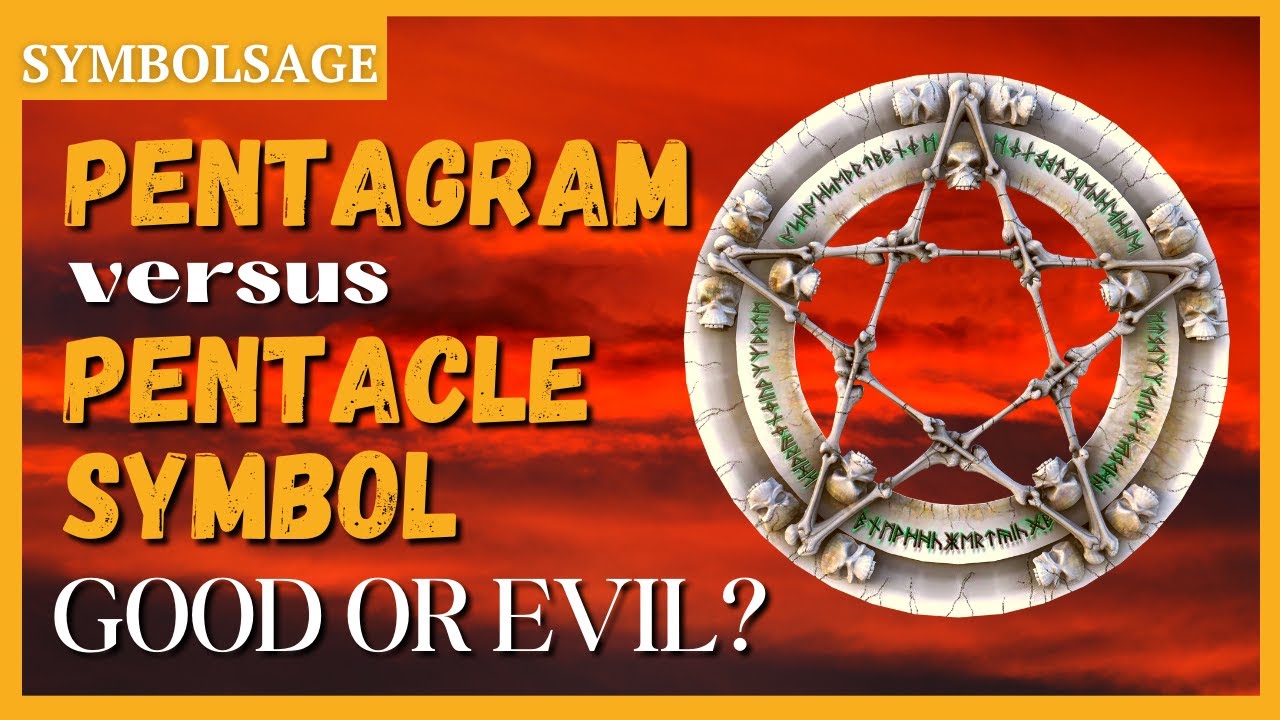
The Satanic Star, most famously depicted as an inverted pentagram often with a goat’s head (the Sigil of Baphomet), is a powerful and often misunderstood symbol. Its symbolism is rooted in concepts of duality, individualism, and a challenge to traditional religious authority, rather than solely evil.
Seven secrets behind its mysterious symbolism include:
- Ancient Roots: The pentagram itself predates its “Satanic” association.
- Inversion’s Meaning: Represents spirit over matter (upright) or matter over spirit/rebellion (inverted).
- Éliphas Lévi’s Influence: His Baphomet popularized the goat-headed inverted pentagram.
- LaVeyan Satanism: Adopted as a symbol of self-empowerment and individualism.
- Five Elements: Each point linked to earth, air, fire, water, and spirit.
- Duality: Embodies balance (male/female, light/dark) for esoteric traditions.
- Cultural Rebellion: Used in music and art to challenge societal norms.
Have you ever seen that striking five-pointed star, often inverted, perhaps with a goat’s head, and felt a shiver of intrigue… or maybe a jolt of alarm? It’s a symbol that immediately conjures images of mystery, rebellion, and, for many, outright evil: the Satanic Star. But what is this emblem, really? Is it purely a sign of darkness, or does its complex history and symbolism hold deeper, more nuanced secrets that many misunderstand?
The truth about the Satanic Star meaning is far more intricate than a simple glance might suggest. It’s a journey that traces back through ancient mathematics, mystical traditions, medieval accusations, and the birth of modern philosophical movements. This symbol has been feared, revered, condemned, and embraced, often reflecting society’s ever-shifting understanding of religion, authority, and individualism. It challenges us to look beyond immediate reactions and appreciate the layered meanings that powerful emblems can carry.

Understanding the secrets behind its mysterious symbolism isn’t about endorsing any particular belief, especially not those contrary to our Christian values here at oracioncristiana.org. Instead, it’s about gaining clarity on a pervasive cultural and mystical icon, recognizing its historical impact, and discerning its various interpretations. It’s about peeling back layers of misconception to see the full picture, even if it’s unsettling.
So, let’s unlock these ancient mysteries. Let’s explore the 7 fascinating secrets behind the Satanic Star’s mysterious symbolism that you should know, and see why this emblem continues to provoke thought and debate today.
1. The Pentagram: Ancient Roots Predating “Satanic” Ties
Let’s begin with the basic form of the Satanic Star: the pentagram. The five-pointed star, or pentagram, is an ancient symbol with roots in various cultures and religions dating back millennia, long before its association with Satanism.
The pentagram’s history is incredibly diverse:
- Ancient Mesopotamia (circa 3000 BCE): Used as a symbol of power and magical protection.
- Ancient Greece: Associated with the goddess Hygieia (health) and used by Pythagoreans to represent mathematical perfection and the five elements.
- Early Christianity: Used to symbolize the five wounds of Christ, or the five senses.
- Medieval Period: Often seen as a symbol of truth or protection against evil.
In its upright position (with one point up), the pentagram has traditionally symbolized:
- Spirit Over Matter: The single upward point representing the spirit ruling over the four elements (earth, air, fire, water) or the human head ruling the four limbs.
- Protection and Goodness: Many ancient cultures viewed it as a benevolent, protective symbol.
This deep history highlights that the star itself is not inherently “Satanic.” Its meaning is derived from its orientation and the context in which it’s used. The subsequent inversion of this ancient symbol is what created its later controversial associations, marking a deliberate subversion of its traditional meaning. You can delve into the extensive history of the pentagram from Wikipedia on the Pentagram.
2. The Inversion: A Deliberate Act of Spiritual Rebellion
The “Satanic Star” isn’t just any pentagram; it’s typically an inverted one. The inversion of the pentagram (with two points up and one point down) is a deliberate act of spiritual rebellion, symbolically representing the triumph of earthly desires and matter over spirit, or a subversion of traditional divine order.
This inversion began to gain its “dark” connotations in the 19th century, particularly among French occultists. If the upright pentagram symbolized the spirit ascending or ruling over matter, then its inversion naturally came to symbolize:
- Matter Over Spirit: The two upward points could represent the “horns” of a goat (often associated with fertility, wildness, or the devil in some traditions) or the material world dominating the spiritual.
- Rebellion Against God: A direct opposition to the traditional Christian hierarchy where God and spirit are supreme.
- Embracing the Earthly: A focus on the physical, sensual, and material aspects of existence, rather than ascetic spiritual denial.
This seemingly simple flip dramatically alters the symbol’s meaning, transforming it from a benign or positive emblem into a potent sign of defiance and counter-cultural philosophy. It’s a visual manifesto, declaring a reversal of established values and a challenge to conventional spiritual authority. This intentional subversion is a key secret behind its powerful impact. You can find academic discussions on symbolism and inversion in occult practices from the JSTOR archive on Occult Symbolism.
3. Éliphas Lévi’s Baphomet: The Iconic Fusion
The most famous depiction of the Satanic Star, often called the Sigil of Baphomet, is inextricably linked to a 19th-century French occultist. The iconic image of the goat-headed, winged Baphomet, with an inverted pentagram on its forehead, was popularized by Éliphas Lévi in 1856, cementing the star’s association with esoteric duality and the occult.
Lévi’s drawing of Baphomet, published in his influential book Dogme et Rituel de la Haute Magie, became the definitive representation. He intentionally merged:
- The Inverted Pentagram: As seen on Baphomet’s forehead.
- Androgynous Features: Combining male (phallic symbol) and female (breasts) elements.
- Goat Head: Drawing from ancient chthonic deities and medieval associations of the goat with the devil.
- Hermetic Principles: Hands pointing up and down with “Solve” and “Coagula,” representing alchemical processes and the maxim “as above, so below.”
For Lévi, Baphomet was not a devil to be worshipped, but a symbolic representation of cosmic balance, ultimate truth, and the integration of all opposing forces (light/dark, male/female, spirit/matter) within a unified whole. It was a potent symbol of his esoteric philosophy, and its striking imagery became synonymous with the occult. This fusion transformed the inverted pentagram into a symbol that spoke volumes about hidden knowledge and mystical unity, even if misunderstood by the masses. You can see Lévi’s original artwork and its explanation on Encyclopedia Britannica on Baphomet.
4. Anton LaVey & The Church of Satan: A Symbol of Self-Deification
The modern, widely recognized “Satanic Star” with the goat’s head found its most public platform in the 20th century. Anton LaVey, founder of the Church of Satan in 1966, adopted Lévi’s Baphomet, specifically the inverted pentagram enclosing a goat’s head (the Sigil of Baphomet), as his church’s official emblem, re-purposing it as a symbol of individualism and self-empowerment.
LaVeyan Satanism is often described as non-theistic; its adherents generally do not believe in a literal Satan or God. Instead, Satan is seen as:
- A Symbol of Rebellion: Against traditional religious dogma and hypocrisy.
- Individualism: Celebrating the self, ego, and personal will.
- Earthly Pleasure: Embracing human desires and pleasures, rather than self-denial.
- Reason & Enlightenment: The pursuit of knowledge through rational inquiry.
The Sigil of Baphomet, therefore, represents a philosophical stance of self-deification—the idea that each individual is their own “god.” It challenges external authority and promotes radical personal freedom. This adoption gave the symbol its most direct and controversial “Satanic” label in popular culture, embedding it as an emblem of anti-establishment thought and individual autonomy. You can explore the philosophy of LaVeyan Satanism from the official Church of Satan website.
5. Duality and Balance: The Harmony of Opposites
For many who engage with Baphomet and the inverted pentagram, its core meaning is not about absolute evil, but about finding equilibrium. The Satanic Star, particularly through Lévi’s Baphomet, symbolically embodies the profound concept of duality and the balance of seemingly opposing forces in existence, such as male and female, light and dark, and order and chaos.
This emphasis on duality is key to understanding its esoteric interpretation:
- Androgyny: The fusion of male and female elements within Baphomet represents the integration of all genders and aspects of humanity, achieving a state of wholeness.
- Cosmic Harmony: The interplay of opposing forces is seen as necessary for creation and cosmic harmony, much like the Yin and Yang in Eastern philosophies.
- Inner Integration: It encourages individuals to confront and integrate their own “shadow” aspects—the suppressed or darker parts of their personality (as in Jungian psychology)—to achieve a more complete and authentic self.
For these interpreters, Baphomet is a guide to understanding the interconnectedness of all things and the necessity of balance in both the universe and the human psyche. It’s a call to embrace complexity, to reconcile seemingly contradictory elements, and to find unity within diversity. It’s a symbol that prompts deep introspection and a quest for inner balance, challenging simplistic notions of “good” versus “evil.” You can find philosophical discussions on dualism from the Stanford Encyclopedia of Philosophy.
6. Cultural Rebellion: From Albums to Activism
Beyond its specific religious or esoteric contexts, the Satanic Star has become a powerful, widely recognized symbol of rebellion in popular culture. The Satanic Star has permeated various forms of art and media, frequently serving as an emblem of rebellion against mainstream norms, oppressive systems, and conventional societal expectations.
Its striking and often provocative imagery makes it a favorite for conveying a sense of defiance:
- Heavy Metal and Subcultures: Genres like heavy metal and black metal frequently feature the inverted pentagram in album art, band logos, and merchandise. For these subcultures, it symbolizes a rejection of mainstream values, a celebration of individuality, and a challenge to authority.
- Film and Television: The symbol often appears in horror films, thrillers, and supernatural dramas as a visual shorthand for the occult, demonic forces, or dark magic. While these portrayals often reinforce negative stereotypes, they also contribute to its widespread recognition.
- Fashion and Art: It can be seen in alternative fashion and contemporary art, used as a provocative statement or a critique of societal structures, challenging viewers to rethink their perceptions.
This widespread use, often detached from specific Satanic beliefs, demonstrates the symbol’s power as a universal sign of “anti-establishment.” It acts as a catalyst, sparking discussions about censorship, freedom of expression, and the boundaries of societal acceptance. It’s a bold declaration for those who wish to visibly express their non-conformity. You can explore the impact of symbols in popular culture from resources like Psychology Today.
7. The Enduring Controversy: A Battleground for Religious Freedom
Despite its complex history and diverse interpretations, the Satanic Star remains a deeply controversial and often feared symbol. It continues to ignite passionate debate, serving in modern times as a battleground for issues of religious freedom, pluralism, and the separation of church and state.
The controversy stems from:
- Historical Misconceptions: Its original false association with medieval Templar “devil worship” still fuels fear and prejudice in the popular imagination.
- Fear of the Occult: Its striking imagery taps into deep-seated fears of evil and the unknown, especially within conservative religious communities.
- Activist Use: Groups like The Satanic Temple, by using Baphomet imagery in protests against the display of Christian monuments on public land (arguing for religious equality), deliberately provoke controversy to highlight issues of religious freedom and the separation of church and state.
This ongoing controversy forces society to confront its biases and to critically examine the principles of tolerance and freedom of expression. It’s a powerful symbol that, by its very nature, demands attention and challenges prevailing norms. The debates around the Satanic Star are a microcosm of larger societal struggles for acceptance and understanding in a diverse world. You can learn more about The Satanic Temple’s activism from their official website.
What Secrets Does the Satanic Star Unlock for You?
The journey into the Satanic Star meaning is a fascinating exploration, revealing a symbol forged in medieval accusations, reinterpreted by occultists, and reclaimed by modern activists. It’s an emblem that embodies duality, individualism, rebellion, and a profound challenge to traditional authority. Far from being a simple sign of evil, its complex layers invite us to ponder the depths of human belief, the power of symbolism, and the ongoing quest for meaning and freedom.
May this exploration inspire you to look beyond the surface of symbols, to question assumptions, and to engage with the world’s diverse spiritual expressions with greater understanding and discernment. What a rich tapestry of human thought to behold!
Now, I’d love to hear from you. The comments section is open!
→ Which of these 7 fascinating secrets about the Satanic Star’s symbolism resonated most deeply with you, or surprised you the most?
→ How does understanding the historical and modern interpretations of this symbol change your perspective on its use in art or popular culture?
→ What’s one way you feel inspired to critically examine symbols and their meanings in your own life or our world today?
Let’s share our insights and encourage thoughtful dialogue in our oracioncristiana.org community!
