Prayer to Mary Undoer: Essential Guide with 5 Practical Steps
prayer to mary undoer
The prayer to mary undoer is a popular Christian devotion that asks for the intercession of the Virgin Mary under the title “Undoer of Knots”. Believers bring to her the complicated problems, strained relationships, anxieties, and persistent habits that feel like “knots” in their lives, asking her to untangle them with patience, wisdom, and motherly care. In this guide, you will learn what this devotion is, where it comes from, how to pray it step by step, and how to integrate it into your daily spiritual life.
Whether you are returning to faith or deepening a long-standing practice, the prayer to mary undoer offers a simple, compassionate way to entrust your worries to God through Mary’s gentle help. The aim is not magic or instant fixes, but steady grace: clarity in confusion, reconciliation after conflict, and courage for decisions that matter.
What is prayer to mary undoer?
At its heart, the prayer to mary undoer is a petition asking Mary to help resolve the “knots” that hinder peace and growth. These knots may be personal—fear, bitterness, addiction—or relational, such as family conflict, estrangement, and misunderstandings. They may also be practical: debts, legal tangles, or complex work dilemmas. The devotion trusts Mary to present these knots to God and, with our cooperation, to ease and unravel them in ways we might not foresee.
Origins of the title “Mary, Undoer of Knots”
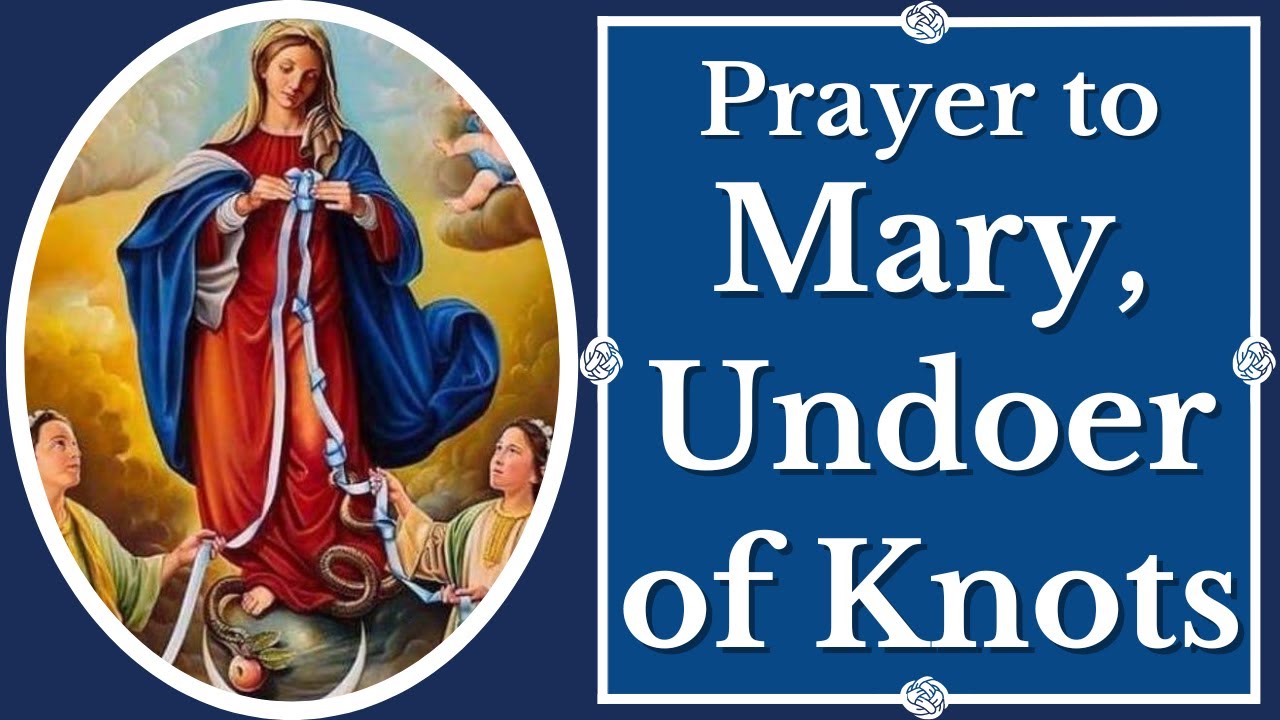
The title comes from a 17th-century tradition in Augsburg, Germany, and a well-known Baroque painting by Johann Georg Melchior Schmidtner. The canvas shows Mary holding a white ribbon full of knots, patiently untying them while angels assist. The symbolism is clear: with faith, dedication, and grace, complicated problems can be loosened and resolved. The devotion gained wide visibility in recent decades, especially after Jorge Mario Bergoglio (later Pope Francis) encountered the image in Germany and helped spread the practice in Argentina and beyond.

The icon and its meaning
In the classic image, Mary stands beneath the Holy Spirit, a sign that she acts in harmony with God. The ribbon with knots represents the mess of human life—choices, hurts, and circumstances that have tightened over time. Angels present ribbons to Mary and carry them on once untied, suggesting that grace both receives and sends. For many, this icon becomes a focus for contemplation while saying the prayer to mary undoer, reminding them that patience and trust bear fruit.
Why people turn to this prayer today
Modern life produces many “knots”: long to-do lists, strained relationships across distance, digital distractions, and the pressure to perform. The prayer to mary undoer offers a calm, steady path to hand over worry and to ask for God’s help in a tangible way. It is accessible to beginners, adaptable to different traditions, and both simple and profound.
Common intentions
- Healing rifts in families and friendships
- Breaking cycles of fear, resentment, or harmful habits
- Finding work or resolving employment disputes
- Managing financial burdens or administrative hurdles
- Seeking wisdom for difficult choices
- Asking for peace and patience during illness
Many who practise the prayer to mary undoer report that, over time, they change as well: they become more patient, more forgiving, and more attentive to small steps that make bigger solutions possible.
What the devotion is—and isn’t
This devotion is a request for intercession. Christians believe that Mary prays with and for the Church, always pointing to Jesus. Praying to Mary is asking her to pray with you to God. It is not a guarantee of a specific outcome, and it does not replace professional help when needed (for example, financial planning, medical care, or counselling). The prayer to mary undoer encourages a realistic, hopeful approach: doing what you can, seeking proper support, and trusting God with the rest.
How to pray prayer to mary undoer
There are two common approaches: a structured novena over nine days, and a short daily petition you can pray in minutes. Choose what best fits your situation and temperament, and feel free to adapt respectfully.
Step-by-step for a nine-day novena
- Set your intention. Write the “knot” clearly in one or two sentences. Keep it focused; if you have many knots, begin with the most pressing.
- Pick a time and place. Consistency helps. A quiet corner at home or a nearby church works well.
- Begin with a moment of silence. Ask for the Holy Spirit’s guidance and peace.
- Offer a simple act of faith. For example, a short prayer acknowledging God’s presence and your trust in Mary’s intercession.
- Present your knot. Describe the situation calmly to the Lord, asking Mary, Undoer of Knots, to help untie it.
- Use a set form if you wish. Many follow a traditional novena outline that includes readings and set prayers. Others use their own words daily. Either way, be sincere and brief enough to remain focused.
- End with gratitude. Thank God for hearing your prayer and Mary for her care, even before you see results.
- Repeat for nine consecutive days, keeping the same intention. If you miss a day, simply continue; consistency matters more than perfection.
Throughout the novena, make one small, concrete step each day that aligns with the intention—reach out to someone, set a budget line, seek advice, or schedule an appointment. The prayer to mary undoer works best alongside practical action.
A short daily invocation
If a novena feels too long, use a simple daily prayer to mary undoer such as: “Mary, Undoer of Knots, I place this knot before you. Help me notice the next right step and give me courage to take it.” You can keep a ribbon with a small knot as a reminder. When you notice progress, loosen the knot or tie a new one for a different intention.
Helpful tips for fruitful prayer
- Be specific about your intention, but open about the outcome. Ask for what you need and add, “according to God’s will”.
- Keep prayers simple. Clarity beats complexity; aim for sincerity over length.
- Combine prayer with action. Make one practical change during the novena.
- Seek reconciliation. If your knot involves a relationship, lean towards forgiveness and honest conversation when safe and appropriate.
- Be patient. Knots formed over years rarely unravel overnight. The prayer to mary undoer is gentle and steady.
Prayer texts you can use or adapt
There are many versions of the novena available. If you prefer original words, you can pray in your own voice. Here is a simple, flexible example you can adapt:
“Holy Mary, Undoer of Knots, I place before you the knot of [name it simply]. I have tried to solve it and need help. Please intercede for me, that God’s light may show the way forward. Untie the knots of fear and impatience in my heart. Help me to act with wisdom today and to trust tomorrow to God. Amen.”
Feel free to add a short thanksgiving. The important thing is attention, not eloquence. Many find it helpful to combine this with the prayer to mary undoer during times of quiet reflection, or after reading a short Scripture passage that speaks to their situation.
Common mistakes and how to avoid them
Expecting instant results
While breakthroughs can come quickly, most knots untie gradually. Avoid discouragement if you see only a small change at first. The prayer to mary undoer advances knot by knot, not always in one sweep.
Focusing only on outcomes
It is natural to want a particular result. However, prayer also transforms the person praying. Keep space for unexpected solutions and for inner growth—patience, forgiveness, and resilience are often part of God’s answer.
Praying without practical steps
Grace builds on nature. If your intention involves finances, meet with a trusted adviser; in conflict, consider a respectful conversation or mediation. The prayer to mary undoer does not replace action; it strengthens it.
Isolating yourself
If the knot is heavy, share with someone wise—friend, mentor, or minister. Sometimes the next right step becomes clear only in conversation.
Integrating the devotion into daily life
The prayer to mary undoer does not require a special season or feast. You can introduce it gently into morning or evening routines. Some keep a small image or a ribbon nearby to remind them to entrust their knots each day. Others choose nine days before a significant decision or family event to focus their prayer.
It also sits well alongside other practices of Christian prayer. For example, many blend the novena with moments of silent contemplation, or a decade of the Rosary focused on a knot. If you wish to cultivate trust in God’s mercy more widely, you may find guidance in resources like how to pray the Divine Mercy Chaplet, which complements this devotion with a steady rhythm of hope and surrender.
In seasons of sorrow, some turn to Mary under other titles too. Reflecting on her compassion at the Cross can deepen empathy and patience—virtues that help in the slow work of untying life’s knots. To explore this dimension of Marian devotion, you can read more about Our Lady of Sorrows.
Finally, consider making a brief examen at day’s end: where did the knot feel tighter, and where did it loosen? Who offered help? What small act could you take tomorrow? This keeps the prayer to mary undoer grounded and forward-looking.
Recommended external resources
- Background on Mary, Undoer of Knots, including history and iconography
- Concise overview of the devotion and its spread in modern times
- A structured novena to Mary, Undoer of Knots with daily reflections
- Pope Francis on Mary’s patient care and intercession
Related articles
Frequently asked questions about prayer to mary undoer
Is “Undoer of Knots” the same as “Untier of Knots”?
Yes. Different English translations use “Undoer” or “Untier”, and some prefer “Unraveller”. All refer to the same Marian title. You can use whichever feels most natural. The practice and meaning of the prayer to mary undoer remain the same.
Can non-Catholic Christians pray this devotion?
Many non-Catholic Christians appreciate the image of God gently untying life’s knots. If you are comfortable asking Mary to pray with you, feel free to use the devotion. If you prefer, you can pray directly to God while reflecting on the image and message. The spirit of the prayer to mary undoer—patient trust and hopeful action—translates across traditions.
Do I need a specific image or booklet?
No. An image can help focus attention, but it is not required. You can pray with a simple ribbon as a symbol, or just your words and intention. Some appreciate printed novena guides; others write their own. The key to the prayer to mary undoer is sincerity and regularity, not accessories.
Is there a best time to start a novena?
You can begin any day. Some people start on a day connected to Mary—such as a Saturday—or ahead of a significant event. What matters is consistency: nine days in a row, with a clear intention and a willingness to act on any insights that come through prayer.
What if the knot does not loosen?
Some situations are very complex. If you find little movement after a novena, consider repeating it later, seeking wise counsel, or reframing your intention. Often, the first change is inside us—courage to make a call, strength to set a boundary, or peace during uncertainty. The prayer to mary undoer helps you notice and cooperate with such grace.
How long should the daily prayer be?
Five to ten minutes is plenty for most people. A short, honest petition is better than a long, distracted recitation. You can expand as needed, but begin simply and keep focus on the knot and your next faithful step.
Can I pray for multiple knots at once?
You can, but it is often more fruitful to focus on one main knot per novena. If you carry many concerns, list them all, then choose the most urgent or foundational one. As that knot loosens, others may follow. The prayer to mary undoer often brings broader clarity when you concentrate your intention.
Conclusion on prayer to mary undoer
The prayer to mary undoer is a gentle, practical devotion for complicated times. Rooted in a centuries-old image of trust, it invites you to place your knots into Mary’s hands and to collaborate with grace through patient, concrete action. It is accessible, non-sensational, and grounded in everyday life—perfect for adults seeking steady help, not quick fixes.
Whether you adopt a nine-day novena or a brief daily petition, the path is the same: name your knot, ask for Mary’s intercession, take the next wise step, and trust God with the rest. Over time, the prayer to mary undoer shapes a habit of hope. Knots loosen, hearts soften, and new possibilities appear.
If you are new to Marian devotion, start small. If you are experienced, return with fresh simplicity. In all cases, the prayer to mary undoer is an invitation to live more peacefully and purposefully—one knot at a time.
