Prayer for a sick person to recover in islamic way: definitive guide
Prayer for a sick person to recover in Islamic way
If you are looking for a clear, compassionate guide to prayer for a sick person to recover in Islamic way, this article offers practical steps, authentic supplications, and thoughtful etiquette grounded in the Qur’an and Sunnah. Whether you are praying for a loved one, a friend, or yourself, you will find easy-to-follow guidance that complements medical care and supports emotional and spiritual wellbeing.
In Islam, seeking healing combines heartfelt supplication (du’a), Qur’anic recitation (ruqyah), good conduct when visiting the ill, and trust in Allah’s wisdom. The aim is not only recovery, but also comfort, hope, and reward for patience during hardship.
What is prayer for a sick person to recover in Islamic way?
At its simplest, prayer for a sick person to recover in Islamic way is a sincere plea to Allah—Al-Shafi (the Healer)—for relief from illness, strength to endure, and a return to health. It can be performed by the sick person themselves or by others on their behalf, and it may include du’a in one’s own words, well-known prophetic supplications, and ruqyah (recitation of specific verses and surahs for healing).
This practice is never a replacement for medical treatment; rather, it complements it. Islam encourages taking means—consulting doctors, taking prescribed medication, resting—while placing full trust in Allah’s decree. Combining both is a balanced way to practise prayer for a sick person to recover in Islamic way.


Core sources and meanings behind Islamic healing prayers
The Qur’an speaks of healing in both a spiritual and, by Allah’s will, physical sense. Many Muslims reflect on verses that emphasise Allah as the Healer and the Qur’an as a source of mercy and cure. For instance, see Qur’an 26:80: He who heals me and Qur’an 17:82 on the Qur’an as healing and mercy. Both verses inspire reliance on Allah and give hope during illness.
Hadith collections preserve the Prophet’s guidance on visiting the sick, offering du’a, and practising ruqyah. The etiquette is gentle, hopeful, and respectful. For accessible references to these teachings, explore the Book of Medicine in Sahih al-Bukhari and Riyad as-Salihin on visiting the sick. Together, these sources form the foundation of prayer for a sick person to recover in Islamic way.
Key concepts to understand before you begin
Du’a and ruqyah
Du’a is personal supplication: asking Allah directly. Ruqyah refers to reciting specific Qur’anic verses and established supplications for protection and healing. Both can be part of prayer for a sick person to recover in Islamic way, and both are permissible when done with reliance on Allah alone.
Taking means (asbab) and placing trust (tawakkul)
Islam encourages seeking treatment alongside spiritual practices. Trust in Allah does not mean avoiding doctors; it means recognising that healing comes from Him, whether through medicine, rest, surgery, or prayer.
Patience (sabr) and hope
Illness can purify sins and increase reward when borne with patience. Maintaining hope, kindness, and gratitude—even in small ways—brings spiritual benefit and emotional resilience.
Authentic duas for healing
Below are well-known supplications used as part of prayer for a sick person to recover in Islamic way. You may recite them in Arabic if you can, or use transliteration and translation to help. Sincerity matters most.
1) Allahumma Rabban-Nas (O Allah, Lord of mankind)
Arabic (transliteration): Allahumma Rabban-nas, adhhib al-ba’sa, ishfi wa anta Ash-Shafi, la shifa’a illa shifa’uk, shifa’an la yughadiru saqama.
Meaning: O Allah, Lord of mankind, remove the harm and heal, for You are the Healer; there is no healing except Your healing, a healing that leaves no illness behind.
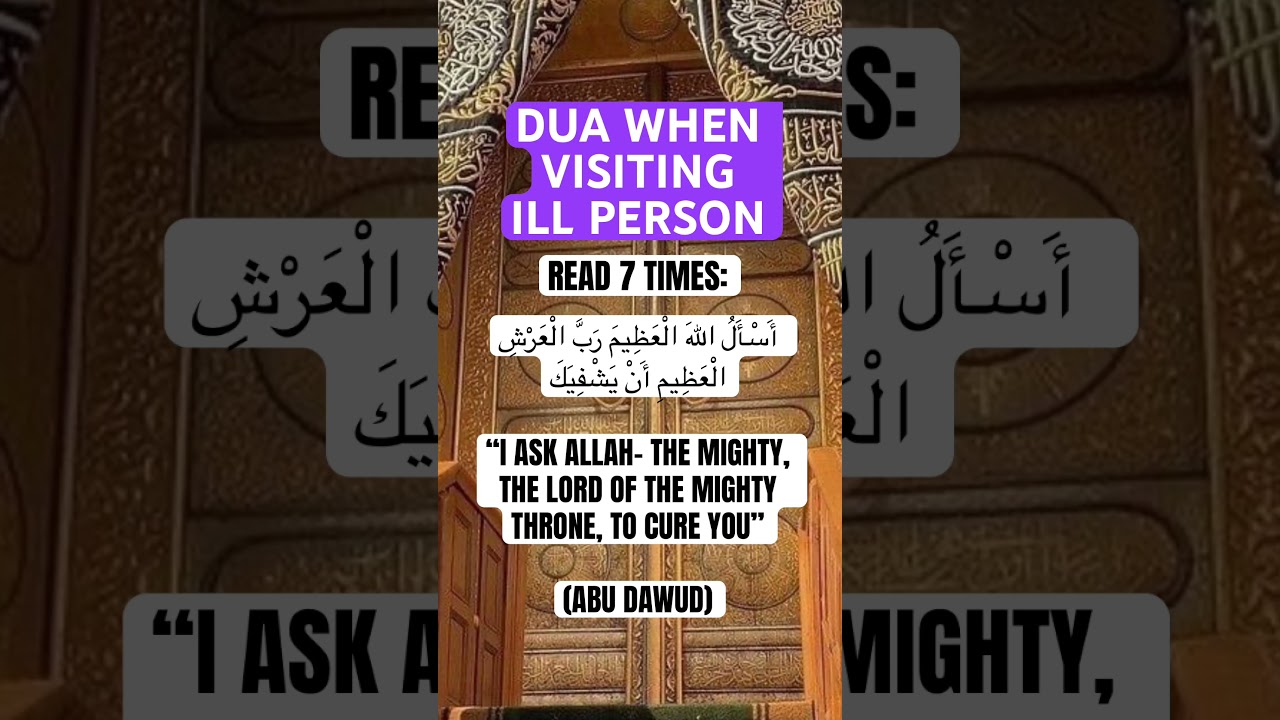
2) As’alullaha al-‘Azim (I ask Allah, the Mighty)
Arabic (transliteration): As’alullaha al-‘Azim, Rabb al-‘Arsh al-‘Azim, an yashfiyaka (for a man) / an yashfiyaki (for a woman).
Meaning: I ask Allah the Mighty, Lord of the Great Throne, to cure you.
This du’a is often recited seven times for someone who is ill. Reciting it calmly and with presence of heart can be a meaningful part of prayer for a sick person to recover in Islamic way.
3) Bismillah arqik (In the name of Allah, I perform ruqyah for you)
Arabic (transliteration): Bismillahi arqik, min kulli shay’in yu’dhik, wa min sharri kulli nafsin aw ‘aynin hasid, Allahu yashfika, bismillahi arqik.
Meaning: In the name of Allah, I perform ruqyah for you, from everything that harms you, from the evil of every soul and envious eye; may Allah cure you; in the name of Allah, I perform ruqyah for you.
4) Verses and surahs commonly recited for ruqyah
- Surah al-Fatihah (opening chapter)
- Ayat al-Kursi (Qur’an 2:255)
- Surah al-Ikhlas (Qur’an 112)
- Surah al-Falaq (Qur’an 113)
- Surah an-Nas (Qur’an 114)
These are recited for protection and healing. Integrating them with du’a makes prayer for a sick person to recover in Islamic way both structured and heartfelt.
Step-by-step prayer for a sick person to recover in Islamic way
The following routine is a practical way to make prayer for a sick person to recover in Islamic way at home or during a hospital visit. Adapt it to your circumstances.
- Set intention: Begin with a sincere intention to ask Allah for healing, seeking His help alone.
- Purification: If possible, perform wudu (ablution). If not, proceed with du’a—Allah knows your situation.
- Recite al-Fatihah: Recite once or thrice, reflecting on its meanings of mercy and guidance.
- Recite Ayat al-Kursi: Remember Allah’s power and care over all creation.
- Recite the last three surahs (Ikhlas, Falaq, Nas): You may recite each three times.
- Make specific du’a: Use the prophetic duas above, then add your own words—mention the person’s name and ask for complete recovery.
- Blowing gently: You may lightly blow into your hands after recitation and wipe over the body (or the area of pain if appropriate and modest).
- Conclude with praise and salawat: End by praising Allah and sending blessings upon the Prophet Muhammad (peace be upon him).
Repeat this routine daily if you can. Keeping it consistent transforms prayer for a sick person to recover in Islamic way into a comforting, hopeful habit.
When and where to make these prayers
Du’a is welcomed at any time, but certain moments are traditionally encouraged:
- During sujood (prostration) in prayer
- After the obligatory prayers
- In the last third of the night
- Between the adhan and iqamah
- On Fridays, especially the final hour before sunset
If you are making prayer for a sick person to recover in Islamic way while visiting, keep it brief and considerate of the patient’s energy levels.
Etiquette of visiting the sick and offering support
Visiting the ill is a noble act. When making prayer for a sick person to recover in Islamic way during a hospital or home visit, observe the following:
- Ask permission to visit and choose a suitable time.
- Keep the visit short unless the patient asks you to stay.
- Speak hopefully; avoid alarming or depressing stories.
- Offer practical help (fetching water, liaising with staff, assisting carers).
- Maintain privacy and dignity; do not share personal details without consent.
- Make the du’a: La ba’sa, tahurun in sha’ Allah (No harm, a purification by Allah’s will).
These manners ensure your prayer for a sick person to recover in Islamic way uplifts the patient and those caring for them.
Combining spiritual practice with treatment and self-care
Islamic guidance encourages using permissible treatments, eating well, resting, and following medical advice. You may also give charity (sadaqah) on behalf of the sick person and ask trusted family to do the same. These acts, alongside prayer for a sick person to recover in Islamic way, build a holistic path to recovery.
Common pitfalls to avoid
- Relying solely on rituals while neglecting doctors’ guidance.
- Using amulets or practices not supported by the Qur’an and Sunnah.
- Overexerting the patient with long recitations when they need rest.
- Sharing the patient’s condition publicly without their permission.
Avoiding these pitfalls helps keep prayer for a sick person to recover in Islamic way faithful, respectful, and effective.
Personalising your du’a: examples you can adapt
You can always pray in your own language. Here are examples you might adapt for prayer for a sick person to recover in Islamic way:
- O Allah, Lord of mankind, grant [Name] a speedy and complete cure. Remove their pain, strengthen their body, calm their heart, and return them to good health by Your mercy.
- O Allah, You are Al-Shafi. Heal [Name] with a healing that leaves no illness, and make this trial a means of forgiveness and closeness to You.
- O Allah, bless the hands of their doctors, guide their treatment, and grant [Name] patience and hope throughout recovery.
Praying for yourself versus praying for others
When you are the one who is ill, integrate short, sincere supplications during daily prayers and moments of calm. When you are praying for another person, mention them by name, use the prophetic duas, and, if appropriate, perform ruqyah with their consent. In both cases, try to maintain a routine of prayer for a sick person to recover in Islamic way so that hope remains steady.
Can you pray for non-Muslim loved ones?
Many scholars allow asking Allah for a non-Muslim’s wellbeing in this life—including relief from pain and good health—while being mindful of relevant boundaries of creed. You can still make heartfelt, compassionate prayer for a sick person to recover in Islamic way, asking for ease, healing, and guidance, and offering practical support and kindness.
Bringing heart and humility to your practice
Speak to Allah with humility and certainty that He hears you. Use His beautiful names—Al-Shafi (the Healer), Ar-Rahman (the Most Merciful), Al-Latif (the Subtle, the Gentle). Recite calmly, breathe slowly, and let your words be clear and hopeful. The presence of heart is a hallmark of meaningful prayer for a sick person to recover in Islamic way.
Recommended external resources
- Qur’an 26:80 on Allah as the One who heals for reflection during illness.
- Qur’an 17:82 on the Qur’an as healing and mercy to understand the spiritual nature of ruqyah.
- Sahih al-Bukhari, Book of Medicine for hadith on treatment and supplication.
- Riyad as-Salihin: The Book of Visiting the Sick for etiquette and recommended prayers.
Related articles
Frequently asked questions about prayer for a sick person to recover in Islamic way
What is the best short du’a I can say at a bedside?
You can recite: As’alullaha al-‘Azim, Rabb al-‘Arsh al-‘Azim, an yashfiyaka/yashfiyaki (I ask Allah the Mighty, Lord of the Great Throne, to cure you). Repeat it up to seven times. This concise supplication is widely used as part of prayer for a sick person to recover in Islamic way.
Do I have to know Arabic to make these prayers?
No. Allah understands all languages. Use the transliterations if helpful and speak from your heart in your own words. Sincerity and humility are central to prayer for a sick person to recover in Islamic way.
Is it allowed to combine medical treatment with ruqyah?
Yes. Islam encourages taking lawful means. Follow professional medical advice while making du’a and reciting Qur’an; the two approaches work together. This balance is a cornerstone of prayer for a sick person to recover in Islamic way.
How often should I recite these duas and surahs?
Consistency is more important than large amounts. Many people recite daily—after obligatory prayers, before sleep, or during quiet moments. If the patient tires easily, keep sessions short and gentle.
Can women perform ruqyah for themselves and family members?
Yes. Ruqyah is not limited by gender. Any Muslim who knows the recitations and maintains correct belief can perform it for themselves or loved ones, in a dignified and modest manner.
What if I cannot visit the sick person in person?
Pray from wherever you are—Allah hears all supplications. You may also recite Qur’an and intend its reward for them, send encouraging messages, arrange practical help, and maintain contact with their carers.
May I pray for a non-Muslim’s recovery?
Yes, many scholars allow asking Allah to grant health and ease to a non-Muslim in this life. You can make gentle, compassionate prayer and offer support, while observing Islamic beliefs about salvation and afterlife prayers.
Conclusion on prayer for a sick person to recover in Islamic way
Seeking healing through the Qur’an and Sunnah is a deeply hopeful practice. By combining prophetic supplications, thoughtful recitation, and good manners with professional medical care, prayer for a sick person to recover in Islamic way becomes a source of strength for patients and their loved ones alike.
Focus on sincerity, clarity, and compassion. Use established duas—such as Allahumma Rabban-nas and As’alullaha al-‘Azim—recite core surahs, and keep visits gentle and supportive.
