Oldest picture of jesus: essential, complete guide with 5 key facts
oldest picture of jesus
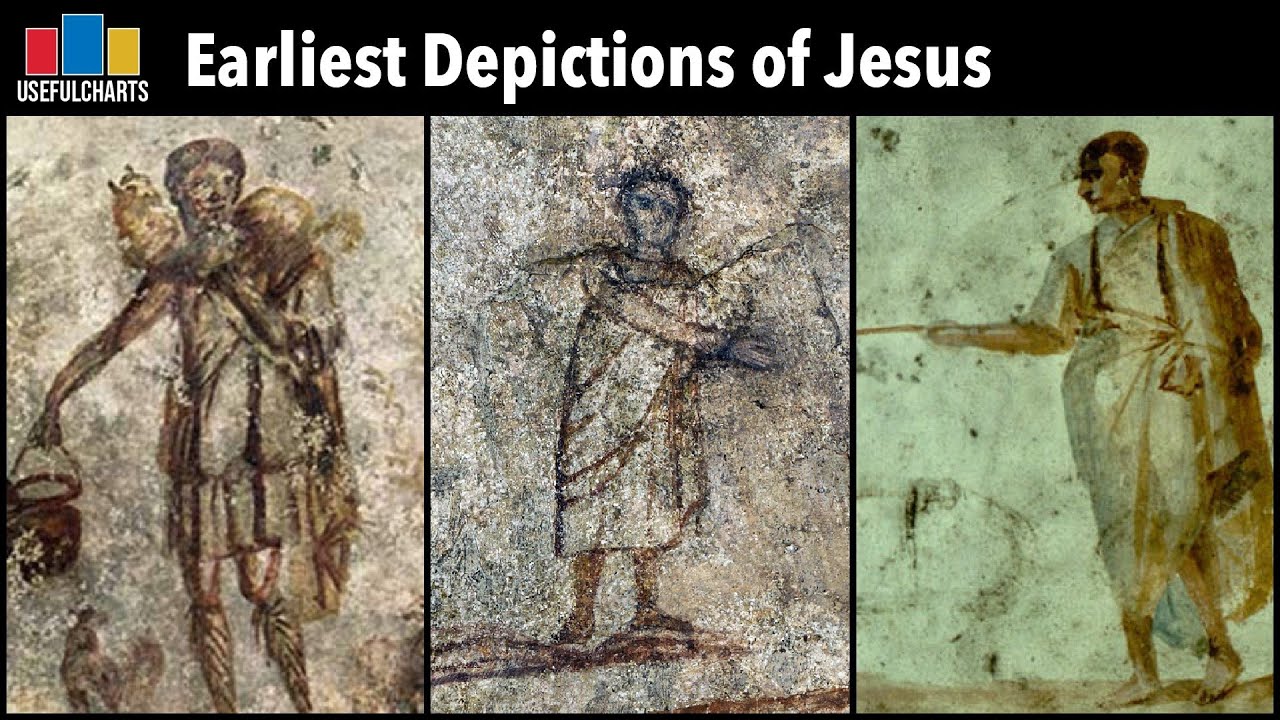
The question of the oldest picture of jesus fascinates historians, art lovers, and curious readers alike. It touches on how early Christians expressed their faith in images, how those images survived (or didn’t) through centuries, and what they might tell us about the beliefs and lives of the first followers of Christ. In this guide, we explore what counts as the oldest picture of jesus, where scholars tend to agree or disagree, which contenders are most convincing, and how to avoid common misconceptions when you come across bold claims online.
Because early Christianity began within Jewish communities that were cautious about images, the very idea of the oldest picture of jesus is complex. Instead of a single definitive portrait, we find a cluster of early visual traditions—symbolic figures like the Good Shepherd, scenes of healing or baptism, and eventually more recognisable portraits. Understanding the historical context, the materials used, and the way images functioned in worship and memory helps us see why this question has no simple answer.
What counts as the oldest picture of jesus?
Before pointing to a single fresco or graffito, it helps to define terms. Scholars ask three key questions:
- What do we mean by “picture”? Is it a portrait of Jesus’s face, a symbolic figure (like a shepherd), a scene from the Gospels, a mosaic, a wall painting, or even a scratched graffito?
- How secure is the date? Early Christian sites are dated by archaeological context, inscriptions, stylistic comparisons, and sometimes scientific tests. Each method has strengths and limitations.
- Does the image unambiguously represent Jesus? Some artworks are certainly of Christ; others have been debated for decades.
These questions explain why the oldest picture of jesus is not a single agreed-upon work. Instead, there are leading candidates, each illuminating a different aspect of early Christian art and worship.


How scholars identify the oldest picture of Jesus: criteria and evidence
Dating methods in early Christian art
Archaeologists and art historians use a combination of techniques to date early Christian images. Stratigraphy situates a work within layers of occupation; inscriptions can name patrons or bishops; stylistic analysis compares features with securely dated parallels. Scientific methods like pigment analysis or radiocarbon dating of organic binders occasionally help, though they are not always applicable. Because of this blend of evidence, proposed dates for the oldest picture of jesus often come with an understood margin of uncertainty.
What counts as a “picture” of Jesus?
Early images do not always show a bearded, haloed Christ. In the third century, Jesus frequently appears as a youthful, beardless figure, dressed like a Roman citizen, or represented symbolically (for example, as the Good Shepherd). Some scenes focus on miracles or sacraments—healing the paralytic, the women at the tomb, or baptism. If we are strict and require a frontal “portrait,” we end up in the sixth century. But if we include narrative scenes and symbolism, then the oldest picture of jesus is likely earlier, from the mid-third century.
The main contenders for the oldest picture of jesus
The Dura-Europos church baptistry frescoes (c. 235–250 CE)
Widely cited by scholars, the house-church at Dura-Europos (in modern-day Syria) is among the earliest surviving Christian worship spaces with painted Christian scenes. Its baptistry walls feature episodes such as the Good Shepherd and perhaps the healing of the paralytic—images that many scholars read as direct or symbolic representations of Christ’s saving work. The church was buried during a siege around 256 CE, which preserved its paintings. While the scenes are not “portraits”, they are compelling candidates in the search for the oldest picture of jesus because they depict Christ within recognisable biblical narratives. For an accessible introduction, see the overview on the Dura-Europos church and baptistry at Dura-Europos church (Wikipedia).
The Catacomb of Priscilla, Rome (late 3rd century)
The Roman catacombs preserve important early Christian art. In the Catacomb of Priscilla, a fresco often identified as the earliest image of Mary with the Christ child appears in a small chamber (the so-called “Greek Chapel”), dated to the late third century. Nearby, the Good Shepherd motif appears as well. While the Madonna and Child is not a solitary portrait of Jesus, it is an early, intimate depiction of Christ in infancy and thus a prime contender in debates about the oldest picture of jesus. To explore this site further, consult the official pages for the catacombs, such as the Catacomb of Priscilla official site.
“Christ Helios” mosaic in the Vatican necropolis (late 3rd century)
Another early and fascinating work is a mosaic often called “Christ as Sol (Helios)”, found in the Mausoleum of the Julii beneath St Peter’s in the Vatican necropolis. It blends Greco-Roman imagery of the sun god with Christian symbolism, suggesting the triumph of Christ. Though syncretic and debated, it is part of the early visual language surrounding Christ in the late third century. The Vatican Museums’ early Christian collections offer broader context for these artworks; see the Vatican Museums’ Pio Cristiano collection for early Christian artefacts and imagery.
The Alexamenos graffito (c. late 2nd to early 3rd century)
This graffito, scratched on a wall in Rome, mocks a Christian named Alexamenos, showing a donkey-headed figure on a cross with the caption “Alexamenos worships his god”. While satirical and hostile, it is frequently cited as the earliest known depiction of the crucifixion associated with Christian worship. Because it is a caricature, some scholars exclude it from lists of the oldest picture of jesus in the positive sense. Nevertheless, it testifies to how outsiders perceived Christians and their crucified Lord in the imperial period. For background, see Alexamenos graffito (Wikipedia).
The fourth century and beyond: from symbols to portraits
After the early third-century examples, the fourth century brings more frequent Christian images in Rome’s catacombs and basilicas, often showing Christ as teacher, law-giver, or ruler. However, the earliest surviving “portrait-like” images with a recognisable, frontal face of Christ (the now-familiar bearded icon) become prominent in the sixth century. A famous case is the encaustic icon of Christ Pantokrator at St Catherine’s Monastery in Sinai, often dated to the mid-sixth century. By this time, images of Jesus were firmly established, though earlier centuries had already laid the foundations through narrative scenes and symbolism.
Why there may never be a single, definitive oldest picture of jesus
Three major factors complicate the search for a single “earliest” image:
- Survival bias: Early Christian art had to endure centuries of damp catacombs, renovations, and occasional iconoclastic periods. Many works haven’t survived.
- Definition: If “picture” means a narrative scene, the third century fits. If it means a true portrait, we are likely in the sixth century.
- Regional diversity: Christian communities in Syria, Egypt, Rome, and North Africa expressed faith differently. Local styles and materials affected what images looked like—and whether they lasted.
Because of all this, scholars tend to discuss a range of early candidates rather than a single definitive oldest picture of jesus. That range also tells us more about the richness and diversity of early Christian visual culture.
What early images reveal about Jesus and early Christian belief
Even if we cannot crown a single oldest picture of jesus, the earliest images provide valuable insights into how the first Christians saw Christ:
- The Good Shepherd: A gentle, protective figure, sometimes youthful and beardless. This motif expresses care, salvation, and guidance rather than power or judgement.
- Healing and Baptism: Scenes of miracles and baptism underscore Jesus’s role as healer and the centrality of initiation rites in community life.
- Syncretism and adaptation: Imagery like “Christ Helios” shows how Christians borrowed visual languages familiar to Greco-Roman viewers, reinterpreting them to convey Christ’s cosmic significance.
- From symbol to portrait: Over time, a more standardised image of Christ emerges, especially after Christianity gained imperial support in the fourth century and icon veneration developed in later centuries.
These themes help explain why the oldest picture of jesus might differ, depending on whether the focus is on symbolism, sacred narrative, or a face intended for personal devotion.
How to evaluate claims about the oldest picture of jesus
Because exciting claims circulate widely online, a practical checklist is useful:
- Provenance and context: Is the artwork tied to a known site (e.g., Dura-Europos, Priscilla), with published archaeological reports?
- Method of dating: Does the date rely on inscriptions, context, stylistic comparison, or scientific analysis? Are the methods described?
- Scholarly consensus: Has the claim appeared in museum catalogues, peer-reviewed articles, or reputable encyclopaedias? The Dura-Europos church article is a good starting point with references for further reading.
- Iconographic clarity: Is Jesus clearly identifiable by attributes, setting, or text? If ambiguous, is the ambiguity acknowledged?
- Quality images and condition reports: Early frescoes and graffiti can be faint; good photographs and conservation notes matter.
Applying these checks helps you sift stronger candidates for the oldest picture of jesus from those that are speculative or sensational.
Common misconceptions when searching for the oldest picture of jesus
Misconception 1: The oldest image gives us Jesus’s “true face”
Even if we had an undisputed earliest portrait, it would still reflect the artistic conventions of its time and place. Early Christian images of Jesus are theologically expressive more than photographically accurate. The goal was to confess who Christ is—shepherd, healer, Lord—rather than to fix his physical likeness.
Misconception 2: All early images are portraits
Many third-century images are symbolic or narrative. If your definition of the oldest picture of jesus requires a frontal portrait, you will probably land in the sixth century. If you allow narrative scenes and symbols that clearly refer to Christ, the third century becomes far richer.
Misconception 3: Viral images must be authentic
From time to time, a “photograph” of Jesus or a newly discovered “first portrait” goes viral. Authentic early Christian images will have a discoverable trail of excavation reports, conservation records, scholarly articles, or museum catalogues. When in doubt, check reputable sources such as the Vatican Museums’ Pio Cristiano collection or encyclopaedic entries with citations.
Where to see early images and learn more
If you’d like to explore candidates for the oldest picture of jesus beyond photographs in books or on websites, consider both in-person visits and virtual collections:
- Rome’s catacombs: Guided visits to the Catacomb of Priscilla (and others) reveal frescoes and inscriptions in context.
- Vatican Museums: Early Christian collections, sarcophagi, and relics of the Vatican necropolis provide a broader background for late Roman Christian art.
- Specialist museums and academic collections: Some sites excavated in the early 20th century, such as Dura-Europos, have materials in university museums and research institutions with online portals.
As you explore, keep in mind that the oldest picture of jesus is more a landscape of early images than a single point on a timeline.
From early imagery to later devotion
The journey from the third-century Good Shepherd to the sixth-century Christ Pantokrator, and onward to Renaissance altarpieces and modern devotional art, shows how Christian imagery evolves with theology, culture, and liturgy. If you are interested in how different Christian traditions approach images and worship, learning about the differences between Orthodox and Catholic traditions can deepen your understanding of why icons and sacred art are used differently across communities.
Likewise, later devotions grow from this long visual conversation. For instance, the 20th-century prayer known as the Divine Mercy Chaplet is often accompanied by an image that portrays Christ in a particular symbolic way. Seeing how these later images develop helps us appreciate the continuity and change from the oldest picture of jesus to contemporary prayer and practice.
Recommended external resources
- Dura-Europos church (Wikipedia): context, images, and bibliography
- Catacomb of Priscilla official site: visiting information and background
- Vatican Museums – Pio Cristiano Museum: early Christian sarcophagi and artefacts
- Alexamenos graffito (Wikipedia): the earliest known crucifixion caricature
Frequently asked questions about oldest picture of jesus
What is the earliest undisputed image of Jesus?
There is no single undisputed image that every scholar agrees upon. If we include narrative and symbolic art, third-century works—especially at Dura-Europos and in the Roman catacombs—are strong candidates. If we require a frontal, portrait-like face recognisable as the later “icon” type, a sixth-century icon such as the Christ Pantokrator at St Catherine’s Monastery in Sinai is often cited.
Is the Alexamenos graffito an image of Jesus?
It is a hostile caricature rather than a devotional image, showing a donkey-headed figure on a cross. Many researchers treat it as an early, non-Christian reference to Christian worship of the crucified Jesus. Whether you count it in a list of the oldest picture of jesus depends on whether your list includes satirical images by non-believers. It remains important evidence for how outsiders perceived Christians in the late second or early third century.
Why do early images show Jesus as a youthful, beardless man?
Early Christian artists drew on Greco-Roman visual language to communicate theological ideas. A youthful, beardless Jesus could evoke ideals of the good teacher or the caring shepherd. Over time, the bearded, more mature face becomes standard, especially in Byzantine and later Western traditions.
Are there earlier images that did not survive?
Almost certainly. The survival of wall paintings and fragile materials depends on many factors, from climate to building reuse. This survival bias is part of why the oldest picture of jesus is best understood as a set of surviving examples rather than the first ever made.
Does the Shroud of Turin count as the oldest picture of Jesus?
The Shroud is a separate and much-debated object with a complex history and contested dating. It is not a painted portrait in the way we consider early Christian art. Discussions of the oldest picture of jesus generally focus on painted, mosaic, or carved images whose contexts are archaeologically documented.
Where can I see early Christian art online?
Reputable museum portals and encyclopaedias are ideal starting points. The Vatican Museums’ Pio Cristiano Museum offers context on early Christian artefacts, and the Dura-Europos church article provides images and references to published research.
