Ziggurat Definition: 5 Fascinating Facts You Need to Know
Respuesta Rápida
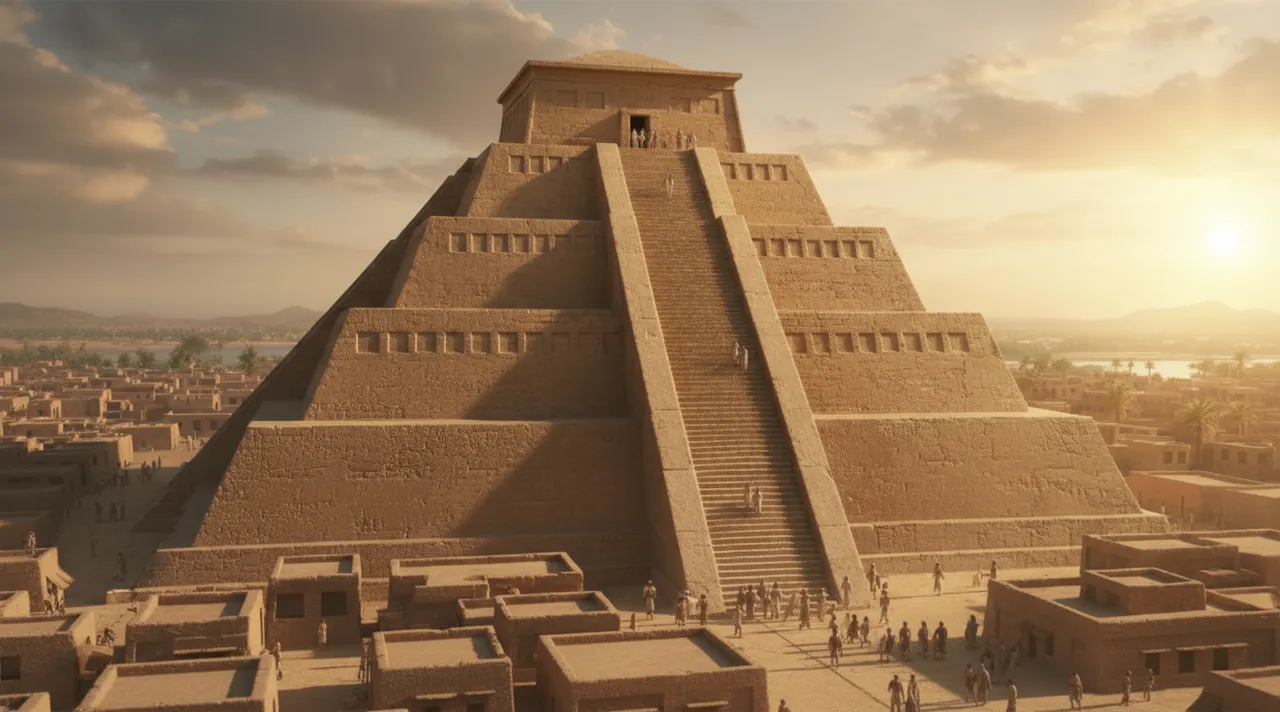
A ziggurat is a massive, terraced, step-pyramid-like structure built in ancient Mesopotamia (modern-day Iraq). Unlike Egyptian pyramids, which were tombs, ziggurats served as temple complexes, with a shrine to a patron deity at the summit, symbolically connecting the heavens and the earth.
Five key facts about the ziggurat definition:
- Temple, Not Tomb: Its primary function was religious, not funerary.
- Mesopotamian Origin: Built by Sumerians, Babylonians, and Assyrians.
- Stepped Design: Characterized by its receding tiers or levels.
- Mud-Brick Construction: Made from sun-dried mud bricks, a common local material.
- “Stairway to Heaven”: Designed as a man-made mountain to bring worshippers closer to the gods.
Have you ever gazed at an image of a majestic, ancient, stepped pyramid rising from a desert landscape and wondered about its story? You were likely looking at a ziggurat. These awe-inspiring structures from ancient Mesopotamia are among the world’s most iconic architectural marvels. But what exactly is a ziggurat, and what fascinating secrets do these man-made mountains hold about the civilizations that built them?
Understanding the ziggurat definition isn’t just for archaeologists or historians. It’s about grasping a foundational concept of early civilization, appreciating one of humanity’s first attempts to build a physical connection to the divine, and clarifying the purpose behind these monumental structures. For us here at oracioncristiana.org, exploring such timeless quests for God strengthens our understanding of the universal human spirit. You are invited to uncover the 5 fascinating facts you need to know about the ziggurat definition.
1. What is a Ziggurat? (A Temple, Not a Tomb)
First and foremost, it’s crucial to understand the primary purpose of a ziggurat, which sets it apart from its more famous Egyptian cousins. A ziggurat is a massive, terraced, step-pyramid-like structure built in ancient Mesopotamia, which served not as a tomb, but as a temple complex, a sacred space designed to connect the heavens and the earth.

This is the most critical distinction:
- Ziggurats (Mesopotamia): Were temples. They were believed to be the earthly dwelling places for the gods. A shrine or temple to a patron deity was placed at the very top.
- Pyramids (Egypt): Were tombs. They were elaborate burial structures for the Pharaohs, designed to protect their bodies and possessions for the afterlife.
Ziggurats were part of a larger temple complex that often served as the administrative and economic heart of the city. It’s like the difference between a grand cathedral at the center of a city and a magnificent royal mausoleum on its outskirts. One is for the living to worship the gods; the other is for honoring the dead. This functional difference is the core of the ziggurat definition.
2. Mesopotamian Origins: Built by Sumerians, Babylonians, and Assyrians
Ziggurats are a unique architectural signature of a specific cradle of civilization. Ziggurats were a distinctive architectural form of ancient Mesopotamia (modern-day Iraq and parts of Iran, Syria, and Turkey), built by successive civilizations including the Sumerians, Akkadians, Babylonians, and Assyrians from roughly 2200 to 500 BCE.
These structures are a testament to the enduring religious traditions of the region.
- Sumerian Innovation: The earliest ziggurats are believed to have been built by the Sumerians in the third millennium BCE. The famous Ziggurat of Ur is a wonderfully preserved example from this period.
- Babylonian Grandeur: The Babylonians also built magnificent ziggurats. The ziggurat in Babylon, named Etemenanki, is often associated with the biblical story of the Tower of Babel.
- An Enduring Form: This architectural form persisted for nearly 2,000 years, showcasing its central importance to Mesopotamian culture.
These towering structures dominated the flat, river-valley landscape of Mesopotamia, a constant, visible reminder of the power of the gods and the kings who served them. It’s like a specific style of skyscraper that defines the skyline of a particular city for centuries, a clear marker of its cultural identity. You can learn more about Mesopotamian history from Encyclopedia Britannica.
3. The Architectural Design: A Man-Made Mountain
The unique design of the ziggurat was not just for aesthetic appeal; it was deeply symbolic. The ziggurat’s architectural design—a terraced, step-pyramid with a flat top—was intended to be a man-made mountain, a symbolic “stairway to heaven” that bridged the gap between the earthly realm of humans and the celestial realm of the gods.
Mesopotamian civilization arose in a flat, alluvial plain between the Tigris and Euphrates rivers. In their religion, mountains were often seen as sacred places, the homes of the gods.
- A Sacred Mountain: Since there were no natural mountains, they built their own. The ziggurat was a cosmic mountain, a sacred axis connecting the three realms: the underworld, the earth, and the heavens.
- Stepped Tiers: The structure was built with a solid core of mud-brick and an outer layer of baked brick. It consisted of several receding rectangular or square tiers, with a grand staircase leading to the top.
- Temple at the Summit: At the very top was a shrine, the holiest part of the temple, believed to be the literal dwelling place of the city’s patron god when they visited earth.
The entire structure was a physical representation of a spiritual journey upward toward the divine. It’s like building a massive, sacred ladder, its base firmly on the ground and its top reaching into the clouds, inviting the gods to descend and humans to ascend. This symbolic ziggurat definition as a “sacred mountain” is key to its purpose.
4. The Tower of Babel: A Ziggurat of Hubris?
One of the most famous stories in the Bible is likely connected to a real ziggurat. The biblical story of the Tower of Babel (Genesis 11:1-9), a massive tower built by a unified humanity to “reach to the heavens,” is widely believed by scholars to have been inspired by the great ziggurat of Babylon, Etemenanki.
The parallels between the biblical account and the historical reality of ziggurats are striking:
- Location: The story is set in “Shinar,” the biblical name for Babylonia.
- Construction: The Bible describes the tower being built with “brick instead of stone, and tar for mortar,” which perfectly matches the mud-brick and bitumen construction of Mesopotamian ziggurats.
- Purpose: The desire to “build ourselves a city, with a tower that reaches to the heavens, so that we may make a name for ourselves” (Genesis 11:4) echoes the prideful ambition often associated with these monumental structures. The name of the Babylonian ziggurat, Etemenanki, even means “Temple of the foundation of heaven and earth.”
The biblical story, however, gives this architectural ambition a theological twist, presenting it as an act of human hubris that God judged by confusing their languages. It’s like a true historical event being retold as a powerful parable, its details used to teach a profound lesson about pride and the limits of human ambition. You can find more on this connection from sources like the World History Encyclopedia.
5. An Enduring Architectural and Cultural Legacy
Though no ziggurats are perfectly preserved, their architectural form and cultural symbolism have had an enduring legacy. The ziggurat’s distinctive stepped-pyramid form has influenced architecture throughout history and continues to be a powerful cultural symbol representing ancient grandeur, monumental ambition, and the human quest for the divine.
The legacy of the ziggurat can be seen in:
- Global Architecture: Stepped pyramids appear in other cultures, most notably in Mesoamerica with the Mayans and Aztecs (like Chichen Itza), though these developed independently and also had different functions. The ziggurat form has also inspired many modern buildings, such as the “Ziggurat” building in West Sacramento, California.
- Popular Culture: Ziggurats frequently appear in films, video games, and literature as settings that evoke a sense of ancient mystery, power, and forgotten gods.
- A Symbol of Aspiration: The very form of the ziggurat—a grand, upward-reaching structure—remains a powerful and universal symbol of human aspiration and the desire to connect with something greater than ourselves.
The ziggurat is not just a pile of ancient bricks; it is a timeless architectural idea. It’s like a powerful musical chord that, once discovered, is used and reinterpreted by musicians in different genres and eras, its emotional resonance never fading. The enduring legacy of this form is a testament to the power of the original ziggurat definition.
What Do These Ancient Mountains Mean for Us Today?
The exploration of the ziggurat definition reveals a profound and majestic structure. It was a temple, not a tomb; a man-made mountain reaching for the heavens; a symbol of divine presence and royal power; and a timeless testament to humanity’s deep-seated desire to connect with God.
May this understanding deepen your appreciation for the ancient world and inspire you to reflect on the “ziggurats” we build in our own lives—the structures and ambitions we create to try and reach for something transcendent. What an incredible window into the dawn of civilization and faith!
Now, your thoughts are welcome. The comments section is open!
→ Which of these 5 fascinating facts about the ziggurat definition resonated most with your understanding or surprised you the most?
→ How does the difference between a ziggurat (a temple for the gods) and a pyramid (a tomb for a king) change how you view these ancient marvels?
→ What’s one modern “tower” or structure in our world that you feel represents a similar kind of human ambition or spiritual longing as the ancient ziggurats?
Sharing insights can encourage one another in our oracioncristiana.org community, as we explore the timeless human quest for God!
