Who created God: The definitive, essential guide in 5 key points
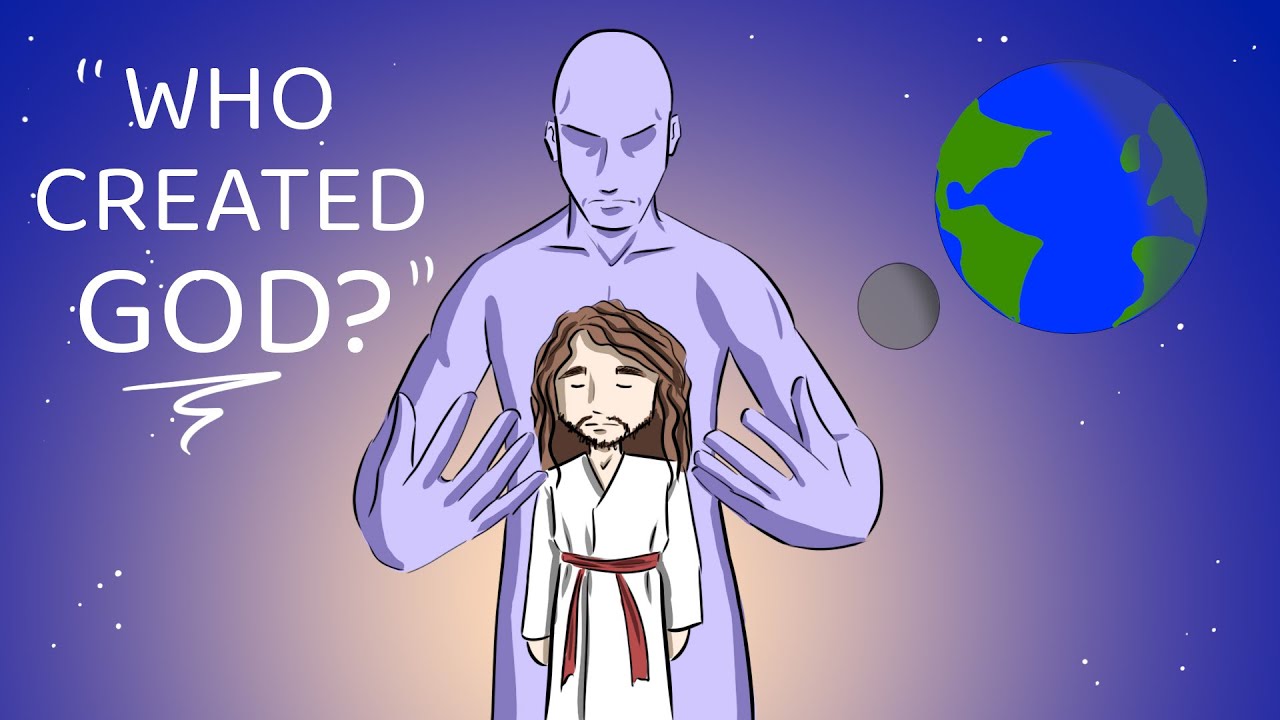
who created god
The question who created god is one of the most enduring puzzles in human thought. It crosses the boundaries of theology, philosophy and science, and when raised carefully it can deepen our understanding of what different traditions mean by “God”. In this article, we explore what the question really asks, why it matters, the classical and modern answers given to it, common misunderstandings, and how you can assess the ideas for yourself without needing specialist training.
Handled well, asking who created god is not an attempt to trap believers or to “win” an argument. Rather, it is a way of probing whether the idea of a creator is coherent, whether an infinite regress of causes makes sense, and what it would mean for anything to exist without a cause. By setting out the major options clearly and fairly, this guide aims to help you think more precisely about a profound topic.
Why the question who created god matters
Behind the directness of “who created god” is a set of deeper concerns: Can the universe explain itself? Must everything that exists have a cause? If not, what would an “uncaused” reality be like? These are not merely abstract ideas; they shape how people picture the world, how they interpret scientific discoveries, and how they approach moral and personal questions.
The question also helps clarify what different people mean by “God”. If someone imagines God as one more powerful being within the universe, then asking who created god is natural. If, however, “God” refers to the ultimate ground of reality—outside or beyond the system of space, time and change—then the question needs reframing. In short, the phrase who created god pushes us to refine definitions and avoid talking at cross purposes.

Defining terms: God, creation, and causation
Three ideas sit at the heart of the debate: what “God” is supposed to be, what “creation” means, and how “causation” works.
- God: In classical theism (the mainstream of historic Judaism, Christianity and Islam), God is not a super-being among other beings, but the necessary, self-existent reality on which everything contingent depends. In other views, “god” may mean a powerful but finite personal being (as in many ancient polytheisms) or even an impersonal ground of being.
- Creation: “Creation” can mean bringing something into existence from nothing (creatio ex nihilo), or organising pre-existing matter (as in some ancient myths). Your answer to who created god will differ depending on which model of creation you assume.
- Causation: Everyday causes involve events within time—one billiard ball striking another. But philosophers also talk about “sustaining” or “explanatory” causes. On this view, a necessary reality could cause the existence of everything else, not by plopping an event into time but by grounding the existence of all contingent things at every moment.
Classical theistic answer to who created god
The traditional answer in classical theism is direct: nobody created God. In this framework, asking who created god is like asking “what colour is the number seven?”—the question misfires because it treats God as if God were a thing inside the system, instead of the reason the system exists at all.
Aquinas, drawing on Aristotle, argued from the existence of change, contingency and cause to a first cause or unmoved mover that is not itself caused. This does not assume that “everything has a cause”; rather, it argues that contingent beings—things that could fail to exist—require an explanation. You can have many links in a chain of explanations, but if each link is contingent, the whole chain still calls for a non-contingent ground. That ground is what classical theists call God: a necessary being whose essence is existence.
Philosophers describe this as the cosmological family of arguments. A careful, scholarly overview is available in the Stanford Encyclopedia of Philosophy overview of the cosmological argument, which traces the reasoning from ancient to modern forms. In a similar vein, you can find neutral background on divine attributes in the Encyclopaedia Britannica entry on God.
Necessary versus contingent existence
To understand why classical theists reject the premise of who created god, it helps to distinguish necessary from contingent existence. A contingent entity depends on something else—its parents, the laws of nature, initial conditions, or a creator. A necessary reality, if possible at all, would exist in all circumstances and not rely on anything outside itself. When someone asks who created god, the classical answer is that “God” names a necessary being. By definition, this kind of reality is not created.
Timelessness and the question of “before”
Another reason the classical answer says “no one created God” concerns time. Creation is a temporal concept—we imagine a “before” and an “after”. But if God is timeless or outside time as its cause, then asking who created god smuggles in a time-bound assumption. In this view, God is the cause of time and space; there is no meaningful “earlier than” with respect to God’s existence.
Alternative perspectives on who created god
Not everyone accepts the classical picture. Different traditions and philosophies answer who created god in various ways that reveal their broader worldview.
- Deism: God is a creator who set the universe in motion and then does not intervene. Most deists would still reject who created god because their creator is uncaused, but they may place less emphasis on God’s ongoing activity in the world.
- Process theology: Influenced by Alfred North Whitehead, process thought portrays God and the world in a dynamic relationship. Here debates about who created god may shift toward whether God and the world co-exist eternally in some evolving process.
- Pantheism and panentheism: In pantheism, God and the universe are identical; in panentheism, the universe exists within God. The who created god question becomes “what explains the whole?” Advocates often resist treating God as a discrete entity that could be made by something else.
- Polytheism: In some ancient religions, gods are powerful but finite beings with origins and family trees. In that framework, the question who created god may have an internal mythic answer (e.g., “the elder gods”); however, these systems usually stop short of a single ultimate ground of being.
- Atheism and non-theism: Atheists typically see no need for a creator; they may argue that the universe (or multiverse) is just a brute fact or that the very concept of a necessary being is incoherent. In this case, asking who created god is a rhetorical way to press theists on special pleading.
Atheist and sceptical critiques
Critics sometimes say that if everything needs a cause, then so must God. Classical theists reply that the argument never claimed “everything has a cause”; rather, it claimed that contingent things have causes or explanations. Another critique is that positing a necessary being is simply stopping the explanatory chain arbitrarily. Defenders counter that any explanation must eventually bottom out in something that exists by necessity—otherwise explanation never gets started. The debate here often centres on the idea of infinite regress. See an accessible overview of the concept in this explanation of infinite regress.
Scientific angles and their limits
Cosmology explores the origins and development of the universe, including the Big Bang model. Some people think that if science explains the early universe, it displaces the need for God. Others argue that scientific explanations tell us how the universe unfolds within physical laws, not why there is a universe at all or why there are laws rather than nothing. The question who created god, framed as a scientific problem, risks confusion because science typically studies causes within spacetime. Whether there is an ultimate cause of spacetime itself is a philosophical question, even when it draws on scientific findings.
Common misunderstandings about who created god
- Thinking “God” means a very powerful object in the universe. In classical theism, God is not a thing among things, so who created god treats God as smaller than the concept intends.
- Assuming “everything has a cause”. Theists usually claim that contingent things require causes or explanations, not that literally everything does.
- Equating “uncaused” with “random”. An uncaused being is not arbitrary; it is proposed as necessary—existing by its very nature.
- Confusing scientific and metaphysical questions. Science can trace physical processes; who created god asks about the ultimate ground of those processes.
- Overlooking definitions. If “god” means a finite deity within time, then asking who created god may have a mythic or historical answer. If “God” means a necessary, timeless reality, the question misapplies a temporal framework.
How different religions approach who created god
Judaism, Christianity and Islam generally agree that nobody created God. God is the uncreated creator, the necessary being who sustains all that exists. There are nuances—about divine simplicity, how God relates to time, and the nature of divine action—but the core claim stands: who created god is based on a category mistake in these traditions.
Within Christianity, you will find notable differences in emphasis between traditions about how God’s action is understood, even though the uncreated nature of God is shared. For a helpful overview of how two major branches describe and practise their faith, see this comparison of differences between Orthodox and Catholic beliefs. While it does not focus specifically on who created god, it situates the question within wider Christian thought.
Hindu philosophies contain a spectrum of positions: some schools contemplate a personal creator (Ishvara), others point to Brahman as the ultimate reality, and still others are non-theistic. In these systems, asking who created god may be reframed as “What is the ultimate reality?” or “How do the many relate to the One?” Buddhism, often non-theistic, typically redirects the discussion to suffering, impermanence and liberation, suggesting that speculation about ultimate origins can distract from practical wisdom.
Ancient Near Eastern mythologies, by contrast, often present gods emerging from primordial chaos or from other gods. In those stories, the who created god question is part of a storyline rather than a metaphysical puzzle, and the myths do not usually aim to provide a single, ultimate explanation of existence.
How to think clearly about who created god: practical pointers
Because who created god sits at the crossroads of different disciplines, it helps to approach it methodically. The following suggestions keep discussion grounded and constructive.
- Clarify definitions. Ask your conversation partner what they mean by “God”. If they mean a necessary, timeless being, simply applying the language of temporal causes may not fit.
- Separate scientific and philosophical claims. Science informs the debate, but it does not settle whether a necessary being exists. Keep track of which questions are empirical and which are conceptual.
- Watch for hidden assumptions. “Everything has a cause” is a stronger claim than many arguments actually make. Similarly, resist assuming that “uncaused” equals “unexplained” or “mysterious”.
- Consider alternatives fairly. You might find the classical theistic answer persuasive, prefer an atheistic view of a brute fact universe, or explore non-Western frameworks. Understanding the best arguments on all sides will strengthen your own position.
- Read primary sources alongside summaries. Brief articles can oversimplify. Reading more detailed resources alongside accessible summaries helps prevent strawman arguments.
If you are curious how different texts beyond the biblical canon influenced beliefs about divine action and origins, you may find this summary of the Book of Enoch useful as historical background. It does not answer who created god directly, but it shows how ideas about heavenly beings and creation developed in certain Jewish and early Christian circles.
Case study: Infinite regress and stopping points
A common pushback to the classical view is: “If everything needs an explanation, why stop at God? Why not ask who created god and keep going?” The classical reply is that if you only appeal to contingent things, you never reach a complete explanation. An infinite chain of contingent causes might explain how one event follows another, but it fails to explain why there is a chain at all. To end the regress in a principled way, you posit a necessary being whose existence is not contingent on anything else.
Critics respond that necessity is a label, not an explanation; perhaps the universe itself is necessary, or perhaps explanation simply stops somewhere without invoking God. This is where judgement calls about simplicity, explanatory power and coherence enter. Many philosophers weigh whether a necessary mind or a necessary set of laws offers a deeper explanation. You can explore competing evaluations in the Stanford Encyclopedia article on the cosmological argument.
Language, logic and the limits of analogies
Everyday analogies—like a watch and a watchmaker—can help but also mislead. They frame God as a tinkerer within the system, which invites who created god. Classical theists insist that such analogies must be handled carefully; their claim is not that God is an object that starts other objects, but that God is the reason anything exists or continues to exist at all.
Similarly, some modern arguments (such as the “kalam cosmological argument”) begin from the impossibility of an actual infinite past and the beginning of the universe, concluding that a timeless personal cause best explains its coming to be. Others prefer arguments from contingency or from the very possibility of necessary truths. Each approach handles who created god differently, but all converge on the idea that the ultimate explanation cannot itself be contingent or caused.
Recommended external resources
- Stanford Encyclopedia of Philosophy: Cosmological Argument – serious, up-to-date coverage of arguments about a first cause or necessary being.
- Encyclopaedia Britannica: God – concise background on what major traditions mean by “God”.
- Wikipedia: Problem of infinite regress – a straightforward overview of regress problems and proposed solutions.
Frequently asked questions about who created god
Does the question “who created god” assume that God is within time?
Often, yes. Many people imagine causes as temporal sequences—one thing happens and then another. Classical theism claims God is the cause of time and space, so applying a “before and after” framework to God is a category mistake. That does not prove God exists, but it shows the standard who created god question may not land where it intends.
If God doesn’t need a cause, why does the universe need one?
The usual argument is that the universe appears contingent: it could have been different or not existed at
