When Was Hinduism Founded? 7 Key Insights You Should Know
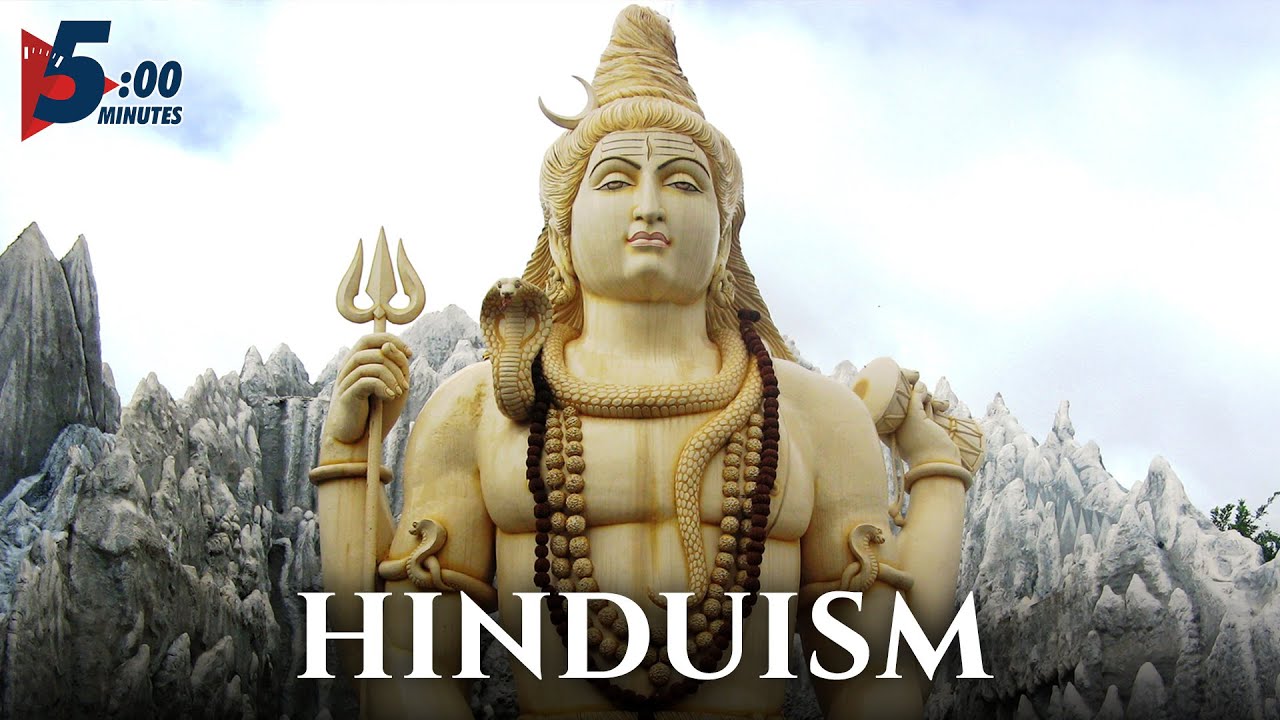
Respuesta Rápida
Unlike many other major religions, Hinduism has no single founder or specific founding date. It is considered the world’s oldest living religion, an evolving tapestry of beliefs and practices that developed over thousands of years, with its earliest roots tracing back to the Indus Valley Civilization (c. 3300–1300 BCE).
Seven key insights into its origins:
- No Single Founder: Evolved organically over millennia.
- Indus Valley Roots: Earliest origins are prehistoric.
- Vedic Period (c. 1500 BCE): The era of its foundational sacred texts, the Vedas.
- Upanishadic Period (c. 800 BCE): A shift towards deep philosophical concepts.
- Epic & Puranic Ages: Development of the great epics and major deities.
- Bhakti Movement: Emphasis on personal devotion.
- Sanatana Dharma: Known to its followers as “the eternal way.”
Have you ever found yourself exploring the world’s great faiths and wondered about the origins of one of its most ancient and complex traditions? The question, “When was Hinduism founded?”, seems simple enough. Yet, it leads us down a fascinating path that defies easy answers. Unlike religions with a clear founder and a specific starting point, Hinduism is a vibrant, evolving tapestry of cultural traditions, profound philosophies, and diverse practices that have developed over thousands of years.


Understanding this unique origin story isn’t just for scholars. It empowers a deeper appreciation for Hinduism’s resilience, its diversity, and its profound spiritual insights that continue to inspire millions. For us here at oracioncristiana.org, exploring such timeless truths strengthens our understanding of the diverse ways humanity seeks the divine. You are invited to uncover the 7 key insights that reveal the rich history of Hinduism’s origins.
1. No Single Founder or Founding Date: The “Eternal Way”
This is the most crucial and surprising insight right from the start. Unlike religions such as Christianity (founded by Jesus Christ) or Islam (founded by Prophet Muhammad), Hinduism has no single human founder, no specific founding date, and no single sacred text that holds exclusive authority.
Hinduism is better understood as an amalgamation of diverse spiritual and philosophical traditions that have evolved over at least 4,000 years on the Indian subcontinent.
- Sanatana Dharma: Many adherents refer to their faith as Sanatana Dharma (सनातन धर्म), a Sanskrit phrase meaning “the eternal way,” “the eternal law,” or “the eternal order.” This name reflects the belief that its principles are timeless and have always existed.
- Organic Growth: It grew organically, absorbing and integrating countless regional beliefs, philosophies, and practices over millennia.
This lack of a singular starting point makes Hinduism unique among major world religions. It’s like a great, ancient river, fed by countless streams and tributaries over thousands of years, its origins lost in the mists of prehistoric times. This foundational understanding is key to appreciating its incredible diversity and resilience. You can learn more about this concept from the Encyclopedia Britannica.
2. Prehistoric Roots: The Indus Valley Civilization (c. 3300–1300 BCE)
The earliest roots of what would become Hinduism stretch back into deep antiquity, long before any written texts we have today. Many scholars trace the earliest origins of Hindu-like beliefs and practices to the ancient Indus Valley Civilization, a sophisticated Bronze Age culture that flourished over 4,000 years ago.
While we cannot decipher their script, archaeological evidence from sites like Mohenjo-daro and Harappa reveals tantalizing clues:
- Ritual Bathing: The presence of large, public water tanks (like the “Great Bath” at Mohenjo-daro) suggests that ritual purification with water, a central practice in modern Hinduism, was already important.
- Proto-Shiva Seals: Certain soapstone seals depict a horned, seated figure in a meditative posture, surrounded by animals. Some scholars identify this as a “proto-Shiva,” an early form of the great Hindu deity.
- Goddess Figurines: Numerous terracotta figurines of female deities have been found, suggesting the worship of mother goddesses, a practice that resonates with the later worship of powerful Hindu goddesses (Devi).
- Sacred Animals and Trees: The reverence for certain animals (like the bull) and trees (like the pipal tree), evident in their art, are also enduring elements in Hindu tradition.
These prehistoric roots highlight the immense antiquity of Hindu traditions. It’s like discovering the ancient, fossilized imprints of a mighty river’s earliest course, revealing its path long before it was ever mapped. You can explore more about this ancient civilization from the World History Encyclopedia.
3. The Vedic Period (c. 1500–500 BCE): The Dawn of Sacred Texts
A pivotal era in the formation of Hinduism began with the composition of its most ancient and sacred texts. The Vedic Period, beginning around 1500 BCE, marked the dawn of Hinduism’s foundational sacred texts, the Vedas, which introduced key deities, complex rituals, and philosophical concepts that would shape the faith for millennia.
This period is named after the Vedas, which are a collection of hymns, prayers, and liturgical texts composed in Vedic Sanskrit.
- The Rigveda: The oldest and most important of the Vedas, containing over a thousand hymns addressed to various deities (devas) who often personified natural forces.
- Key Deities: The Vedic pantheon included gods like Indra (king of the gods, god of thunder), Agni (god of fire, the divine messenger), and Soma (a deified plant and drink).
- Ritual Sacrifice (Yajna): The central religious practice of the Vedic period was the yajna, an elaborate fire sacrifice performed by Brahmin priests to honor the gods and maintain cosmic order (rita).
The Vedas provided not only religious guidelines but also moral and philosophical teachings that laid the groundwork for later Hindu beliefs. It’s like the first light of dawn, its brilliant rays illuminating a spiritual landscape and setting the course for the day to come. The Vedic texts remain the ultimate scriptural authority in Hinduism, even as the religion has evolved dramatically since that time.
4. The Upanishadic Period (c. 800–200 BCE): A Shift to Philosophy
As the Vedic period waned, a profound philosophical shift occurred, moving from external ritual to deep internal contemplation. The Upanishadic Period, named after the Upanishads, marked a significant turn towards mystical and philosophical inquiry, introducing foundational concepts like Brahman, Atman, karma, and reincarnation.
The Upanishads are philosophical texts, often in the form of dialogues between a teacher and a student, that explore the deeper, mystical meaning of the Vedas.
- Brahman and Atman: They introduced the concept of Brahman (the ultimate, impersonal reality of the universe) and Atman (the individual soul or self), and the profound idea that Atman is ultimately identical to Brahman (“Tat tvam asi” – “You are that”).
- Karma and Reincarnation (Samsara): They articulated the doctrines of karma (the law of cause and effect, where actions determine one’s future) and samsara (the cycle of death and rebirth), from which one seeks liberation (moksha).
- Focus on Inner Knowledge: The emphasis shifted from external sacrifices to achieving liberation through inner knowledge (jnana) and meditation.
This philosophical turn laid the groundwork for much of later Indian religious and philosophical thought, including Buddhism and Jainism. It’s like moving from the grand, public ceremonies of a cathedral to the quiet, introspective solitude of a monastery, seeking truth not in external rites but in the depths of one’s own soul. The Upanishads remain a vital source of spiritual wisdom in Hinduism.
5. The Epic, Puranic, and Classical Ages (c. 200 BCE – 500 AD): The Rise of Major Deities
This era saw the composition of some of Hinduism’s most beloved stories and the rise of the major deities who dominate modern Hindu worship. This period saw the creation of the great Hindu epics (the Ramayana and Mahabharata) and the Puranas, which popularized the worship of major deities like Vishnu, Shiva, and Devi (the Goddess).
This was a time when complex philosophical ideas were woven into engaging narratives, making them accessible to all.
- The Epics:
- The Ramayana: The story of Rama (an avatar of Vishnu) and his wife Sita, embodying the ideals of dharma (righteous duty) and devotion.
- The Mahabharata: An epic tale of a dynastic struggle, containing the Bhagavad Gita, a profound philosophical dialogue between Krishna (an avatar of Vishnu) and the warrior Arjuna.
- The Puranas: A collection of texts containing myths, legends, and genealogies of the gods, which were instrumental in developing the worship of the Trimurti (the Hindu trinity of Brahma the creator, Vishnu the preserver, and Shiva the destroyer) and the great Goddess, Devi.
This period made Hinduism a more personal and devotional religion, with gods who actively intervened in the world and could be approached with love and devotion. It’s like taking complex scientific principles and turning them into captivating stories and movies, making them accessible and emotionally resonant for everyone.
6. The Bhakti Movement (c. 7th Century AD onwards): A Personal Path to God
During the medieval period, a powerful new wave of religious expression swept across India, further personalizing the faith. The Bhakti movement was a major devotional movement that emphasized a personal, loving, and emotional relationship with a chosen deity, making salvation accessible to all, regardless of caste or gender.
This movement was revolutionary, often challenging the rigid structures of the Brahmin-led ritual system.
- Emphasis on Love (Bhakti): The central focus was bhakti, an intense, personal love and devotion to a deity, often expressed through poetry, song, and dance.
- Poet-Saints: It was led by charismatic poet-saints who composed devotional hymns in vernacular languages, making them accessible to the common people.
- Inclusivity: The Bhakti movement was highly inclusive, often rejecting caste distinctions and welcoming women and lower-caste individuals into its fold.
The Bhakti movement profoundly shaped modern Hinduism, fostering the deeply personal and devotional practices that are common today. It’s like a spiritual revolution, declaring that the path to God is not through complex rituals or esoteric knowledge, but through the simple, powerful act of a loving heart.
7. Modern Hinduism (19th Century – Present): Reform and Global Spread
The last few centuries have seen Hinduism undergo significant reforms and expand its influence globally. Modern Hinduism has been shaped by reform movements in the 19th century and has spread globally, with philosophies like yoga and meditation becoming widely practiced and appreciated worldwide.
Key developments include:
- Hindu Reform Movements: In the 19th century, figures like Swami Vivekananda and movements like the Brahmo Samaj sought to reform Hinduism, re-emphasizing its philosophical depth (Vedanta) and presenting it to the Western world as a rational and universal religion.
- Global Spread: Through migration and the work of modern gurus and teachers, Hindu philosophies have spread across the globe.
- Yoga and Meditation: Practices rooted in Hindu philosophy, such as yoga and meditation, have become incredibly popular in the West as tools for physical health, mental well-being, and spiritual growth.
This modern era has seen Hinduism adapt to new cultural contexts, engage in interfaith dialogue, and offer its ancient wisdom to a global audience. It’s like an ancient river finally reaching the vast ocean, its waters mingling with and enriching the entire world. This global influence ensures that the “eternal way” continues to be a vibrant and relevant spiritual path for the 21st century.
What Does Hinduism’s Ancient Journey Mean for You Today?
The question of when was Hinduism founded reveals a profound and captivating journey. It’s a story not of a single moment, but of a continuous, organic evolution over thousands of years—from the prehistoric rituals of the Indus Valley to the sacred hymns of the Vedas, the deep philosophy of the Upanishads, the epic stories of gods and heroes, the devotional love of the Bhakti saints, and its modern global spread.
May this exploration deepen your appreciation for the world’s oldest living religion and inspire you to reflect on the enduring power of a faith that is constantly renewing itself while staying true to its ancient roots. What an incredible testament to the resilience and diversity of human spirituality!
Now, your thoughts are welcome. The comments section is open!
→ Which of these 7 key insights into Hinduism’s origins resonated most deeply with your understanding or surprised you the most?
→ How does understanding Hinduism as an evolving tradition (Sanatana Dharma) rather than a religion with a single founder change your perspective on faith?
→ What’s one aspect of Hindu philosophy (e.g., karma, bhakti, yoga) that you feel is most relevant or inspiring for navigating life in 2025 and beyond?
Sharing insights can encourage one another in our oracioncristiana.org community, as we explore the world’s diverse spiritual paths!
