When Did Moses Live? 7 Fascinating Facts You Didn’t Know
Respuesta Rápida
While the Bible doesn’t specify an exact date, most scholars place Moses’s life during Egypt’s New Kingdom, likely in the 13th century BCE (around 1200s BCE). He is revered as the prophet chosen by God to lead the Israelites out of slavery in Egypt and deliver the Ten Commandments.
Seven fascinating facts about Moses’s timeline and life:
- 13th Century BCE: The most widely accepted historical period for his life.
- Pharaoh’s Court: Rescued from the Nile and raised in Egyptian royalty.
- Burning Bush: Called by God to lead the Exodus.
- The Exodus: Led the Israelites from Egyptian slavery to freedom.
- Mount Sinai: Received the Ten Commandments from God.
- Wilderness Journey: Guided Israel for 40 years.
- Before Promised Land: Died before entering Canaan, fulfilling prophecy.
The truth is, determining when Moses lived isn’t a simple task, as direct historical evidence from that distant era is scarce. Yet, by meticulously examining biblical narratives, archaeological findings, and the records of ancient Egypt, scholars have pieced together compelling theories that shed light on his timeline and the pivotal events he led. It’s like gathering fragmented pieces of a grand, ancient mosaic, and carefully assembling them to reveal a clearer picture of a pivotal era.
Understanding when Moses lived isn’t just about historical dates. It’s about grasping the profound context of the Exodus, appreciating the immense challenges he faced, and recognizing how his life and leadership laid the very groundwork for three major world religions. It empowers us to connect more deeply with this foundational story and draw timeless lessons for our own journeys of faith and freedom. For us here at oracioncristiana.org, exploring such enduring truths strengthens our understanding of God’s intricate plan. So, let’s embark on this enlightening journey and uncover the 7 fascinating facts that reveal when Moses lived and why his legacy remains so powerful today!
1. What Was Moses’s Era? (The Thirteenth Century BCE)
Let’s begin with the most widely accepted historical timeframe for Moses’s life and the Exodus. Most biblical scholars and historians estimate that Moses lived approximately in the 13th century BCE (around 1200s BCE), during the Late Bronze Age in ancient Egypt, a period coinciding with the reigns of powerful Pharaohs like Ramses II.


While direct archaeological proof definitively naming Moses remains elusive, two main chronological theories for the Exodus exist:
- The Early Date (c. 1446 BCE): This theory aligns with a literal reading of 1 Kings 6:1 (which states 480 years from the Exodus to Solomon’s 4th year). This would place Moses during Egypt’s 18th Dynasty, possibly under Thutmose III or Amenhotep II.
- The Late Date (c. 1250 BCE): This is the more widely accepted historical-archaeological consensus. It places Moses during Egypt’s 19th Dynasty, particularly under Ramses II (reigned 1279–1213 BCE), whose monumental building projects (like the cities of Pithom and Pi-Ramesse, mentioned in Exodus 1:11) are consistent with the biblical account of Israelite forced labor.
This historical context is crucial for understanding the backdrop of Moses’s story—a time of immense Egyptian power and the brutal enslavement of the Israelites. It’s like finding a broad historical highway where Moses’s footsteps leave their indelible marks, even if the exact mile markers are debated. The 13th century BCE provides a robust framework for understanding the era of the Exodus. You can delve into scholarly discussions on the Exodus chronology from sources like the Biblical Archaeology Society.
2. Pharaoh’s Court: An Unlikely Upbringing
Moses’s journey began in the very heart of the empire that oppressed his people, a truly astonishing twist of fate. Moses was miraculously rescued from the Nile River and raised in the Pharaoh’s court, receiving a sophisticated Egyptian education, an unlikely upbringing that uniquely prepared him for his future role as a leader.
His early life is recounted in Exodus 2:
“When she [his mother] could hide him no longer, she got a papyrus basket for him… and put the baby in it… Pharaoh’s daughter went down to the Nile to bathe… She saw the basket among the reeds and sent her female slave to get it. She opened it and saw the baby… So she had compassion on him and took him as her own son.” (Exodus 2:3-6, 10)
This dramatic rescue and upbringing highlights:
- Divine Providence: God’s hand was clearly at work, preserving him from infanticide (Exodus 1:22).
- Egyptian Education: Acts 7:22 states Moses was “educated in all the wisdom of the Egyptians and was powerful in speech and action.” This equipped him with knowledge of Egyptian culture, law, and administration—all vital for confronting Pharaoh.
- Identity Conflict: Moses later chose to identify with his Hebrew people rather than remain in royal comfort (Hebrews 11:24-27).
Moses’s time in Pharaoh’s court provided him with a unique blend of Egyptian education and Hebrew heritage, making him the perfect bridge between the two worlds. It’s like a secret weapon, being trained by the very empire he would one day confront, all part of God’s intricate plan. This privileged yet conflicted upbringing profoundly shaped when Moses lived and his ultimate destiny.
3. The Burning Bush: God’s Call to Liberation
After decades as a shepherd in Midian, Moses experienced a profound, life-altering encounter that forever changed his path. Moses encountered God in the miraculous form of a burning bush that was not consumed, receiving his divine call to return to Egypt and lead the Israelites out of slavery.
This pivotal moment is recounted in Exodus 3:
“There the angel of the LORD appeared to him in flames of fire from within a bush. Moses saw that though the bush was on fire it did not burn up… God called to him from within the bush, ‘Moses! Moses!’ … ‘I am the God of your father, the God of Abraham, the God of Isaac and the God of Jacob.’ … ‘I have indeed seen the misery of my people in Egypt. I have heard them crying out because of their slave drivers, and I am concerned about their suffering. So I have come down to rescue them from the hand of the Egyptians and to bring them up out of that land into a good and spacious land, a land flowing with milk and honey… So now go; I am sending you to Pharaoh to bring my people the Israelites out of Egypt.'” (Exodus 3:2-10)
This encounter powerfully highlights:
- Divine Revelation: God reveals Himself as the covenant God of Israel’s ancestors.
- God’s Compassion: He hears and cares deeply about His people’s suffering.
- Moses’s Reluctance: Moses initially resisted, feeling inadequate, but God assured him of His presence and power.
This call from the burning bush not only defined Moses’s role as a liberator but also set in motion the epic events of the Exodus, directly impacting when Moses lived and marking him as one of history’s most significant prophets. It’s like a quiet, unassuming place suddenly becoming a holy ground, where a profound divine conversation forever altered the course of human history.
4. The Exodus: The Defining Event of His Life and Legacy
The central event of Moses’s life, and arguably one of the most foundational narratives in the Bible, is the Exodus. The Exodus, Moses’s miraculous leadership in freeing the Israelites from Egyptian slavery, is the defining event of his life and legacy, marking the birth of Israel as a nation and symbolizing divine deliverance.
This monumental escape, filled with astonishing miracles, is detailed in Exodus 7-14:
- Confrontation with Pharaoh: Moses, empowered by God, confronted the mighty Pharaoh, demanding, “Let my people go!”
- The Ten Plagues: God unleashed ten devastating plagues upon Egypt, progressively breaking Pharaoh’s stubborn resistance and demonstrating His sovereignty over Egyptian gods.
- The Passover: The final plague (death of the firstborn) led to the institution of Passover, saving Israel through the blood of a lamb.
- Parting of the Red Sea: The miraculous parting of the Red Sea allowed the Israelites to escape Pharaoh’s pursuing army, cementing their freedom.
This epic journey from bondage to freedom is central to the identity of the Israelite people. It’s a foundational story of faith, resilience, and divine intervention, profoundly shaping Judaism, Christianity, and Islam. It’s like a historical earthquake that fundamentally reshaped the landscape of an entire civilization, forever altering its course. The Exodus is the key event that encapsulates when Moses lived and his enduring impact.
5. Mount Sinai: Receiving the Ten Commandments
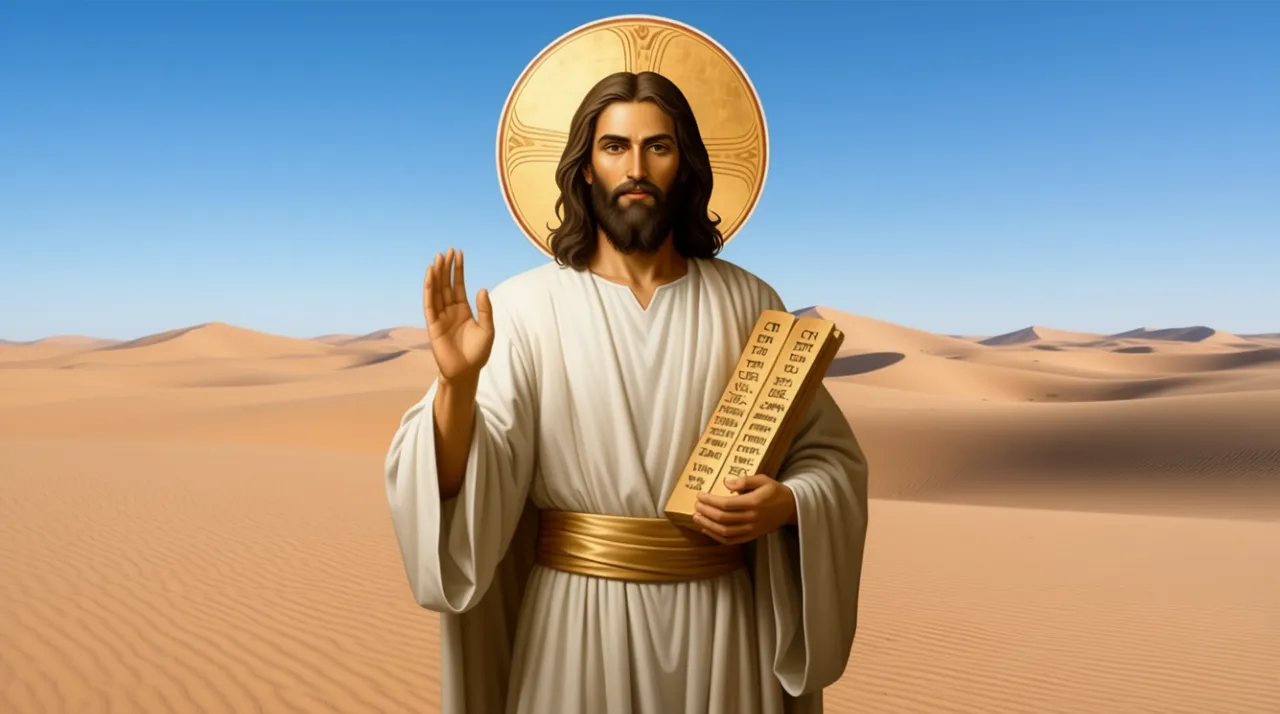
Immediately following the Exodus, Moses played an unparalleled role in receiving God’s moral law. After leading the Israelites from Egypt, Moses ascended Mount Sinai, where he received the Ten Commandments and the Law from God, establishing the covenant that would govern the newly liberated nation.
This profound encounter is detailed in Exodus 19-20:
“When the people saw the thunder and lightning and heard the trumpet and saw the mountain in smoke, they trembled with fear… The LORD said to Moses, ‘Tell the Israelites this: “You yourselves have seen that I have spoken to you from heaven.”‘” (Exodus 20:18, 22)
The giving of the Law at Sinai highlights:
- Divine Covenant: God established a special covenant relationship with Israel, making them His chosen people.
- Moral Foundation: The Ten Commandments and the extensive Mosaic Law provided a comprehensive moral, ethical, and ceremonial framework for the nation.
- Moses as Mediator: Moses served as the mediator between God and the people, receiving and conveying God’s divine will.
- Theological Identity: This event solidified Israel’s theological identity as a people living under God’s law.
6. The Wilderness Journey: 40 Years of Guidance and Testing
After receiving the Law, Moses continued his leadership for decades, guiding the Israelites through a prolonged period of challenge and formation. Moses led the Israelites through the wilderness for 40 years, a period of divine guidance, testing, and spiritual formation that prepared them to enter the Promised Land.
This long journey, detailed in the Books of Numbers and Deuteronomy, saw:
- Divine Provision: God miraculously provided manna (Exodus 16) and water, sustaining them in the barren desert.
- Testing and Rebellion: The Israelites repeatedly rebelled and complained, leading to divine judgment and further testing of their faith.
- Spiritual Formation: This period was essential for stripping away their Egyptian slave mentality and forming them into a nation dependent on God.
- Moses’s Intercession: Moses constantly interceded for the people, demonstrating immense patience and leadership.
The 40 years in the wilderness were a crucial time of spiritual maturation, shaping the identity and faith of the Israelite nation. It’s like a long, arduous trek through a challenging landscape, where every step teaches valuable lessons of endurance and faith, preparing them for the ultimate destination. This extended period of leadership underscores the profound impact of when Moses lived and his unwavering commitment to his divine calling.
7. Died Before the Promised Land: A Prophetic Fulfillment
Finally, Moses’s life concluded with a poignant, bittersweet ending, a testament to God’s justice and faithfulness. Moses, despite leading the Israelites to the very border of the Promised Land, died before entering it himself, a consequence of his own disobedience, yet fulfilling God’s prophetic word and establishing Joshua as his successor.
This concluding chapter of his life is recounted in Deuteronomy 34:
“Then Moses went up from the plains of Moab to Mount Nebo… There the LORD showed him the whole land… ‘I have let you see it with your eyes, but you will not cross over into it.’ And Moses the servant of the LORD died there in Moab, as the LORD had said.” (Deuteronomy 34:1, 4-5)
This ending is significant:
- Consequence of Disobedience: Moses struck the rock twice out of anger (Numbers 20:10-12), rather than speaking to it as God commanded, for which he was forbidden from entering Canaan.
- God’s Faithfulness: Even in judgment, God was faithful to His word and showed Moses the land He promised.
- Leadership Transition: Joshua, Moses’s faithful assistant, was appointed as his successor (Deuteronomy 31:7-8), ensuring continuity of leadership.
- Humanity of Leaders: It reminds us that even the greatest leaders are human and fallible, and God’s plan transcends any individual.
What Lessons from Moses’s Life Inspire Your Journey Today?
The exploration of when did Moses live unveils a remarkable journey through ancient Egypt and the wilderness, a life profoundly shaped by divine encounters, monumental challenges, and unparalleled leadership. From his miraculous rescue and royal upbringing to his call from the burning bush, the epic Exodus, the giving of the Law, the wilderness trek, and his poignant death before the Promised Land, Moses’s story is a testament to faith, obedience, and God’s sovereign plan.
May this understanding deepen your appreciation for this foundational figure and inspire you to pursue your own journey of faith with courage, perseverance, and unwavering trust in God’s divine guidance. What an incredible legacy to embrace and learn from!
Now, I’d love to hear from you. The comments section is open!
→ Which of these 7 fascinating facts about when Moses lived or his life journey resonated most deeply with your understanding or surprised you the most?
→ How does Moses’s transition from an Egyptian prince to a humble shepherd (and then a mighty liberator) inspire your own view of leadership or personal transformation?
→ What’s one practical lesson from Moses’s life (e.g., obedience, perseverance, intercession) that you feel is most relevant for your spiritual journey or for leaders in our world today?
Let’s share our insights and encourage one another in our oracioncristiana.org community!
