The Virgin at Prayer: Essential, Complete Guide – 5 Key Insights
the virgin at prayer: meaning, history, and how to appreciate this beloved image
Few devotional images are as instantly recognisable as the virgin at prayer. Whether you encounter it in a museum, a parish corridor, or a family sitting room, this serene portrayal of Mary with downcast eyes and joined hands invites quiet contemplation. In this guide, we explore what the image represents, where it comes from, what to look for when viewing it, and how it has shaped Christian devotion across centuries. We will also share practical tips to help you appreciate the work more fully, and point you towards reliable resources for deeper study.
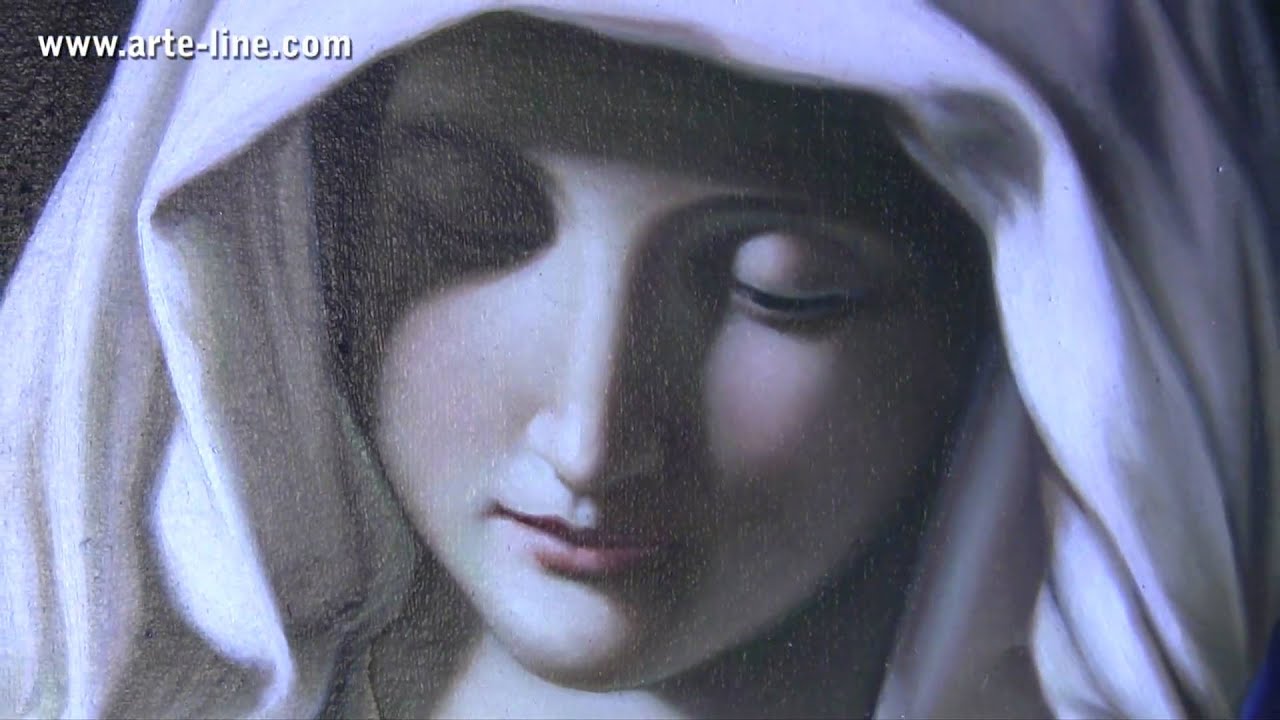
Although often used to refer to a specific Baroque painting by the Italian master Sassoferrato, the phrase the virgin at prayer can describe a wider type of Marian image: the Madonna shown alone, absorbed in prayer, draped in her characteristic blue mantle and white veil. This visual formula has become a cornerstone of Western Christian art, communicating humility, purity, and obedient faith.
What is the virgin at prayer?
At its simplest, the virgin at prayer is a devotional image of Mary, Mother of Jesus, depicted head-and-shoulders or half-length, hands joined, eyes lowered, and lips slightly parted in silent prayer. The effect is intimate and interior: Mary is not engaging with the viewer directly, but inviting the viewer to join her in contemplation.
Art historians often associate the type with the Baroque era and with Sassoferrato (Giovanni Battista Salvi, 1609–1685), whose quietly luminous paintings distilled earlier models into a refined and reproducible prototype. However, similar motifs appear in earlier Renaissance works and later nineteenth-century devotional prints. Over time, the virgin at prayer became a visual shorthand for Marian virtues—humility, purity, obedience, and steadfastness—without the narrative context of the Annunciation, Nativity, or Pietà.

Historical background and artists behind the virgin at prayer
The seventeenth century witnessed a renewed emphasis on affective, personal devotion in Catholic Europe. In that setting, artists crafted images that could be used in churches and homes to support contemplation and catechesis. Among the finest exponents was Sassoferrato, whose calm, idealised manner drew on Raphael and the Carracci while favouring a polished surface and restrained emotion. For a concise introduction to his style and a definitive example, see the National Gallery’s entry on Sassoferrato’s The Virgin in Prayer.
Sassoferrato painted several variants of the composition, making the image widely available. Today, you will find versions in major collections, including The Metropolitan Museum of Art, which offers detailed curatorial notes for its own painting of The Virgin in Prayer (c. 1640–50) at The Met. For biographical context and further works, a concise overview is available on Wikipedia’s page on Giovanni Battista Salvi da Sassoferrato.
While the virgin at prayer is especially associated with Sassoferrato, it echoes earlier Marian types from the Renaissance and shares spiritual kinship with tender icons from the Byzantine and Orthodox traditions. Across centuries, artists returned to the subject precisely because it requires so little story: Mary simply prays, and that is enough.
Visual features and symbolism in the virgin at prayer
Understanding the symbolic language woven into the virgin at prayer can enrich even a short encounter with the image. Here are key elements to look for.
Composition, colour, and light
The composition tends to be tight and uncluttered, often a half-length figure against a plain, dark ground. This simplification directs the eye to Mary’s face and hands. The blue mantle—traditionally ultramarine made from costly lapis lazuli—signals her exalted status, while the white veil indicates purity. A cool, even light wraps the figure and outlines the fingertips, emphasising the moment of prayer without dramatic spotlighting. This restrained luminosity is characteristic of the best versions of the virgin at prayer.
Gesture and gaze
Mary’s hands are joined in the classic gesture of prayer, sometimes with a slight offset between the palms so the fingers do not overlap perfectly—an artist’s detail that adds realism. Her gaze is almost always lowered, avoiding eye contact with the viewer. This creates a sense of interiority: we observe her prayer from the side-lines rather than becoming the focus of her attention. That reserve is part of the gentle power of the virgin at prayer.
Objects and attributes
In the purest versions, there are no additional objects beyond Mary’s garments, which heightens the devotional clarity. Some variants include a book (usually a prayer book or the Scriptures), a lily symbolising purity, or a distant horizon. These details, if present, connect the image with broader themes: Scripture meditation, the Annunciation, or the timelessness of Mary’s example.
Why the virgin at prayer matters
Beyond its beauty, the virgin at prayer offers a visual path into prayer itself. It models a posture of recollection and humility, inviting the viewer to slow down. Historically, such images were part of a wider effort to cultivate personal devotion in households, not only in church. Reproductions were deliberately affordable so that ordinary people could live with the image and learn from it daily.
Thematically, the picture re-centres Mary not as queen or intercessor alone, but as a believer at prayer. This has pastoral value: it emphasises Mary’s humanity, her reliance on God, and her attentiveness—qualities that anyone can imitate, whatever their tradition or background.
Where to see the virgin at prayer today
Several major museums hold versions or close variants of the composition. In London, the National Gallery’s well-preserved painting offers a striking example of the type, with fine detail in the veil and mantle folds. The Met’s version in New York demonstrates how small changes in hand position and the fall of light can alter the mood. If you are planning a visit, check collection websites in advance; the pages for The Virgin in Prayer at the National Gallery, London and The Met’s Virgin in Prayer provide current display information and high-resolution images for study.
How to look closely: a step-by-step guide to appreciating the virgin at prayer
If you are new to art appreciation, this simple approach can help you get the most from encountering the virgin at prayer in a museum—or even from a high-quality reproduction at home.
- Start at a distance. Take in the whole composition. Notice your immediate response—calm, curiosity, or perhaps a sense of stillness.
- Trace the lines. Follow the edges of the veil and mantle; feel how they lead the eye towards the hands and face.
- Observe the light. Where is the brightest point? How does the light describe the fingertips and the curve of the cheek?
- Examine the hands. Are the fingers precisely aligned? Is there a subtle separation between the palms? Small choices reveal the artist’s sensitivity.
- Look for texture. Even in highly polished works, the paint will show fine traces of brushwork in the veil’s hem or along the lips.
- Step back again. Ask what the image communicates to you personally. Does it draw you into quiet? Does it suggest a prayer of your own?
Devotional use: how the virgin at prayer shaped prayer at home and in churches
During the Counter-Reformation, church leaders encouraged art that would support devotion without confusing or distracting detail. The virgin at prayer answered that call, offering a concentrated image of humility and faith suitable for side chapels and private rooms alike.
In domestic settings, the picture often accompanied Scripture reading, the Rosary, or litanies. It served not as a focus for elaborate symbolism but as a companion to ordinary prayer. If you are looking to enrich your personal devotion today, pairing quiet reflection on the image with structured prayer can be helpful; for example, you might explore a simple chaplet using this resource on how to pray the Divine Mercy Chaplet.
The virgin at prayer across Christian traditions
While the image is rooted in Western painting, its values—humility, contemplation, purity—are shared across Christian traditions. Eastern Christianity has long employed icons to draw believers into prayerful awareness. Though the style differs, the aim is similar: to use a sacred image as a window to divine reality rather than an object of curiosity. For a concise comparison of approaches in Christian art and devotion, this overview of differences between Orthodox and Catholic traditions offers helpful context.
Collecting and reproductions of the virgin at prayer
Because the virgin at prayer became so popular, many versions exist: autograph works by Sassoferrato, studio copies, later reproductions, and nineteenth-century prints. If you are considering a purchase, keep these points in mind:
- Provenance and documentation matter. Museum-proven works and well-documented copies carry more historical interest and value.
- Condition affects both aesthetic appeal and longevity. Overcleaning can rob the painting of subtle tonal transitions essential to its serenity.
- High-quality reproductions can still serve devotional purposes. A good print, well framed, preserves the image’s contemplative power at modest cost.
Authenticity questions arise because the composition is simple to imitate. Stylistic analysis—particularly of the flesh tones, the veil’s edge, and the soft modelling of hands—helps experts distinguish master works from later copies.
Common confusions and mistakes about the virgin at prayer
Because many Marian images share visual elements, it is easy to confuse the virgin at prayer with other types. Here are the most common mix-ups:
- Mater Dolorosa (Our Lady of Sorrows): The sorrowful Virgin is often shown alone, but her expression is more anguished, sometimes with tears, and attributes like seven swords or a dark mantle suggest grief. The mood of the virgin at prayer is gentler and more interior.
- Annunciation scenes: Mary is sometimes shown reading or praying as Gabriel arrives. If an angel is present or if there is strong symbolic emphasis on lilies and a ray of light, you are likely in an Annunciation, not the stand-alone devotional type.
- Immaculate Conception: Mary stands on a crescent moon, crowned with stars, clothed with the sun—imagery taken from Revelation 12. This is distinct from the intimate, close-up view of the virgin at prayer.
- Madonna of Humility: Here Mary is seated on the ground or a low cushion, often with the Christ Child, which is not the focus of this particular devotional image.
Praying with art: a simple method using the virgin at prayer
If you wish to use the image to support your prayer, try this short exercise:
- Settle yourself in a quiet place. Place the image where you can see it comfortably.
- Spend a minute simply looking, without forcing thoughts. Allow the silence of the picture to steady your breathing.
- Speak a brief intention: “Mary, help me to pray with humility.”
- Read a short Scripture verse, then return to the image. Let your eyes rest on Mary’s hands, and offer your own prayer in your heart.
- Conclude with gratitude. If you use set prayers like the Rosary or chaplets, the image can become a gentle anchor for your attention.
Recommended external resources
- National Gallery, London: Sassoferrato, The Virgin in Prayer – authoritative curatorial information and high-resolution images.
- The Metropolitan Museum of Art: The Virgin in Prayer – detailed object description and scholarly context.
- Wikipedia: Giovanni Battista Salvi (Sassoferrato) – useful overview of the artist’s life and oeuvre with references.
Related articles
- Pray with structure: a guide to the Divine Mercy Chaplet
- Orthodox and Catholic: similarities and differences in devotion
Frequently asked questions about the virgin at prayer
Is the virgin at prayer always by Sassoferrato?
No. While Sassoferrato created some of the most famous versions, the composition was copied and adapted by many artists and workshops across Europe. The phrase the virgin at prayer also describes a broader devotional type rather than a single, unique painting.
What makes the virgin at prayer a Baroque image if it feels so quiet?
Baroque art is not only about drama and movement; it also values clarity, immediacy, and emotional engagement. The quiet intensity of the virgin at prayer reflects Baroque aims by encouraging a direct, affective response without theatrical narrative.
How can I tell if a picture is the virgin at prayer or a different Marian image?
Look for a close-up, uncluttered composition, Mary’s downcast eyes, joined hands, and minimal attributes. If you see angels, a child, a crescent moon, or explicit sorrowful symbols, you may be looking at a different Marian subject.
Why is blue used so prominently in the virgin at prayer?
Traditionally, blue—especially ultramarine—signified Mary’s importance and purity. The colour’s historic expense also communicated honour. In the virgin at prayer, blue creates a calm visual field that enhances the image’s contemplative mood.
Can the virgin at prayer be used in personal prayer even if I am not Catholic?
Yes. Many Christians appreciate the image as a prompt to stillness and humble prayer. You can treat it as a visual aid that focuses attention on God, much as you might use a verse, a candle, or a simple cross.
Where can I see a well-preserved example in person?
Two reliable starting points are the National Gallery in London and The Metropolitan Museum of Art in New York, both of which present excellent versions along with scholarly commentaries on their websites.
Conclusion on the virgin at prayer
From its Baroque refinement to its modern reproductions, the virgin at prayer remains one of the most accessible and moving images in Christian art. With minimal narrative and maximum clarity, it shows Mary absorbed in prayer, modelling the humility and attentiveness that all believers can emulate. The more you look, the more the painting reveals: the delicate meeting of the fingertips, the tender fall of the veil, the calm glow that seems to emanate from the figure.
Whether you encounter the virgin at prayer in a museum gallery or on the wall of a quiet room at home, it can serve as a gentle guide into stillness. Its enduring appeal rests not on grand spectacle but on a profound simplicity that crosses cultures and centuries. By learning the image’s history, attending to its visual language, and allowing it to accompany your own prayers, you will discover why the virgin at prayer has become a cherished companion for countless viewers and worshippers alike.
If you wish to explore further, the museum resources linked above provide excellent starting points, and pairing your viewing with a structured devotion can help translate contemplation into daily practice. In this way, the virgin at prayer is not only a masterpiece of art history but also a quietly powerful teacher of the heart.
