Sedevacantist Theology: 7 Key Concepts You Must Understand
Respuesta Rápida
Sedevacantism is a theological position within traditional Catholicism that holds the view that the papal seat (Holy See) has been vacant since the Second Vatican Council or the death of Pope Pius XII. Adherents believe that post-Vatican II popes are illegitimate due to perceived deviations from traditional Catholic doctrine.
Seven key concepts to understand Sedevacantist theology are:
- Vacant Papacy: Belief that the current papacy is not legitimate.
- Pre-Vatican II Adherence: Strict loyalty to traditions and liturgies before 1962.
- Rejection of Modernism: Views post-Vatican II changes as heretical.
- Invalidity of Sacraments: Rejection of sacraments and teachings from modern clergy.
- Papal Infallibility: Emphasizes uncompromising adherence to traditional understanding.
- Apostolic Succession: Believes the line of legitimate authority is broken.
- Crisis of Faith: Sees the modern Church in a state of deep doctrinal crisis.
Have you ever found yourself exploring the diverse landscape of Catholicism, only to discover a unique and often misunderstood movement that challenges the very legitimacy of modern papal leadership? We’re talking about Sedevacantism. This isn’t just a minor disagreement; it’s a profound theological position held by a faction of traditionalist Catholics who believe that the papal seat, the Holy See, has actually been vacant since the mid-20th century. What an extraordinary claim!
The Sedevacantist movement asserts that the popes who have reigned since the Second Vatican Council (1962-1965) are not legitimate successors to Saint Peter, having, in their view, deviated from traditional Catholic doctrine. This stance raises deep questions about authority, tradition, and what truly defines the Catholic faith. It’s like finding a loyal, ancient guard still standing watch, refusing to acknowledge the new leadership because, in their eyes, the true King has not yet arrived.
Understanding Sedevacantist theology isn’t about endorsing its claims. Instead, it’s about grasping a significant, albeit minority, perspective within Catholicism, recognizing its historical roots, its deeply held convictions, and the profound questions it poses about faith in a changing world. It challenges us to look beyond immediate impressions and appreciate the fervent commitment to what these believers perceive as authentic tradition. For us here at oracioncristiana.org, exploring such distinct theological viewpoints deepens our understanding of Christian history and broadens our perspective. So, let’s delve right in and uncover the 7 key concepts you must understand about Sedevacantist theology!

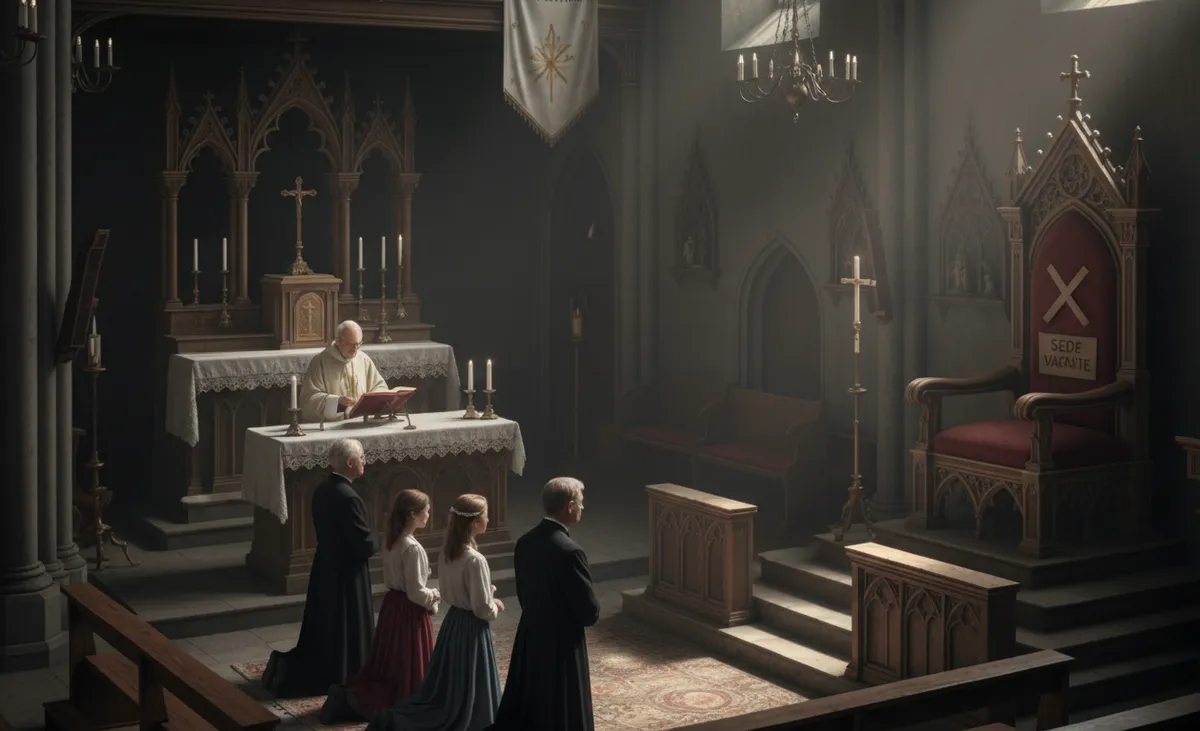
1. What Is Sedevacantism? (The Vacant Chair)
Let’s begin with the clearest definition of this unique theological position. Sedevacantism is a theological position within traditional Catholicism that holds the view that the papal seat (the Holy See) has been vacant since the death of Pope Pius XII in 1958, or since the Second Vatican Council (1962-1965).
The term “sedevacantism” comes from the Latin phrase “sede vacante,” which translates to “the chair being vacant.” This phrase is traditionally used during the interim period between the death or resignation of one pope and the election of another. However, sedevacantists apply it as a permanent descriptor for the post-Vatican II papacy.
- Core Belief: They believe that the popes who have reigned since this pivotal point (Paul VI, John Paul I, John Paul II, Benedict XVI, and Francis) are not legitimate popes because they have allegedly promoted ideas that contradict traditional Catholic teaching.
- Heresy as Invalidation: A foundational premise is the theological principle that a pope who publicly teaches heresy automatically ceases to be a valid pope.
2. The Second Vatican Council: The Pivotal Breaking Point
The emergence of Sedevacantism is inextricably linked to a specific, transformative event in the Catholic Church’s history. Sedevacantist theology asserts that the Second Vatican Council (1962-1965) and its subsequent reforms represented a fundamental departure from traditional Catholic doctrine, serving as the pivotal breaking point for the legitimacy of the post-Conciliar papacy.
For sedevacantists, Vatican II and the changes it introduced were not merely pastoral updates but a dilution or corruption of core tenets. They often cite several specific reforms as evidence of “modernism” or heresy:
- Liturgical Reforms: The introduction of the Novus Ordo Missae (the New Order of Mass) in vernacular languages, replacing the Tridentine Mass (Traditional Latin Mass), is seen as a Protestantization of the liturgy.
- Ecumenism: The emphasis on dialogue and unity with other Christian denominations (Unitatis Redintegratio) is viewed as compromising the unique truth of Catholicism.
- Religious Liberty: The affirmation of religious freedom (Dignitatis Humanae) is interpreted as a contradiction of previous teachings that upheld the Catholic Church as the one true religion.
- Relations with Non-Christian Religions: The declaration expressing respect for other faiths (Nostra Aetate) is seen as diluting the Church’s missionary mandate.
Sedevacantists argue that these changes were so radical that they could not have come from a true Catholic pope, thereby invalidating the authority of Pope Paul VI (who implemented many of these reforms) and all his successors. It’s like believing that a beloved, ancient recipe has been so fundamentally altered that it no longer tastes like the original dish. This perceived departure from tradition is the cornerstone of their entire theological stance. You can find their perspective on Vatican II from sources like Catholic.com.
3. Adherence to Pre-Vatican II Traditions: The Benchmark of True Faith
For sedevacantists, the definition of authentic Catholicism is found in the Church as it existed before the Council. Sedevacantist theology holds a staunch adherence to pre-Vatican II traditions, liturgies, and doctrines, viewing them as the authentic expression of the Catholic faith and the benchmark against which all modern changes are judged.
This commitment to “Tradition” (with a capital T, referring to the entire body of beliefs and practices passed down) is non-negotiable:
- The Traditional Latin Mass: The Tridentine Mass (as codified by the Council of Trent and last revised in 1962 by Pope John XXIII) is predominantly celebrated within sedevacantist communities. They see it as the only valid and reverent form of the Mass.
- Pre-Conciliar Doctrines: They uphold all doctrines, encyclicals, and papal pronouncements from before Vatican II as binding and unchangeable.
- Rejection of Modernism: Any teaching or practice that deviates from these pre-Conciliar norms is considered a dangerous “modernism” that compromises the purity of the faith.
For sedevacantists, this adherence is not simply a preference; it is essential for salvation. They see themselves as the true preservers of authentic Catholicism in a time of perceived apostasy within the mainstream Church. It’s like believing that the original, unadulterated spring water is the only true source of refreshment, and anything mixed with it is no longer pure. This unwavering loyalty to what they perceive as the true faith defines their entire spiritual and communal life. You can find more on traditional Catholic movements from Wikipedia on Traditionalist Catholicism.
4. Rejection of Modern Popes: A Challenge to Papal Infallibility
The most direct and challenging implication of Sedevacantist theology is its absolute rejection of all popes since the death of Pope Pius XII. A central tenet of Sedevacantism is the belief that post-Vatican II popes (from Paul VI to Francis) have been heretical or invalid, thus they are not true Popes and do not possess legitimate papal authority.
This rejection directly challenges the Catholic doctrine of papal infallibility (defined at the First Vatican Council in 1870), which states that the Pope, when speaking ex cathedra (from the chair of Peter) on matters of faith and morals, is preserved from error. Sedevacantists argue that:
- Heresy Invalidates Office: A public heretic cannot validly hold the office of Pope.
- Post-Conciliar Popes are Heretical: They believe the changes enacted or approved by modern popes (e.g., in liturgy, ecumenism, religious liberty) constitute heresy.
- Papal See is Vacant: Therefore, the papal office is truly vacant, and the subsequent “elections” of these men were invalid.
This belief has profound ramifications. It means sedevacantists do not pray for the current Pope, do not recognize the validity of the vast majority of bishops and priests worldwide who are in communion with Rome, and often seek alternative clergy and sacraments from sedevacantist communities. It’s like a loyal subject who refuses to acknowledge a usurper king, believing the true throne lies empty. This radical rejection of modern papal authority is what fundamentally defines and distinguishes the sedevacantist movement within Catholicism.
5. Invalidity of Sacraments and Teachings (A Crisis of Grace)
The rejection of modern popes extends logically to a profound crisis regarding the very means of grace. Sedevacantist theology often asserts that because the post-Vatican II popes are illegitimate, the vast majority of sacraments dispensed by clergy in communion with them (the mainstream Church) are invalid, and their teachings are erroneous.
This is a significant and serious implication:
- Invalidity of the Novus Ordo Mass: They believe the New Order of Mass is invalid or gravely illicit, and therefore does not truly confer the Eucharist.
- Invalidity of Ordinations: They may question the validity of priestly and episcopal ordinations performed using the new rites, leading to doubts about the validity of subsequent sacraments.
- Invalidity of Confessions/Marriages: This skepticism can extend to other sacraments performed by priests who received their ordination post-Vatican II or who use the new rites.
- Erroneous Teachings: They reject the teachings and pronouncements of the post-Conciliar Magisterium (the Church’s teaching authority) as infected by modernism.
6. Apostolic Succession: A Broken Chain?
The concept of Apostolic Succession is central to Catholicism, yet Sedevacantism interprets it as having been disrupted. Sedevacantist theology asserts that the line of legitimate Apostolic Succession, which is crucial for the Church’s integrity and the validity of its sacraments, has been broken due to the heresy of modern popes and bishops.
For mainstream Catholics, Apostolic Succession is the unbroken chain of bishops tracing their authority back to the original Apostles. Sedevacantists agree on the importance of this, but believe:
- Heresy Interrupts Succession: If a bishop (including the Pope) publicly teaches heresy, they automatically lose their office and, therefore, cannot validly transmit Apostolic Succession.
- Invalid Ordinations: They often argue that the new rites of episcopal ordination (introduced after Vatican II) are invalid, meaning bishops ordained with these new rites do not truly possess Apostolic Succession and cannot validly ordain others.
- Clergy Shortage: This leads to a severe shortage of validly ordained clergy in their view, posing immense challenges to the continued practice of the sacraments.
This belief creates a profound crisis of authority and sacramental validity for sedevacantists. It forces them to question the legitimacy of virtually all modern clergy and to seek out alternative bishops who claim to have valid lines of succession from before the Council. It’s like believing a vital electrical circuit has been broken, cutting off the flow of power to the entire system. This radical position is a direct consequence of their interpretation of Vatican II and its aftermath. You can read more about Apostolic Succession on Encyclopedia Britannica.
7. Crisis of Faith: Preserving True Catholicism
At its heart, the Sedevacantist movement views the modern era as a profound spiritual emergency. Sedevacantist theology arises from a deep conviction that the Catholic Church is currently in a profound “crisis of faith,” believing that their movement is essential for preserving authentic Catholic doctrine and practice until a truly Catholic Pope is restored.
This sense of crisis informs their entire worldview:
- Doctrinal Erosion: They believe core doctrines have been eroded or corrupted by “modernism.”
- Liturgical Corruption: They see the Novus Ordo Mass as a corrupted liturgy.
- Moral Decline: They often view contemporary societal moral decline as a direct consequence of this perceived ecclesiastical crisis.
- Awaiting a True Pope: They are essentially waiting for a future Pope who will unequivocally condemn the perceived heresies of Vatican II and restore traditional Catholic practice.
This profound sense of crisis is what motivates their staunch adherence to traditional practices and their rejection of mainstream Catholic leadership. They see themselves as the faithful remnant, safeguarding the purity of the Church in a time of unprecedented apostasy. It’s like a small, dedicated group protecting a precious, sacred flame in a world that has grown cold and dark, awaiting the dawn. This deep commitment to preserving what they see as “true” Catholicism defines their identity and shapes their community life.
What Does Sedevacantism Reveal to You About Faith and Authority?
The exploration of Sedevacantist theology unveils a complex and often challenging landscape within Catholicism. It’s a movement born from a deep conviction that the Church is in a profound crisis of faith, leading to the belief in a vacant papal seat and an unwavering adherence to pre-Vatican II traditions.
This unique perspective highlights the immense importance of authority, doctrine, and tradition for these believers, and raises profound questions about faithfulness in a changing world. While many will disagree with its conclusions, understanding Sedevacantism allows for a deeper appreciation of the fervent dedication and spiritual struggles that exist within the vast tapestry of Christianity. What an incredible testament to the enduring power of conviction!
Now, I’d love to hear from you. The comments section is open!
→ Which of these 7 key concepts of Sedevacantist theology resonated most deeply with your understanding or surprised you the most?
→ How does the Sedevacantist interpretation of Vatican II (as a departure from tradition) challenge or affirm your own views on church authority and adaptation?
→ What’s one aspect of their commitment to preserving what they believe is “true” Catholicism that you find most compelling, even if you disagree with their conclusions?
Let’s share our insights and encourage one another in our oracioncristiana.org community!
