Romans: the complete, essential guide with 12 key facts
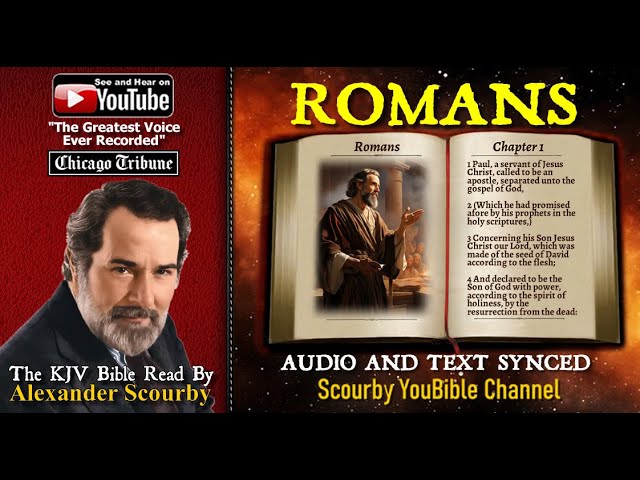
romans: a clear guide to the letter that shaped Christian thought
The word romans most often refers to the New Testament letter written by the apostle Paul to the earliest Christian communities in Rome. This remarkable text is both pastoral and profound: it explains the heart of the gospel, addresses tensions between Jewish and Gentile believers, and sets out a vision of life shaped by grace. Whether you are exploring Christianity, deepening your understanding of the Bible, or simply curious about ancient letters that still influence ethics and culture, Romans remains a foundational work. In what follows, we unpack what romans is, why it matters, how to read it well, and common pitfalls to avoid.
As you’ll see, romans is not just a theological treatise—it is a carefully crafted letter for real people in a cosmopolitan city. Its exploration of faith, righteousness, and human dignity continues to resonate across centuries.
What is romans?
Romans (often titled “The Epistle to the Romans”) is a letter in the New Testament written by Paul the apostle, probably in the late 50s CE, to house-churches in Rome. It offers a panoramic vision of God’s saving work in Christ, moving from the reality of sin to the gift of justification by faith, and on to the transformed life empowered by the Spirit. In short, romans frames the Christian message from first principles to practical living.
Key aims of romans include:


- Uniting diverse believers—Jewish and Gentile—in a single family of faith.
- Clarifying how the good news relates to the Hebrew Scriptures (the “Law and the Prophets”).
- Preparing for Paul’s hoped-for mission to Spain by strengthening support from Rome.
- Guiding everyday ethics: humility, love, hospitality, and peaceable citizenship.
Historical context: Rome, Paul, and the first hearers
When romans was penned, Rome was the world’s great metropolis: multilingual, multi-ethnic, and religiously diverse. Jewish communities were long established there, and the message about Jesus had already reached the city by the time Paul wrote. However, edicts from Emperor Claudius had previously expelled some Jews from Rome, and the social fabric of the churches was complex when they returned. Romans speaks into this reality, articulating how the one God is faithful to Israel’s promises while welcoming the nations through Christ.
Paul writes as a pastor-theologian. He has not yet visited Rome, so romans functions as both introduction and manifesto. Drawing deeply on the Hebrew Bible, Greco-Roman rhetoric, and his own experience, Paul crafts an argument that dignifies every person—showing that all fall short and all may be welcomed through grace.
How romans is structured
Although a letter, romans reads like a carefully built argument. A helpful overview is:
- Romans 1–4: The universal human need and justification by faith. Paul demonstrates that both Gentiles and Jews are in need of God’s mercy, yet are made right (justified) through faith.
- Romans 5–8: Life in Christ and the Spirit. The letter moves beyond forgiveness to a life set free from sin’s domination, describing hope, adoption, and the Spirit’s empowering presence.
- Romans 9–11: Israel’s place in God’s plan. Paul wrestles with the fate of Israel, God’s faithfulness, and the mystery of salvation history.
- Romans 12–15: Practical living. A sweeping portrait of humility, service, love of neighbour, peace, and public responsibility.
- Romans 16: Personal greetings. A window into real friendships, co-workers, and house-church networks.
Reading romans with this flow in mind helps you grasp how doctrinal statements are designed to fuel hope and foster unity.
Core themes you should know
Sin and the human condition
Romans begins by levelling the ground: moralists, law-keeping Jews, and non-Jews alike stand in need of mercy. The point is not to shame, but to unveil reality honestly. In romans, sin is more than wrongdoing; it is a power that distorts worship and relationships. This diagnosis sets up the cure: grace.
Justification by faith
If there is a signature phrase in romans, it is that people are “justified by faith”. This means being declared right with God on the basis of Christ’s faithfulness and our trusting response, not by rule-keeping. Paul draws on Abraham as the exemplar—trust in God’s promise precedes the Law, so the way is open to all peoples. This is central for understanding Christian assurance without sliding into pride.
Grace and union with Christ
Romans 5–8 portray a life joined to Christ. Believers are not merely forgiven; they are set within a new realm. In romans, this is pictured as a transfer from “in Adam” to “in Christ”. The Spirit enables a new walk, marked by hope that even suffering cannot extinguish, because God’s love has been poured into hearts.
Israel and the nations
Romans 9–11 is Paul’s extended meditation on God’s faithfulness to Israel. Far from replacing Israel, God’s plan is larger than anyone expected. Gentiles are grafted in, yet are warned against arrogance. The tone of romans here is reverent and hopeful, ending in doxology—a hymn of wonder at God’s wisdom.
Transformed living
Romans 12 opens with a call to offer ourselves as living sacrifices—whole-life worship. The remainder of romans turns doctrine into deeds: sincere love, hospitality, patience in suffering, overcoming evil with good, wise citizenship, and respect for others’ consciences. It is practical, not abstract.
How to read romans today
Approaching romans can feel daunting. Here are steps that make it accessible and rewarding:
- Read slowly, with the whole letter in mind. Romans is an argument that builds; chapters make best sense together.
- Notice the “you” and “we”. Paul alternates between groups to engage both Jewish and Gentile believers.
- Trace Old Testament quotations. Romans is steeped in Scripture; following the references deepens understanding.
- Hold together grace and transformation. The same grace that justifies also reshapes character.
- Watch for rhetorical questions. Paul anticipates objections and answers them—these are guideposts for meaning.
Common misunderstandings about romans
- “Romans is only abstract theology.” In fact, romans addresses real tensions and daily ethics, moving from cosmic scope to concrete practices.
- “Faith means ideas without deeds.” In romans, faith is trust that leads to a new life empowered by the Spirit.
- “The Law is simply bad.” Paul honours the Law’s holiness, while insisting it cannot rescue. Romans offers a nuanced view.
- “Israel is sidelined.” Romans 9–11 say otherwise: the story features God’s steadfast mercy towards Israel and the nations.
Why romans still matters
Across history, romans has sparked renewal. Augustine found clarity about grace through reading it; the Protestant Reformation drew heavily on its teaching about justification; modern movements for justice have appealed to romans 12–13 to ground neighbour-love and civil responsibility. Today, romans remains a resource for personal growth, community unity, and thoughtful public engagement.
Key passages to explore
- Romans 1:16–17 – The gospel as God’s power for salvation, revealing righteousness by faith.
- Romans 3:21–26 – A dense summary of justification apart from the Law, yet witnessed by the Law and Prophets.
- Romans 5:1–5 – Peace with God and hope that does not disappoint.
- Romans 8 – Life in the Spirit; assurance that nothing can separate us from God’s love.
- Romans 12:1–2 – Whole-life worship and renewed minds.
Practical takeaways from romans
For personal growth
- Let grace come first. Start from God’s initiative, not your performance.
- Name reality honestly. Romans encourages sober self-assessment without despair.
- Lean into the Spirit’s help. Transformation is possible, but not self-powered.
For community and relationships
- Practise humble unity. Romans calls mixed communities to mutual honour and patience.
- Welcome the other. Hospitality and conscience-sensitivity are marks of mature love.
- Seek peace publicly. Romans 12–13 envision good citizenship and peacemaking.
For public life
- Value conscience and neighbour-love as anchors for ethical decisions.
- Resist vengeance. “Overcome evil with good” remains a powerful public ethic.
- Hold hope. Romans’ grand vision sustains courage in complex times.
Jews, Gentiles and the promise in romans
One of the striking contributions of romans is its treatment of the relationship between Jewish and Gentile believers. Paul insists that the gospel is “to the Jew first and also to the Greek”, and he opposes any hint of superiority on either side. If you are exploring how the early church understood the nations, the meaning of Gentiles is an excellent companion topic, and it illuminates much in romans 1–4 and 9–11.
Reading romans alongside wider Christian traditions
Christians across traditions largely agree on the centrality of grace in romans, while sometimes emphasising different aspects (for example, the precise relationship between faith, works, and the sacraments). If you wish to see how traditions approach shared foundations, our overview of Orthodox and Catholic differences can add context as you read romans with a broad, irenic perspective.
Recommended external resources
- Encyclopaedia Britannica: overview of the Letter of Paul to the Romans – Historical background, authorship, and themes.
- Wikipedia: Epistle to the Romans – A detailed article with structure, themes, and scholarly references.
- Bible Gateway: text of Romans (NIV) – Read or search the letter in a popular translation.
Examples of using romans in study or group settings
Whether you’re studying alone or with others, romans lends itself to a steady, thoughtful rhythm. Here is a simple plan:
- Weeks 1–2: Romans 1–4. Focus on the diagnostic section and the heart of justification by faith. Summarise Paul’s argument in your own words.
- Weeks 3–4: Romans 5–8. Note the shift from guilt to life. Journal “markers of hope” in these chapters.
- Weeks 5–6: Romans 9–11. Track every time Paul mentions mercy. End by writing a short prayer of gratitude for God’s faithfulness.
- Weeks 7–8: Romans 12–16. Identify practical steps for community life; choose one to practise each week.
In a group, rotate readings aloud. Encourage questions and allow romans to challenge assumptions—especially around pride, exclusion, or despair.
Common mistakes to avoid when reading romans
- Skipping context. Romans is a letter to a mixed community; ignoring this can distort interpretation.
- Cherry-picking verses. Lift any sentence from its line of thought and you risk missing Paul’s meaning.
- Forgetting the Old Testament backdrop. Romans constantly echoes earlier Scripture.
- Separating belief from behaviour. In romans, grace leads to transformed living.
- Turning unity into uniformity. Romans 14–15 celebrates conscience and patience, not one-size-fits-all rules.
How romans has influenced culture
Beyond theology, romans has influenced literature, music, and law-like moral discourse. Its language of conscience, neighbour-love, and honouring authorities has guided debates about civil society. The crescendo of Romans 8 has inspired countless hymns and modern songs. Even those outside church life often recognise its stirring affirmations about inseparable love and enduring hope.
Further study tips for romans
- Compare translations. Seeing how key words are rendered (e.g., “righteousness”, “justice”, “faithfulness”) clarifies themes.
- Use a study Bible or commentary. Brief notes can explain allusions and historical details.
- Memorise a few anchors. Verses from Romans 5 and 8 provide ballast for life’s hard days.
- Pray the text. Romans is meant to be lived, not just understood.
Frequently asked questions about romans
Who wrote romans and when?
Romans was written by Paul the apostle, most likely in the late 50s CE, near the end of his third missionary journey. He composed it while in Corinth or nearby, and it was delivered to the Roman churches, probably by Phoebe (mentioned in Romans 16).
Why is romans considered so important?
Because it offers a comprehensive account of the gospel—human need, God’s grace, the role of faith, the place of Israel, and practical ethics. Many consider romans pivotal for understanding Christian belief and life, and it has been central in movements of reform and renewal.
Is romans mainly about doctrine or about living?
Both. The early chapters develop core doctrine, while the latter chapters apply it to everyday life. In romans, belief and behaviour are inseparable: grace transforms how we love, serve, and engage with society.
How does romans relate to the Old Testament?
Romans is saturated with quotations and allusions to the Law, Prophets, and Psalms. Paul argues that the gospel fulfils, not abolishes, God’s earlier promises, and he uses figures like Abraham and David to demonstrate continuity.
Does romans contradict James about faith and works?
No. Romans emphasises that we are justified by faith, apart from works of the Law; James stresses that genuine faith expresses itself in deeds of love. They address different problems but share the conviction that authentic faith is active.
What are the most-quoted parts of romans?
Common favourites include Romans 1:16–17, 3:21–26, 5:1–5, Romans 8 (especially 8:28–39), and Romans 12:1–2. These passages summarise hope, assurance, and practical discipleship.
Can someone new to the Bible read romans first?
Yes, with guidance. Starting with a modern translation and a short introduction helps. Reading romans alongside a friend or group can make the letter more accessible and enjoyable.
Conclusion on romans
At its heart, romans is a letter about grace, given to ordinary people navigating complex lives in a great city. It brings together the story of Israel, the mission to the nations, and the transforming love of God in Christ. Far from abstract, it invites us into a hopeful, Spirit-empowered way of life that honours others and pursues peace.
By reading romans as a whole—attending to its context, argument, and practical outcomes—we discover how faith lays the foundation for renewed minds and renewed communities. Its enduring relevance lies in this union of mercy and transformation.
Whether you come to romans seeking understanding, unity, or a fresh start, the letter meets you with honesty about the human condition and assurance about divine faithfulness. Its message remains clear: grace welcomes us in, and grace leads us on.
