Psalm 110: 7 Powerful Insights You Can’t Ignore
Respuesta Rápida
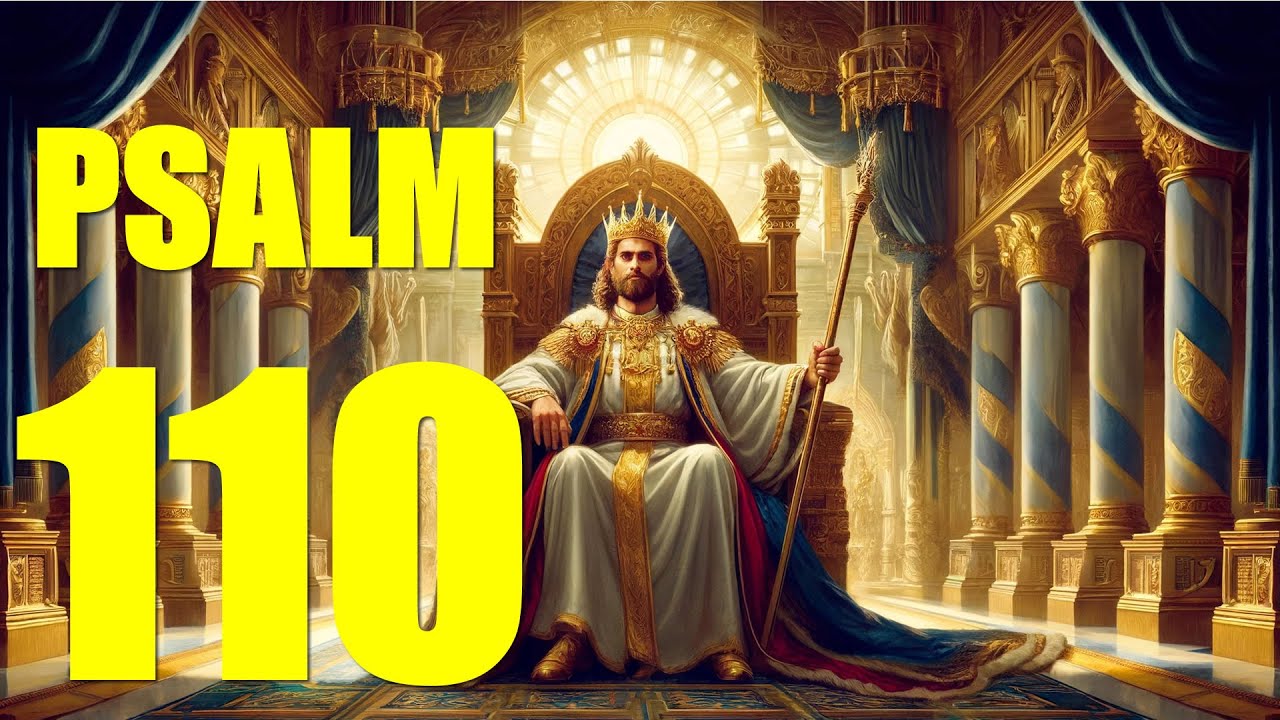
Psalm 110 is one of the most significant and frequently quoted psalms in the Bible, celebrated for its profound messianic prophecy. It uniquely portrays the coming Messiah not just as a triumphant king who will rule over his enemies, but also as an eternal priest in the order of Melchizedek.
This powerful psalm reveals the Messiah’s dual nature and divine authority through several key themes:
- Divine Kingship: The Messiah is invited to sit at God’s right hand, a position of supreme honor and power.
- Eternal Priesthood: His priesthood is everlasting, unlike the traditional Levitical priests.
- Ultimate Victory: It prophesies his final victory and judgment over all opposing nations and rulers.
Have you ever read a passage of scripture that feels like a key, unlocking a deeper understanding of the entire Bible? A chapter so packed with meaning that it gets quoted again and again by the most important figures in the faith? That’s Psalm 110. 💡 It might be short—only seven verses—but its impact is monumental, echoing from the Old Testament all the way through the New.
This isn’t just another beautiful song from King David. It’s a powerful, prophetic vision that pulls back the curtain on the divine nature of the Messiah. It’s the single most quoted psalm in the New Testament, referenced by Jesus himself to challenge the religious leaders of his day. So, what’s the big deal? What makes this short psalm so incredibly important?
Here at oracioncristiana.org, we believe that diving deep into scripture like this can transform your faith from a simple belief into a profound conviction. Get ready to explore the seven powerful insights from Psalm 110 that you simply can’t afford to ignore.


1. The Divine Conversation: “The LORD Says to My Lord”
The very first verse of Psalm 110 drops us right into the middle of an earth-shattering conversation happening in the heavens. It reads: “The LORD says to my Lord: ‘Sit at my right hand until I make your enemies a footstool for your feet.'” (Psalm 110:1, NIV). Pay close attention to those words. This isn’t just David talking; he is reporting a conversation he is witnessing.
In the original Hebrew, the distinction is even clearer. The first “LORD” is Yahweh, the sacred, personal name for God Almighty. The second “Lord” is Adoni, a title of respect for a superior, a master, or a king. So David, the great king of Israel, is saying that God the Father (Yahweh) is speaking to his Lord (Adoni).
This was a theological bombshell! Who could possibly be David’s Lord, other than God himself? This opening line immediately points to a figure who is both human (a descendant of David) and divine—someone worthy of being called “Lord” by the king. This is precisely the verse Jesus used in Matthew 22 to silence the Pharisees, asking them how the Messiah could be both David’s son and David’s Lord. It’s a powerful testament to the divine nature of the Messiah.
2. A Royal Scepter from Zion: The Messiah’s Earthly Reign
After establishing the Messiah’s heavenly authority, the psalm immediately pivots to His power on Earth. Verse 2 says, “The LORD will extend your mighty scepter from Zion, saying, ‘Rule in the midst of your enemies!‘” The scepter is an ancient symbol of a king’s authority and power to rule. This isn’t a weak or passive king; this is a ruler who will actively govern, even while surrounded by opposition.
The promise that this rule will extend from “Zion” (another name for Jerusalem) is crucial. It grounds this cosmic kingship in a real, historical place, connecting it to God’s promises to Israel. The verse paints a picture of a kingdom that begins in God’s holy city and expands outward, a theme that resonates deeply with the Christian concept of the Church’s mission starting in Jerusalem and spreading to the ends of the earth (Acts 1:8).
3. A Unique and Eternal Priesthood: The Order of Melchizedek
Just when you think you understand the Messiah’s role as King, Psalm 110 throws in a stunning twist in verse 4: “The LORD has sworn and will not change his mind: ‘You are a priest forever, in the order of Melchizedek.'” This is perhaps the most profound revelation in the entire psalm.
In ancient Israel, the roles of king and priest were strictly separate. Kings came from the tribe of Judah (like David), and priests came from the tribe of Levi. A king could never be a priest. But this psalm declares that the Messiah will be both. He won’t be a priest like the others; He will be a priest in the order of Melchizedek.
Who was Melchizedek? He was a mysterious and righteous figure from the book of Genesis who was both the king of Salem (ancient Jerusalem) and “a priest of God Most High.” The author of Hebrews in the New Testament dedicates an entire chapter (Hebrews 7) to explaining the significance of this. The Messiah’s priesthood is superior to the old one because it is:
- Eternal: He is a priest “forever.”
- Appointed by Divine Oath: “The LORD has sworn,” indicating the unbreakable nature of this appointment.
- Royal: It combines the authority of a king with the intercessory role of a priest.
4. A Warrior King Who Crushes Opposition
The second half of the psalm shifts in tone, portraying the Messiah not just as a ruler, but as a mighty warrior executing divine judgment. The language is intense and vivid, describing a day of righteous wrath against those who defy God’s authority. Verses 5 and 6 describe him “crushing kings” and “judging the nations.”
This imagery can be jarring to our modern sensibilities, but it’s essential for a complete picture of the Messiah. He is not only the gentle Lamb who takes away the sin of the world but also the conquering Lion of Judah who will execute perfect justice. This part of the psalm is a solemn reminder that while God is infinitely merciful, He is also perfectly just. There will be a day of reckoning for evil and rebellion. This warrior king fights not for personal glory, but to establish God’s righteous and final rule over all creation.
5. The Most Quoted Psalm in the New Testament
You can’t fully appreciate the weight of Psalm 110 without seeing how central it was to the early Christians’ understanding of Jesus. This single psalm is quoted or alluded to in the New Testament more than any other Old Testament chapter. It’s the interpretive key they used to explain who Jesus is and what he accomplished.
Here’s just a sample of its influence:
| New Testament Passage | Psalm 110 Verse Referenced | How It’s Used |
|---|---|---|
| Matthew 22:44, Acts 2:34-35, Hebrews 1:13 | Verse 1 (“Sit at my right hand”) | To prove Jesus’s divinity and his ascension to the place of highest honor and authority. |
| Hebrews 5:6, 6:20, 7:17-21 | Verse 4 (“A priest forever in the order of Melchizedek”) | To explain that Jesus is the perfect and eternal High Priest, whose sacrifice is superior to all others. |
| 1 Corinthians 15:25 | Verse 1 (“…until I make your enemies a footstool”) | To describe Christ’s current reign and the future reality when all things will be subjected to him. |
The early church saw Psalm 110 as a divinely inspired job description for the Messiah, and they saw Jesus Christ as the perfect fulfillment of every line.
6. A Divine Model for Leadership
Beyond its prophetic power, Psalm 110 offers a profound model for leadership that is still relevant today. The Messiah’s leadership is rooted not in personal ambition or popular opinion, but in divine authority. He is powerful, yet he is a servant-priest. He is a warrior, but he fights for justice, not conquest.
This psalm challenges our worldly ideas of power. True, God-honoring leadership is about being appointed and empowered by Him. It combines strength with compassion, authority with service. It’s a reminder for anyone in a position of leadership—in the church, at work, or in the family—that our authority is a stewardship from God, to be used for His purposes.
7. A Source of Unshakeable Hope and Confidence
Finally, Psalm 110 is an incredible source of hope for believers. In a world that often feels chaotic and unjust, this psalm gives us a glimpse of the final reality. It tells us that, no matter how things may appear, there is a King on the throne at the right hand of God. His victory is certain.
This isn’t just wishful thinking; it’s a divine promise, sworn by an oath from God Himself. The final verse paints a simple yet powerful image of the warrior king pausing to drink from a brook along the way before continuing his victorious march. It’s a picture of refreshment and relentless progress. This psalm gives us the confidence to face our own battles, knowing that our King and High Priest is reigning in victory and interceding for us forever.
The Reigning King and Eternal Priest
Psalm 110 is a masterpiece of theology and prophecy, a compact and powerful portrait of Jesus Christ in all his glory. It reveals him as our divine Lord, our reigning King, our eternal High Priest, and our conquering warrior. It’s the anchor that secures our understanding of who Jesus is and gives us unshakeable hope for the future.
This ancient song is a powerful reminder that history is moving toward a final, glorious conclusion where every enemy is defeated and every knee will bow to the King of kings.
I know this psalm is incredibly rich, and we’ve only scratched the surface. The comments section below is your space to continue the conversation:
→ Which insight from Psalm 110 resonates most with you right now?
→ How does seeing Jesus as both King and Priest change your perspective of him?
