Prayer to the Virgin Mary Undoer of Knots: Essential Guide, 5 Steps
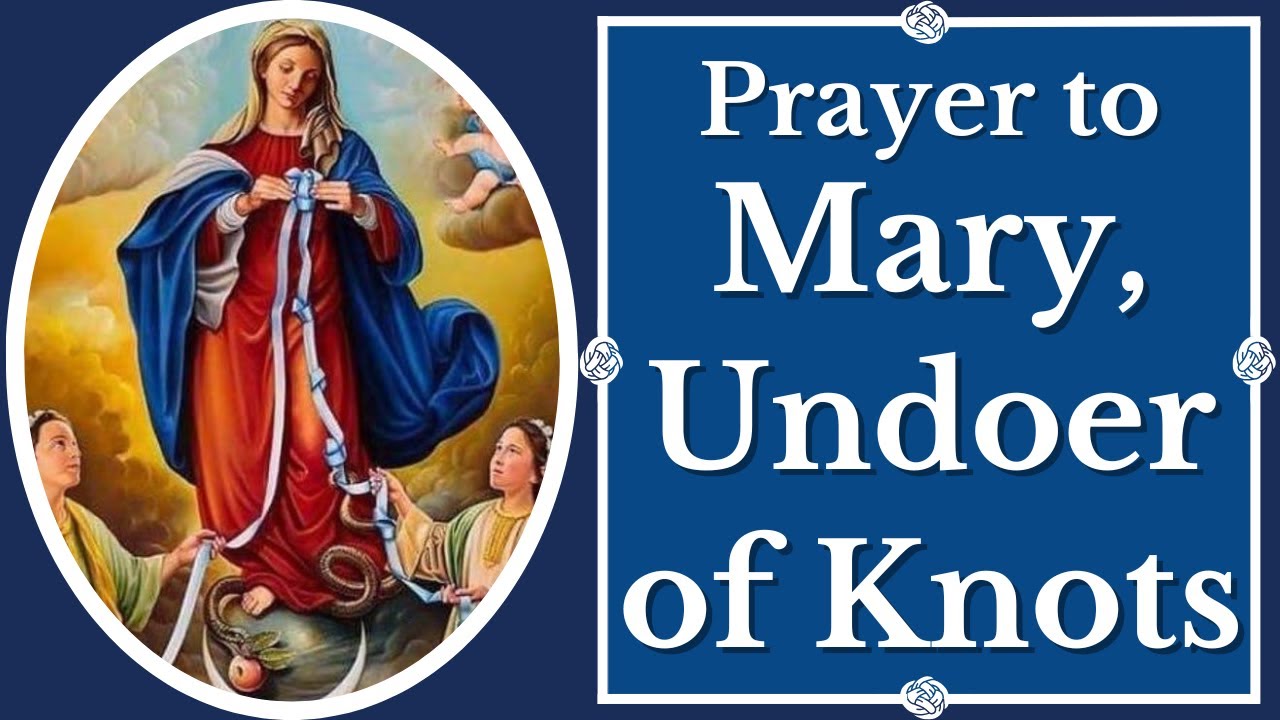
prayer to the virgin mary undoer of knots
If you are facing tangled problems, family tensions or inner anxieties that feel impossible to resolve, the prayer to the virgin mary undoer of knots offers a gentle, time-tested way to bring them to God through Mary’s intercession. This devotional path invites you to place your “knots” — the complicated situations, habits or relationships that feel stuck — into the hands of Our Lady so she can present them to her Son, Jesus Christ, and patiently loosen them with grace.
Known in many places as Mary, Untier (or Undoer) of Knots, this devotion has grown worldwide in recent decades, especially after it was highlighted by Pope Francis. It is not a magic formula, nor a shortcut that bypasses real-life responsibilities. Rather, it is a prayerful discipline that strengthens trust in God, encourages concrete steps towards reconciliation and healing, and cultivates peace while waiting for answers.
In this comprehensive guide, you will learn what the devotion involves, where it comes from, how to pray the prayer to the virgin mary undoer of knots as a simple daily prayer or novena, and how to avoid common mistakes. You will also find practical examples, recommended resources, and clear answers to frequent questions, all in plain language.
What is the prayer to the virgin mary undoer of knots?
At its heart, the prayer to the virgin mary undoer of knots is a plea for intercession: we entrust to Mary the “knots” of our lives so that she, by God’s grace, may patiently untie what seems impossible for us. The “knots” can be anything: family estrangement, anxiety, addictions, workplace conflicts, debt, habitual sin, or a loss of hope. The devotion is often prayed as a nine-day novena, but it can also be prayed informally, even in a short, sincere moment during a busy day.

Origins and history
The title “Undoer of Knots” is associated with a Baroque painting in Augsburg, Germany, attributed to Johann Georg Melchior Schmidtner (c. 1700). It shows Mary untying a long ribbon of knots while surrounded by angels, a visual metaphor for her role in helping untangle human difficulties by leading us to Christ. For a concise overview of the story, history and symbolism, see Wikipedia’s article on Mary, Undoer of Knots.
This devotion was especially promoted in the modern era by Jorge Mario Bergoglio (now Pope Francis), who encountered the image while studying in Germany and later brought it to wider attention in Argentina and beyond. For background and context, Vatican News has covered the spread of the devotion and the Holy Father’s personal connection to it.
The image and its symbolism
In the Augsburg image, Mary stands beneath the Holy Spirit, with a ribbon threaded with knots in her hands. The ribbon symbolises the threads of our lives — moments of disobedience, confusion or suffering — that, through her intercession, can be gently loosened and set straight. Angels assist, reminding us that prayer involves the whole communion of saints and the ceaseless work of grace.
Early Christian writers like St Irenaeus spoke of Mary’s obedience “untying the knot” of Eve’s disobedience. The iconographic theme of untying therefore echoes a deep biblical and theological motif: God patiently “makes straight” our paths and restores what is broken when we open ourselves to grace.
Why people turn to the prayer to the virgin mary undoer of knots
People turn to the prayer to the virgin mary undoer of knots because it blends heartfelt honesty with practical hope. It provides a simple framework to name a problem clearly, surrender it in faith, and wait in peace while also taking responsible action.
Spiritual aims
- To bring complex problems before God with trust.
- To ask Mary’s intercession to “untie” what feels stuck or impossible.
- To grow in patience, humility and perseverance.
- To cultivate peace while co-operating with grace in daily life.
Typical intentions
- Family issues: estrangement, communication breakdowns, separation or divorce.
- Personal struggles: anxiety, depression, addiction, persistent habits of sin.
- Practical challenges: debt, job loss, legal complications or housing uncertainty.
- Discernment: confusion over a decision, vocation, or a change of direction.
How to pray the prayer to the virgin mary undoer of knots
There is no single mandatory wording. You can pray spontaneously, follow a traditional novena, or incorporate the devotion into your Rosary. What matters is a sincere heart, a clear intention, and a willingness to co-operate with the grace you receive.
A simple way to begin
If you are new to this devotion, here is a simple version of the prayer to the virgin mary undoer of knots you can use today:
“Mary, Undoer of Knots, I bring to you this knot in my life [briefly name it]. I place it in your hands and ask you to untie it by your loving intercession, so that I may be freed to do God’s will with peace and courage. Lead me to Jesus, help me take the right steps, and keep me faithful while I wait. Amen.”
You can repeat this daily, naming the knot honestly and specifically. Some people write their knot on paper and keep it near an image of Our Lady as a reminder to persevere in prayer.
The novena format step-by-step
Many Catholics and other Christians prefer to pray a structured nine-day novena. Here is a clear, accessible pattern you can follow:
- Set your intention. Choose one knot to present over nine days. Be specific, and ask for grace both to change what you can and to accept what you cannot.
- Begin with the Sign of the Cross and a moment of silence. Invite the Holy Spirit to guide your prayer.
- Read a short Scripture passage. For example, John 2:1–11 (Wedding at Cana) or Luke 1:26–38 (the Annunciation).
- Pray the core prayer to the virgin mary undoer of knots. Use the simple form above, or a traditional text if you prefer.
- Optional: Pray a decade of the Rosary. Focus on a Mystery related to trust and surrender (e.g., the Annunciation or the Wedding at Cana).
- Offer a brief practical resolution. Decide one small, concrete action that aligns with your intention (a phone call, an apology, making an appointment, seeking advice).
- Close with gratitude. Thank God for the grace received today and entrust the remaining knots to Mary’s care.
If you prefer a traditional novena text, you can find a widely used version at the EWTN novena to Our Lady Undoer of Knots, which many people follow exactly as written.
Tips for deepening the practice
- Keep a prayer journal: jot down your intention, any insights, and small changes you notice over time.
- Pair prayer with action: grace and practical steps go hand in hand.
- Practise patience: the ribbon takes time to untie; trust grows as you persevere.
- Seek support: talk to a trusted friend, mentor or priest, especially for difficult knots.
- Create a prayer space: a simple image or candle can help you focus and return each day.
The prayer to the virgin mary undoer of knots blends beautifully with other devotions centred on mercy and trust. For example, the Divine Mercy Chaplet prayer is a short, powerful way to entrust wounds and worries to Christ while asking for compassion for yourself and others.
Different Christian traditions approach Marian devotion in distinct ways. If you are exploring how intercession and veneration relate across traditions, you may find this overview helpful: differences between Orthodox and Catholic traditions. Understanding the “why” behind devotional practices can enrich your own prayer and avoid confusion.
Scriptural and theological foundations
Although the specific title “Undoer of Knots” is later, the underlying meaning of the prayer to the virgin mary undoer of knots is rooted in Scripture and early Christian reflection. The devotion highlights three core insights:
- Mary leads us to Jesus. In John 2, Mary notices the couple’s need and points to Christ: “Do whatever he tells you.” Her role is not to replace Jesus but to intercede and direct us to him.
- God straightens what is tangled. The Psalms and prophets describe God making paths straight and lifting burdens. Mary’s “yes” (Luke 1:38) co-operates with this saving work.
- The knot metaphor is ancient. St Irenaeus (2nd century) wrote that the knot of Eve’s disobedience was untied by Mary’s obedience. The image of untying therefore connects deeply with salvation history.
Praying this devotion keeps Christ at the centre. Mary’s intercession is always oriented towards him. She “undoes” knots by helping us surrender pride, resentment or fear, and by asking for the grace we need to act with courage, humility and charity.
It is wise to remember that this is a devotional practice, not an obligation. The Church encourages devotions that lead us more deeply into the Gospel and the sacraments. If a devotion strengthens faith, hope and love, and encourages responsible action, it can be a fruitful part of a balanced spiritual life.
Common mistakes to avoid when using the prayer to the virgin mary undoer of knots
- Treating it as magic. The prayer to the virgin mary undoer of knots does not bypass the cross or ordinary effort. It supports, clarifies and strengthens you while you do your part.
- Changing intentions too often. Choose one knot and stay with it for the full novena, unless a serious reason arises to change.
- Ignoring practical steps. If you need to apologise, seek counselling, make a budget, or consult a professional, prayer and action should go together.
- Praying only when desperate. Building a habit of daily prayer helps when crises arrive.
- Forgetting gratitude. Thanking God for small improvements keeps hope alive and prevents discouragement.
Practical examples of the prayer to the virgin mary undoer of knots in daily life
Here are a few realistic scenarios showing how the devotion can be integrated into ordinary routines:
- Family reconciliation: You have not spoken to a sibling in months. Each evening for nine days, you name this knot, ask Mary’s help, and choose one small action (writing a note, praying for your sibling by name, or asking a mutual friend for advice). By day nine, you feel calmer and make a gentle, non-confrontational call. The knot is not fully untied yet, but a thread has loosened.
- Workplace stress: A conflict with a colleague leaves you anxious. You pray the novena, ask for clarity and charity, and schedule a mediated conversation. You enter the meeting with less defensiveness and a concrete plan. The situation improves because prayer softened your approach and guided your choices.
- Financial worry: Debt feels overwhelming. You pray daily using the prayer to the virgin mary undoer of knots, then create a budget, seek free advice, and talk honestly with your family. The burden does not vanish overnight, but you experience new peace and see steady progress.
- Habitual sin: You struggle with a recurring habit. Alongside confession and spiritual support, you pray the devotion, identify triggers, and set healthy boundaries. Over time, the knot loosens as grace and discipline work together.
Recommended external resources
- Traditional novena to Our Lady Undoer of Knots (EWTN) — a full text you can use at home.
- Vatican News coverage of the devotion and Pope Francis’s connection — background on the spread and meaning of the devotion.
- Historical overview of Mary, Undoer of Knots (Wikipedia) — origins, the Augsburg painting and global growth.
Frequently asked questions about prayer to the virgin mary undoer of knots
Is the prayer to the virgin mary undoer of knots only for Catholics?
No. While the devotion is rooted in Catholic tradition, Christians from other backgrounds also find it helpful as a way of asking for intercession and learning to surrender to God.
