Prayer to saint rita the impossible: essential guide, 5 steps
Prayer to saint rita the impossible: meaning, tradition, and how to pray
For many Christians, prayer to saint rita the impossible offers comfort and direction when faced with challenges that seem beyond human solution. Known as the patroness of difficult and hopeless causes, Saint Rita of Cascia inspires believers to trust in God’s providence, especially when every practical avenue looks closed. In this guide, you will find the background to her devotion, practical ways to pray, common mistakes to avoid, and thoughtful suggestions for integrating this prayer into daily life.
Whether you are new to this devotion or simply want to deepen your understanding, the sections below will help you approach prayer to saint rita the impossible with clarity, reverence, and confidence. You will also find links to reliable sources and related devotions that can support you on your journey of faith.
What is prayer to saint rita the impossible?
At its heart, prayer to saint rita the impossible is a petition for heavenly help when circumstances feel insurmountable. Many people turn to Saint Rita precisely because traditions and testimonies portray her as a powerful intercessor for problems that appear beyond remedy: broken relationships, legal deadlocks, chronic illnesses, or deeply rooted personal struggles. The prayer is not a magic formula; rather, it is a humble request that God, through the intercession of Saint Rita, will bring light, strength, and resolution in line with His will.
People use prayer to saint rita the impossible in varied ways: a short daily prayer for specific needs, a nine-day novena for sustained requests, or a quiet, reflective moment before an image of Saint Rita when the heart is heavy. The “impossible” aspect refers not to superstition, but to the believer’s experience of being at the end of personal resources, where only grace can open a path forward.


As with all Christian prayer, intention matters. A sincere, patient, and trusting heart is more important than perfect wording. Over time, many find that regularly praying this devotion gently reshapes their approach to difficulty—fostering hope, patience, and a willingness to discern God’s timing.
A brief portrait of Saint Rita of Cascia
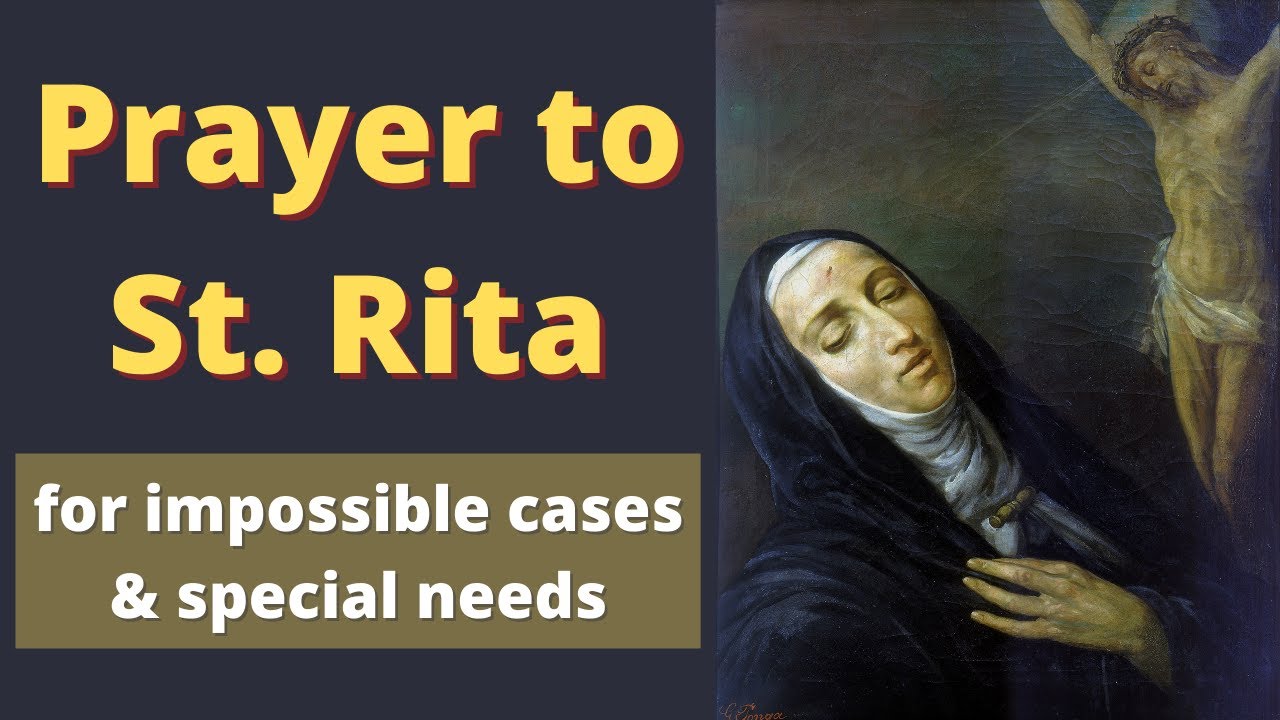
Saint Rita (1381–1457) was an Augustinian nun from Cascia, Italy. Her life included marriage, motherhood, widowhood, and religious life—giving her a deep understanding of the complexities and sorrows many people face. She is often depicted with a wound on her forehead, symbolising a mystical participation in Christ’s suffering. Her reputation as a saint of the impossible grew from reported answers to prayer linked with her intercession.
If you wish to learn more about her life and spiritual legacy, you can read comprehensive biographies such as the Rita of Cascia article on Wikipedia or the entry in the Encyclopaedia Britannica on Saint Rita. These offer historical context that can deepen your appreciation for why prayer to saint rita the impossible resonates with so many people today.
How to say the prayer to saint rita the impossible, step by step
The following simple approach can help you pray with focus and sincerity. You can adapt it to your timeframe and personal style. The purpose is to cultivate a prayerful attitude that opens your heart to God’s action through Saint Rita’s intercession.
- Prepare a quiet space. Find a calm place where you can concentrate for a few minutes. If helpful, place an image or small statue of Saint Rita nearby as a visual aid. Silence your phone and take a few deep breaths.
- Begin with a moment of faith. Make the Sign of the Cross (if this is your tradition) and call to mind God’s presence. Consider reading a brief Scripture verse that encourages trust.
- State your intention clearly. Explain your need honestly and simply. Prayer to saint rita the impossible is most heartfelt when you avoid vague or overly complicated wording. Tell God what you are seeking, and ask Saint Rita to intercede.
- Use a set prayer if you wish. You may pray in your own words, or use a traditional formula. You could say, for example: “Saint Rita, advocate of the impossible and helper in desperate cases, I place my trust in your intercession. Please pray with me and for me, that God will grant (state intention) according to His holy will.”
- Ask for grace, not just outcomes. Include a line asking for patience, wisdom, and the courage to do what is right while you wait.
- Close with gratitude. Thank God for hearing you, and thank Saint Rita for her intercession. You might finish with an Our Father, Hail Mary, or Glory Be, depending on your practice.
When saying prayer to saint rita the impossible, many people find it helpful to keep a notebook of intentions and dates. Noting how situations develop can strengthen your trust, whether the answer is a clear solution, a change of perspective, or the grace to endure.
Suggested wording for personal prayer
“O glorious Saint Rita, patroness of impossible causes, look kindly upon me in my need. I entrust to your intercession (state intention). Obtain for me from our loving God the grace I need—faith, patience, and perseverance—so that I may accept His will and see His goodness even in trials. Saint Rita, pray for us. Amen.”
Feel free to adapt this language so your own voice comes through. What matters is that prayer to saint rita the impossible communicates trust and humility, not a demand for a particular result.
Common mistakes to avoid
- Treating prayer as a transaction. Prayer is relationship, not bargaining. Keep your focus on God’s will and wisdom.
- Impatience. Answers often unfold over time. Persist gently rather than abandoning prayer because results are not instant.
- Isolation. If appropriate, seek pastoral guidance or support from trusted friends while you continue your prayer to saint rita the impossible.
- Neglecting practical steps. Prayer and prudent action go together. Do what you reasonably can in your situation.
When and why people turn to prayer to saint rita the impossible
People often choose this devotion at crossroads: a marriage in difficulty, a child in crisis, a job loss, a medical diagnosis, or a legal matter. The appeal of prayer to saint rita the impossible lies in its combination of honest realism—“I cannot solve this alone”—and deep hope—“God can help in ways I cannot foresee.”
Some find that setting a specific time each day (for example, morning or evening) brings consistency. Others pray spontaneously when a wave of anxiety or sadness rises. What unites these approaches is the conviction that Saint Rita, who knew suffering and complexity, is a compassionate companion who points the heart towards Christ.
Novena and other devotions linked to prayer to saint rita the impossible
A popular approach is a nine-day novena, praying daily with a set intention. A novena provides structure, helps you persevere, and gives a natural rhythm to your petition. Within a novena, you can repeat a core prayer to saint rita the impossible, read a short Scripture passage, and close with a traditional prayer or hymn.
Many people complement this with other devotions that foster trust in God’s mercy. For example, the Divine Mercy Chaplet prayer guide offers a simple and powerful way to ask for mercy for yourself and others, especially during times of trial. Similarly, reflecting on Mary’s steadfast faith at the foot of the Cross can be strengthening; you might explore the devotion to Our Lady of Sorrows as a companion practice.
If you prefer to pray with a community, look for local parishes or shrines that honour Saint Rita. The official Shrine of Saint Rita of Cascia (Italy) provides historical and devotional resources, while centres such as the National Shrine of Saint Rita of Cascia (Philadelphia) offer guidance on novenas, relics, and events. These places can deepen your experience of prayer to saint rita the impossible by connecting you with a living tradition.
Scriptural foundations and spiritual attitude
While Saint Rita’s intercession is the focus of this devotion, the foundation of any Christian prayer is Scripture and the life of Christ. Many find strength in Gospel passages where Jesus meets people at the limit of their hope—the woman with the haemorrhage, the blind man, the paralytic. Reading a short passage before or after your prayer to saint rita the impossible can anchor your petition in God’s promises.
The spiritual attitude recommended is a blend of boldness and surrender: ask clearly, trust fully, and leave the outcome to God. Saint Rita’s own life shows how perseverance in prayer can coexist with patience in adversity. This posture helps prevent discouragement if answers take unexpected forms.
Practical tips to stay consistent
- Set a reminder. A daily reminder on your phone can prompt you to keep up your prayer routine.
- Create a small prayer corner. A candle, a Bible, and an image of Saint Rita can help you focus.
- Journal briefly. After each prayer to saint rita the impossible, write one line about how you feel or what you sense. Over time, patterns emerge.
- Use community support. Share your intention with a close friend or a prayer group if that feels right. Mutual support fosters perseverance.
- Combine with acts of charity. Offering a small act of kindness for someone in need can become a tangible expression of your petition.
Examples of intentions suited to prayer to saint rita the impossible
- Family reconciliation: healing rifts that seem entrenched.
- Health challenges: strength and guidance amid long-term illness.
- Work and finances: doors to open when options appear exhausted.
- Legal or administrative barriers: fair outcomes where delays or complexities persist.
- Personal transformation: freedom from ingrained habits or fears that feel unchangeable.
These examples illustrate the breadth of situations for which people turn to prayer to saint rita the impossible. The key is sincerity—not the scale of the problem, but the trust with which you present it.
How long should I keep praying?
There is no single timetable. Some pray once with deep conviction. Others maintain a daily prayer for weeks or complete a novena repeatedly. Generally, it helps to balance constancy with openness: remain faithful to your prayer to saint rita the impossible, yet stay attentive to how God may be guiding your next steps. If your situation evolves, adjust your intention accordingly.
Recommended external resources
- In-depth overview of Saint Rita of Cascia for historical background and devotion.
- Encyclopaedia Britannica: Saint Rita of Cascia for a concise, reliable biography.
- Official Shrine of Saint Rita of Cascia (Italy) for pilgrimages, prayers, and novena materials.
- National Shrine of Saint Rita of Cascia (Philadelphia) for devotional resources, events, and testimonies.
Frequently asked questions about prayer to saint rita the impossible
Is prayer to saint rita the impossible only for Catholics?
No. While Saint Rita is a Catholic saint, people from various Christian backgrounds turn to her intercession. The essential elements—trust in God, sincere petition, and openness to His will—are common to many Christian traditions.
Must I use a specific wording for the prayer?
No. Set prayers can be helpful, but the heart of prayer to saint rita the impossible is sincerity. You may speak to God in your own words or combine a traditional formula with personal additions that reflect your situation.
What if my request is not granted as I hoped?
Sometimes the answer is “not now” or “not in this way.” Keep praying for wisdom, patience, and peace. Many find that, over time, God’s guidance becomes clearer, even if the outcome differs from the initial request.
Is a novena necessary for this devotion?
No. A novena is a helpful structure for persistence, but it is not required. A single, heartfelt prayer to saint rita the impossible can be meaningful; so can a simple daily routine without a set nine-day format.
Can I combine this prayer with other devotions?
Yes. It is common to combine it with Scriptural reflection, the Rosary, or the Divine Mercy Chaplet. Such practices strengthen trust and keep your focus on Christ while asking for Saint Rita’s intercession.
Do I need a relic or specific object to pray?
No. Sacred objects can aid focus, but they are not essential. What matters most is the disposition of your heart and your trust in God’s love and providence.
How often should I say prayer to saint rita the impossible?
As often as helps you remain hopeful and faithful—daily for a time of need, weekly for ongoing challenges, or during a novena. Choose a rhythm you can sustain without becoming anxious about results.
Conclusion on prayer to saint rita the impossible
In moments when life feels blocked on every side, prayer to saint rita the impossible offers a steady way to place your burdens before God. Rooted in the life of a saint who knew hardship and grace, this devotion invites you to ask boldly, trust deeply, and remain open to God’s timing and wisdom.
Whether you pray once, begin a novena, or weave this practice into your daily routine, the essentials remain the same: clarity of intention, patience in waiting, and gratitude for the graces received along the way. Used with humility and perseverance, prayer to saint rita the impossible can become a source of hope, perspective, and quiet strength.
As you continue, consider complementing this devotion with Scripture, community support, and related practices that nurture trust in God’s mercy. Above all, let prayer to saint rita the impossible remind you that no circumstance lies beyond the reach of divine compassion and the gentle help of a faithful intercessor.
