Prayer to our lady of czestochowa: essential guide – 5 key steps
Prayer to our lady of czestochowa: meaning, history and how to pray
For many believers, prayer to our lady of czestochowa is a steady anchor in uncertain times. Rooted in centuries of devotion to the Black Madonna of Jasna Góra in Poland, this practice blends heartfelt intercession with a deep trust in Mary’s maternal care. Whether you are seeking comfort, courage, protection for your family, or a renewed faith, prayer to our lady of czestochowa offers a simple, accessible path to draw closer to Christ through his Mother.
This guide explains what the devotion is, why it matters, and practical ways to pray—at home, in church, or on pilgrimage. You will also find sample prayers, tips for a novena, common mistakes to avoid, and answers to frequent questions. Above all, the aim is to help you pray with clarity and confidence, and make prayer to our lady of czestochowa a meaningful part of your life.
What does prayer to our lady of czestochowa mean?
At its heart, prayer to our lady of czestochowa is an appeal for help, guidance, and protection from Mary, revered as the Mother of God, under her beloved title associated with the Polish icon at Jasna Góra. Catholics traditionally understand Marian prayer as intercession: we ask Mary to pray for us and carry our petitions to her Son, Jesus Christ. This is not worship of Mary; rather, it is honouring her unique role in salvation history and seeking her motherly support on our journey of faith.
People turn to prayer to our lady of czestochowa for many intentions: family unity, perseverance in suffering, conversion of loved ones, strength in adversity, deliverance from fear, and gratitude for favours received. The icon’s enduring reputation as a sign of protection—especially in times of national or personal trial—has made this devotion particularly cherished among Polish communities and far beyond.


A brief history and symbolism of Our Lady of Czestochowa
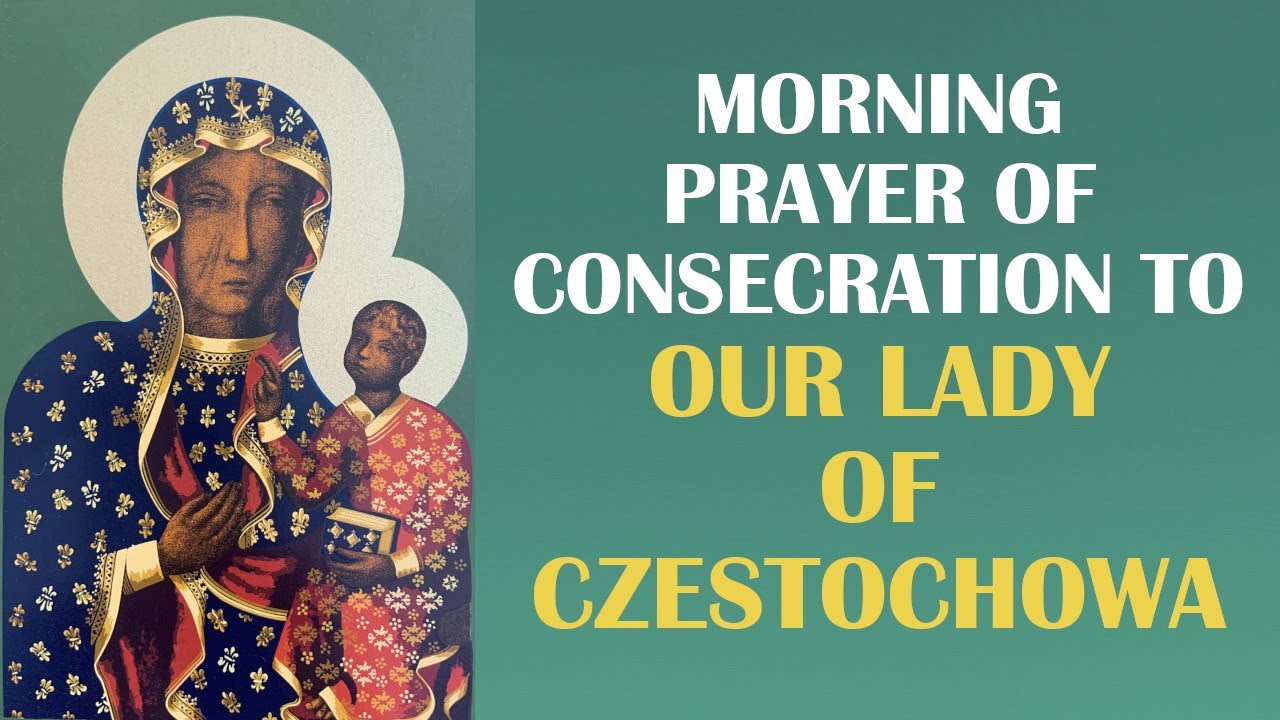
The icon known as the Black Madonna of Czestochowa is housed at the Jasna Góra Monastery in southern Poland. Tradition holds that it has been venerated for many centuries, drawing millions of pilgrims each year. The darkened complexion of Mary and the Child Jesus is often attributed to the ageing of pigments and candle soot over time, though the exact history is complex and layered with legend and restoration.
Two notable slashes across Mary’s cheek are central to its symbolism. They evoke a resilient, suffering Mother who stands with those who carry wounds of their own—physical, emotional, and spiritual. The star on Mary’s veil and the robes gilded in rich colours point to her dignity and to the divine light she reflects. While the icon has an unmistakable national and cultural identity, its message is universal: Mary leads us to Christ, and Christ sustains us in every season of life.
If you would like a concise historical overview and context, the entry on the Black Madonna of Czestochowa on Wikipedia is a helpful starting point. For pilgrim information and the liturgical life around the icon, the official site of the Jasna Góra Monastery provides schedules, news and background.
Why Catholics and others turn to prayer to our lady of czestochowa
Many people feel a personal connection to this title of Mary because it unites realism and hope. The icon portrays tenderness without removing the marks of suffering. For anyone facing hardship—illness, family strain, anxiety, grief—the devotion says: “You are not alone.” Through prayer to our lady of czestochowa, believers entrust their lives to a Mother who understands pain yet points unfailingly to Christ, the source of mercy and healing.
Additionally, this devotion carries an ecumenical sensitivity. The icon is written in a style familiar to the Christian East, and the sanctuary is rooted in Catholic life. If you are exploring how Eastern and Western traditions express devotion, this overview of the differences between Orthodox and Catholic traditions may offer helpful context for shared reverence towards Mary and the saints, even with distinct theological emphases.
Steps for prayer to our lady of czestochowa
There is no single “correct” method, but the following steps can help you pray with focus and sincerity. Adapt them to your situation and the time you have available.
- Prepare a quiet space. If possible, place an image of Our Lady of Czestochowa, a crucifix, or a candle nearby.
- Begin with a moment of silence. Breathe slowly and ask the Holy Spirit to guide your prayer.
- Make the Sign of the Cross. This grounds your prayer in the life of the Trinity.
- Express your intention clearly. Speak to Mary as to a mother: name your worries, hopes, names of people you are praying for, and any decision you face.
- Offer a set prayer. You might use a traditional text or a simple personal prayer to our lady of czestochowa (examples below).
- Add a decade of the Rosary or another devotion. Many pair this with the Rosary, a short psalm, or silence before the Blessed Sacrament.
- Conclude with gratitude. Thank God for listening, and ask for the grace to act on any light you have received.
If you appreciate structured devotions, you could combine prayer to our lady of czestochowa with time-tested prayers such as the Rosary or a chaplet. For instance, many faithful also learn how to pray the Divine Mercy Chaplet as a companion devotion centred on Christ’s mercy.
A daily prayer to our lady of czestochowa
Here is a simple text you can use each day. Feel free to adapt it to your circumstances.
O Our Lady of Czestochowa, Mother of the Saviour, I place myself under your protection today. You who carried the Child Jesus and held fast beneath the Cross, be close to me in my needs. Intercede for me, for my family, and for all I love. Teach me to trust God’s will, to persevere in hope, and to act with courage and compassion. Our Lady of Czestochowa, lead me to your Son, that I may live in his mercy and peace. Amen.
A novena prayer to our lady of czestochowa
A novena is nine consecutive days of prayer for a specific intention. You can keep it brief—five to ten minutes daily. Set a time you can realistically maintain.
- Sign of the Cross and a minute of silence.
- Read a short Scripture verse (for example, Luke 1:46–55 or John 2:1–11).
- State your intention clearly.
- Pray: “Our Lady of Czestochowa, I entrust to you [name your request]. Please pray that I may seek God’s will, accept his timing, and live with steadfast faith. Amen.”
- Conclude with an Our Father, Hail Mary, and Glory Be.
Repeat daily for nine days. Keep notes of any shifts in your perspective or practical steps you sense you should take. Remember: the goal of prayer to our lady of czestochowa is not to ‘control’ outcomes but to grow in trust and to cooperate with grace.
Short invocation: prayer to our lady of czestochowa
In moments of stress or sudden need, a brief appeal can be enough: “Our Lady of Czestochowa, shelter me under your mantle; lead me swiftly to Jesus.” Keeping a concise phrase in your heart allows you to pray anywhere—on the commute, before a meeting, or when you wake in the night.
When and where to say prayer to our lady of czestochowa
One strength of the devotion is its flexibility. You can pray at home before an icon, at church before the Blessed Sacrament, or while walking. Many make it part of morning or evening prayer, or use their lunch break for a short reflection and an intention.
- At home: set a small prayer corner with a candle and image. A consistent place helps you build the habit.
- At church: visit during open hours, light a candle, and spend a few minutes in intercession.
- On pilgrimage: if you are ever able to visit Jasna Góra, attending Mass or a Marian devotion there can be especially moving. The Jasna Góra sanctuary website lists services and visitor information.
The Church encourages sound, Christ-centred Marian devotion. For a thoughtful framework on how Marian prayer supports the life of faith, see Pope Paul VI’s apostolic exhortation Marialis Cultus (For the Right Ordering and Development of Devotion to the Blessed Virgin Mary). It offers principles for integrating Marian prayer with Scripture, liturgy, and daily life.
Intentions and themes to bring to Mary
Like all intercessory prayer, prayer to our lady of czestochowa grows when we are honest about our deepest needs and ready to take the next practical step. Consider these themes as you pray:
- Family life: unity, reconciliation, patience in parenting, care for elders.
- Health: medical treatments, strength for caretakers, peace in anxiety.
- Work and studies: ethical decisions, perseverance, wise use of talents.
- Faith and virtue: freedom from fear, growth in charity, courage to forgive.
- Community and society: protection of the vulnerable, justice with mercy, and peace.
As you entrust these intentions through prayer to our lady of czestochowa, ask Mary to align your heart with God’s will—and then act on any small, concrete prompt that follows in daily life.
Common mistakes when practising prayer to our lady of czestochowa
It is easy to slip into habits that quietly drain prayer of its strength. Watch out for these pitfalls:
- Thinking of prayer as a transaction. Prayer is relationship, not a purchase. Avoid treating the devotion as a guarantee of a specific outcome.
- Rushing or multitasking every time. Short prayers are fine, but occasionally offer unrushed time to listen and reflect.
- Neglecting Scripture. A few lines of the Gospel or Psalms will enrich your prayer and anchor it in God’s Word.
- Skipping gratitude. Thank God for small mercies and growth—even when your main intention remains unresolved.
- Giving up too quickly. Perseverance matters; keep praying, and keep doing what good you can while you wait.
Deepening your devotion over time
Growth in prayer is gradual. If you feel stuck or dry, that is normal. Try these gentle practices to deepen the habit:
- Keep a simple prayer journal. Note your intention, a verse, and any light you received.
- Pair prayer to our lady of czestochowa with the liturgical year—special feasts, Advent, Lent.
- Learn a Marian hymn or antiphon and use it as a closing prayer.
- Invite a friend or family member to join you for a brief weekly prayer time.
- Read a trustworthy resource on Marian devotion to nourish understanding and practice.
If you would like a historically oriented reference, the entry on Czestochowa in the Catholic Encyclopaedia is informative: see New Advent’s article on Czestochowa.
Examples of wording for your own prayer
While classic formulas are valuable, a personal approach can be very fruitful. Here are adaptable lines you can weave into your own prayer to our lady of czestochowa:
- “Mary, Mother of Jesus and my Mother, teach me to trust when the outcome is uncertain.”
- “Black Madonna, who bears the marks of suffering, stand with me in my wounds and help me to hope.”
- “Mother, lead me to forgive as I have been forgiven, and to act with courage and kindness.”
- “Our Lady of Czestochowa, keep my loved ones under your mantle and bring us closer to Christ.”
You might end with a simple doxology: “Glory be to the Father, and to the Son, and to the Holy Spirit…” This reminds us that Mary’s whole mission is to draw us into the life of God.
Fitting the devotion into a busy day
Consistency beats intensity. Ten peaceful minutes daily will do more for your spiritual life than an occasional hour in a rush. Try this simple rhythm:
- Morning (2–3 minutes): Offer your day and one intention through a brief prayer to our lady of czestochowa.
- Midday (1 minute): Pause to say the short invocation and recall your intention.
- Evening (5 minutes): Review the day, give thanks, and entrust tomorrow to Mary’s intercession.
If you prefer a more structured devotion in the evening, a decade of the Rosary with a focused intention can be a beautiful way to close the day.
How this devotion relates to other prayers
Prayer to our lady of czestochowa sits comfortably alongside the Rosary, the Angelus, and Eucharistic adoration. You can also pair it with Christ-centred devotions like the Divine Mercy Chaplet, which emphasises trust in Jesus’ mercy and can deepen the confidence you bring to Marian intercession.
For readers exploring varied Christian expressions, contrasts and common ground between East and West can illuminate why this icon speaks across traditions. The article on the differences between Orthodox and Catholic traditions offers a concise background that can enrich your appreciation of the icon’s style and theology.
Recommended external resources
- Jasna Góra Monastery official site for pilgrim information, history, and liturgical schedules.
- Background on the Black Madonna of Czestochowa for a concise overview and references.
- Marialis Cultus by Pope Paul VI for guidance on sound Marian devotion in harmony with Scripture and liturgy.
