Prayer to mary perpetual help: essential guide and 5 key steps
prayer to mary perpetual help
The prayer to mary perpetual help is a beloved Catholic devotion that asks the Mother of God—honoured under the title “Our Lady of Perpetual Help”—to intercede in our needs and to lead us to her Son. Whether you are facing a difficult decision, praying for a loved one, or simply seeking steadiness in everyday life, this time-tested prayer offers comfort, guidance and hope. In this guide, you will find what the devotion is, how to pray it thoughtfully, its history and symbolism, and practical tips for making it part of daily life.
More than a set of words, the prayer to mary perpetual help forms a way of approaching God with confidence, trusting that Mary, the Mother of Jesus, prays with and for us. It is rooted in Scripture, tradition and the Christian belief that the saints support us on our journey of faith.
What is the prayer to mary perpetual help?
At its heart, the prayer to mary perpetual help is a petition: we ask Our Lady to assist us “perpetually”—not once, but continually—as we navigate life’s challenges. This prayer is frequently said before the icon of Our Lady of Perpetual Help, a striking image rich in symbolism, and it is commonly used within a novena (nine days of prayer) or as a simple daily invocation.
Origins of the icon and devotion
The devotion that underpins the prayer to mary perpetual help is closely linked to a 15th-century Byzantine icon, now enshrined at the Church of St Alphonsus Liguori in Rome. In 1866, Pope Pius IX entrusted the icon to the Redemptorists with the mandate to “make her known.” You can read a detailed historical overview and iconographic explanation on trusted sources such as Wikipedia’s article on Our Lady of Perpetual Help, and on the Redemptorists’ international site, which shares news and resources about the devotion: Redemptorists (CSsR) international.


The message of the prayer
When people turn to the prayer to mary perpetual help, they are not treating Mary as a replacement for God, but as a compassionate intercessor—someone who points us to Christ and prays for us. The prayer expresses trust, a desire for the Lord’s will, and a request for strength and mercy in particular needs: health, family, work, travel, spiritual growth and reconciliation.
How to pray the prayer to mary perpetual help
There is no single “only” way to approach the prayer to mary perpetual help. Some people pray the words in a book or on a card; others pray spontaneously, using the icon as a focus. Here is a gentle framework you can adapt.
Prepare your heart
- Find a quiet place. If you have an icon or image of Our Lady of Perpetual Help, place it nearby.
- Begin with the Sign of the Cross and a moment of stillness.
- Bring to mind the intention for which you are offering the prayer to mary perpetual help: name the person, situation or need.
- Ask for the grace to seek God’s will above all.
A traditional short prayer
You may use this traditional form of the prayer to mary perpetual help:
“Mother of Perpetual Help, I fly to you and place my life under your care. You are the Mother of Mercy; obtain for me the grace to imitate your virtues. I entrust to you my present need (mention intention). Dear Mother, help me to accept God’s will, and lead me ever closer to your Son, Jesus. Amen.”
The Novena to Our Lady of Perpetual Help
Many parishes hold a weekly novena, often on Wednesdays. To pray a personal novena at home, you can keep the following pattern for nine days:
- Begin with the Sign of the Cross and a brief moment of silence.
- Read a short passage of Scripture (for example, a Psalm, or a Gospel snippet).
- Pray the prayer to mary perpetual help slowly, naming your intention.
- Add a decade of the Rosary or a Hail Mary, according to your preference.
- Close with a brief thanksgiving, entrusting the outcome to God.
There are widely used novena texts you might find helpful. For a reliable form used around the world, see the Redemptorists’ novena to Our Mother of Perpetual Help, which offers structured prayers and hymns suitable for both public and private devotion.
Praying with the icon
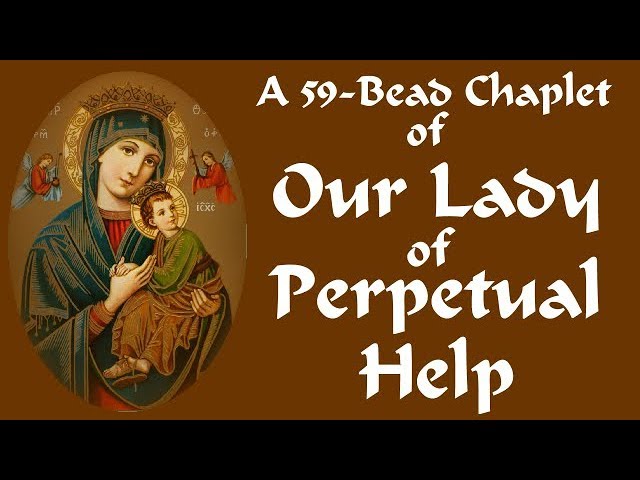
The icon of Our Lady of Perpetual Help is a visual catechism. As you say the prayer to mary perpetual help, take time to “read” the image: Mary’s steady gaze invites trust; the Child Jesus grips her hand; the angels bear instruments of the Passion. Let the image draw you into the mystery of Christ’s love, which Mary always magnifies.
Meanings within the icon of Our Lady of Perpetual Help
Many people find the prayer to mary perpetual help deepens when they understand the symbolism of the icon. Key features include:
- Greek initials identifying Mary as “Mother of God” and Christ as “Jesus Christ”.
- Archangels Michael and Gabriel presenting the Cross, nails and spear—reminders of the Passion.
- The Child’s sandal dangling, sometimes read as a sign of haste or vulnerability.
- Mary’s starry veil and red tunic—the colours of motherhood and sacrifice—over a blue mantle, indicating her role and dignity.
- A golden background signifying the light of heaven and the divine presence.
For a comprehensive explanation of these elements, you may consult this detailed overview of Our Lady of Perpetual Help, which summarises historical scholarship and iconography in an accessible way. Reflecting on these symbols can enhance your use of the prayer to mary perpetual help, helping you to hold together your personal needs and the wider story of salvation.
When and why people turn to the prayer to mary perpetual help
Throughout the world, countless Christians rely on the prayer to mary perpetual help as a trusted companion in specific circumstances. Common intentions include:
- Health concerns: surgery, chronic illness, mental health and recovery.
- Family and relationships: marriage, children, ageing parents, reconciliation.
- Work and study: employment decisions, financial stress, examinations.
- Spiritual growth: overcoming temptation, deepening prayer, returning to faith.
- Safety and travel: commending journeys and daily routines to God’s care.
Many also turn to the prayer to mary perpetual help in moments of wider crisis—natural disasters, community unrest or times of bereavement—asking for compassion and practical wisdom. Devotees often testify that, even when circumstances remain difficult, they receive new peace and clarity.
Integrating this devotion into everyday life
A key strength of the prayer to mary perpetual help is its simplicity. Consider setting a regular time—perhaps morning coffee, a midday pause, or before bedtime—so that the prayer becomes part of your rhythm. Pair it with Scripture: a line from the Psalms, a verse from Luke’s Gospel, or a daily Mass reading. Keep a written list of intentions and update it with thanksgivings, noticing how God has been at work over time.
You might also weave the prayer to mary perpetual help into other practices. For instance, some people pray a short invocation to Our Lady before beginning the Rosary, or combine it with mercy-focused devotions like the chaplet; if you are interested in a step-by-step approach, see how to pray the Divine Mercy Chaplet for a complementary devotion focused on trust in God’s mercy.
If you worship or study across traditions, you may wonder how Marian devotion is understood beyond Roman Catholicism. A helpful background article on longstanding similarities and differences can be found here: differences between Orthodox and Catholic traditions. Icon veneration and honouring Mary as Theotokos (God-bearer) are strong in the Christian East, which can enrich your appreciation of the icon used with the prayer to mary perpetual help.
Common mistakes and gentle corrections
Because it is so approachable, the prayer to mary perpetual help is sometimes misunderstood. Here are frequent pitfalls and ways to address them:
- Treating it as a “magic formula”. Correction: Prayer is relationship, not ritualism. Say the words with attention, and always add, “Your will be done,” trusting God’s wisdom.
- Neglecting Scripture and Sacraments. Correction: The prayer to mary perpetual help sits best inside a wider Christian life—listening to God in the Bible, receiving the Eucharist, practising charity.
- Forgetting thanksgiving. Correction: Keep a gratitude list. Thank God and Our Lady for graces received; this cultivates faith even amid unanswered petitions.
- Overloading the intention. Correction: Be specific. Focus each time you pray on one or two intentions so your heart is present, not scattered.
- Comparing outcomes. Correction: Every soul’s path is unique. Resist measuring your prayer by others’ experiences; persevere with humble trust.
Above all, remember that the aim of the prayer to mary perpetual help is to draw closer to Christ. Mary’s role is to accompany and encourage, to steady us when we feel unsteady, and to remind us that God is faithful.
Historical spread and living practice today
After 1866, the Redemptorists carried the icon and the devotion across the globe. Weekly novena services became popular in places such as Ireland, the Philippines and the United States. Today, the National Shrine of Our Mother of Perpetual Help in Baclaran is among the busiest Marian shrines, with millions seeking comfort and making the prayer to mary perpetual help a centrepiece of parish and family life. For insight into a parish-based novena schedule and catechesis, see Baclaran Church, National Shrine of Our Mother of Perpetual Help.
In the United Kingdom and elsewhere in Europe, the devotion often sits alongside Eucharistic Adoration and communal Rosary, and is used in personal prayer especially during times of illness or transition. Even a brief daily prayer to mary perpetual help can act as a lifeline when routines are crowded and attention is thin.
Practical example: a simple weekly pattern
If you would like to build a sustainable habit around the prayer to mary perpetual help, consider this weekly rhythm:
- Monday: Offer the prayer for wisdom at work or in studies.
- Tuesday: Pray for family relationships—unity, forgiveness, patience.
- Wednesday: Join a parish novena or say a home novena prayer and read a Gospel passage.
- Thursday: Intercede for the sick and those who care for them.
- Friday: Pray in reparation and for strength against temptation.
- Saturday: Entrust your week to Our Lady and prepare for Sunday worship.
- Sunday: Give thanks for graces received; note any “small mercies” since last week.
By aligning the prayer to mary perpetual help with real needs and an ordinary timetable, you gently form a habit that is both realistic and fruitful.
Recommended external resources
- Comprehensive background on Our Lady of Perpetual Help (history and iconography)
- Official Redemptorist novena to Our Mother of Perpetual Help (texts and guidance)
- National Shrine of Our Mother of Perpetual Help, Baclaran (devotions and schedules)
- Vatican News – Church resources and reflections to support your prayer life
Related articles
Frequently asked questions about prayer to mary perpetual help
Is the prayer to mary perpetual help a Catholic-only devotion?
It is most widely practised in the Catholic Church, particularly in parishes served by the Redemptorists. However, many Christians from other traditions appreciate the icon and the spiritual message of trusting God’s help through Mary’s intercession. If you are new to Marian prayer, you can start simply and ensure your focus remains on Christ.
Do I need the icon to say the prayer?
No. The prayer to mary perpetual help can be said anywhere—on a commute, during a quiet walk, or at home. The icon is a helpful aid because it centres your attention and teaches through imagery, but it is not required.
What if my request is not granted?
Prayer is not a guarantee of specific outcomes. The prayer to mary perpetual help is about entrusting your needs to God’s loving will. Sometimes the answer is delayed or different from what we expect. Keep praying with honesty and gratitude for small signs of grace; support your prayer with Scripture, community and the sacraments.
How long does a novena take and what if I miss a day?
A novena lasts nine consecutive days. If you miss a day, simply continue the next day; God is not bound by the clock. The point of a novena linked to the prayer to mary perpetual help is steady perseverance, not perfection.
Can I combine this prayer with the Rosary or other devotions?
Yes. Many people begin a decade of the Rosary with the prayer to mary perpetual help or end their daily prayer time with this short invocation. It pairs well with Scripture reading, Eucharistic Adoration and other devotions that foster trust and mercy.
Is there a “best” time to pray?
The best time is the one you will keep. Some prefer early morning; others find a lunchtime pause more reliable. If your parish offers a weekly novena, that can help you stay consistent. The important thing is to be sincere and present when you say the prayer to mary perpetual help.
Conclusion on prayer to mary perpetual help
The prayer to mary perpetual help is a gentle yet powerful way to ask for God’s aid while walking closely with Mary, who always points us to Jesus. Rooted in an ancient icon and carried by centuries of Christian practice, it combines trust, perseverance and gratitude in a form anyone can learn and make their own.
Whether you pray it as a novena, a daily petition, or an occasional cry for help, the prayer to mary perpetual help aligns your heart with God’s purposes and invites steady hope. Its icon teaches us that Christ’s love meets us in real fears and fragile moments; Mary’s hand is firm because she knows where to lead us.
If you are beginning, start small: a short intention, a quiet pause, a sincere “Mother of Perpetual Help, pray for us.” Over time, the prayer to mary perpetual help can become a thread of grace running through your days—supporting your faith, shaping your choices and drawing you deeper into the mystery of God’s mercy.
