Prayer to Mary of Knots: Essential, Practical Guide in 5 Steps
Prayer to Mary of Knots: meaning, origins, and how to pray
The prayer to mary of knots is a beloved Catholic devotion that invites believers to entrust life’s tangles to the gentle care of the Virgin Mary. Known also as “Mary, Undoer of Knots” or “Our Lady Undoer of Knots,” this spiritual practice focuses on asking Mary to help untie the complex problems, hurts, and confusions that can weigh on the heart. Whether you are facing a strained relationship, a difficult decision, or long-standing anxiety, the prayer to mary of knots offers a compassionate pathway to clarity, hope, and inner peace.
In this guide, you will discover what the prayer to mary of knots is, where it comes from, and how to practise it in a simple, meaningful way. You will also find tips, examples, common mistakes to avoid, and helpful resources so you can integrate this devotion into your daily life. No expertise is required—only a sincere intention and an open heart.
While rooted in Catholic tradition, the prayer is accessible to anyone seeking help with knots—those stubborn, repeated challenges that seem impossible to loosen on your own. The prayer to mary of knots is not magic; rather, it is a gentle invitation to patience, surrender, and trust that the Mother of Jesus intercedes for us and leads us towards healing.
What is the prayer to mary of knots?
At its heart, the prayer to mary of knots is a way of entrusting difficult situations—symbolised as knots—to Mary and asking for her intercession to untie them. The “knots” can be anything: misunderstandings, resentments, addictions, debt, legal problems, spiritual dryness, or past wounds that still influence the present. Through this prayer, you name your knot, place it before God with Mary’s help, and ask for the grace to see a way forward.

Many people pray it as a novena (nine consecutive days), but it can also be offered as a daily prayer during quiet moments, at the start of a new project, or when a particular issue feels especially tangled. The prayer to mary of knots often accompanies the Rosary, as the rhythm of the Hail Marys mirrors the slow, careful work of untying a knotted cord.
History and symbolism behind the devotion
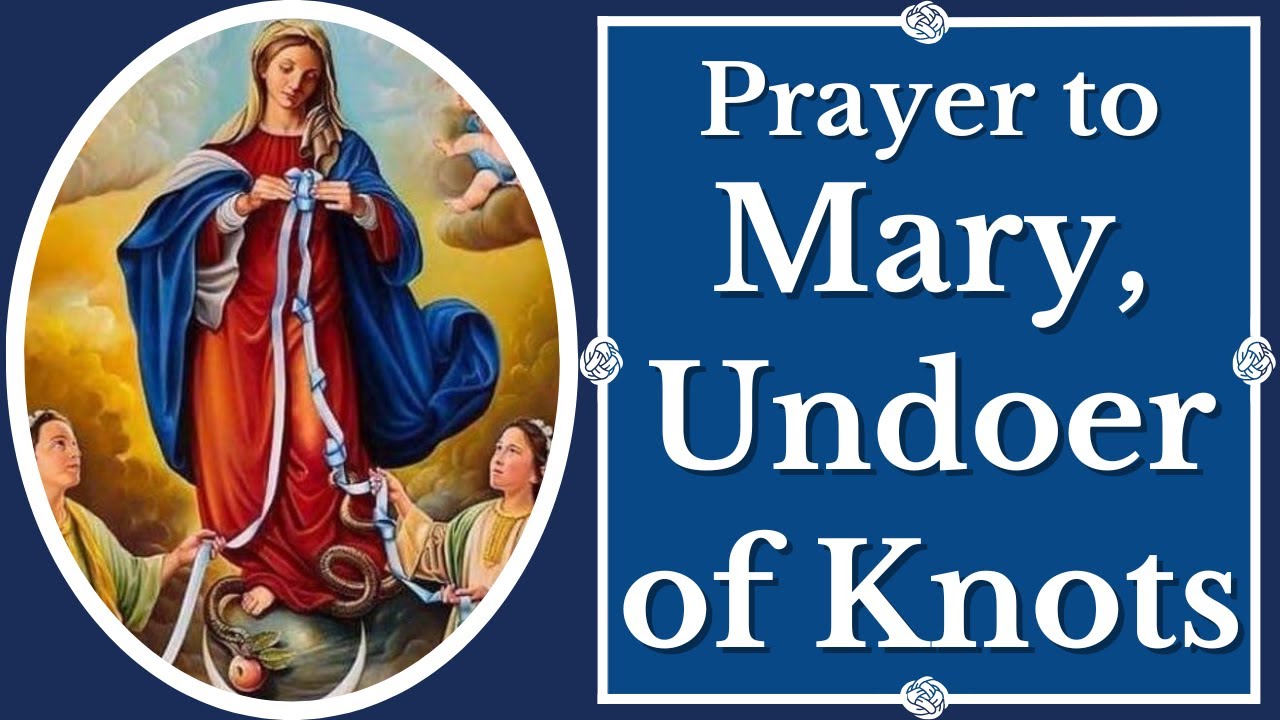
The devotion to Mary as “Undoer of Knots” has its roots in a Baroque painting housed at St Peter am Perlach in Augsburg, Germany. Painted by Johann Georg Melchior Schmidtner in the early 18th century, it depicts Mary patiently untying a knotted ribbon, with angels assisting and the Holy Spirit hovering above. The image reflects an older tradition from St Irenaeus (2nd century), who wrote that “the knot of Eve’s disobedience was loosed by the obedience of Mary.” Over time, this theological insight blossomed into a pastoral devotion: the prayer to mary of knots highlights Mary’s maternal care in undoing the knots of sin, confusion, and suffering in our lives.
In recent decades, the devotion gained international visibility after it was promoted by Pope Francis, who encountered it while studying in Germany. Today, the icon and the associated novena have become a source of comfort for many seeking Mary’s accompaniment in untangling hardships.
How to pray the prayer to mary of knots
You can approach this devotion in a variety of ways. The steps below describe a clear, beginner-friendly structure you can adapt to your circumstances. The key is simplicity and sincerity.
1) Choose your knot and intention
Begin by selecting one particular knot—something specific rather than a general sense of “everything is difficult.” For instance: “Help me reconcile with my sister,” or “Guide me to resolve my debts responsibly,” or “Heal my fear of commitment.” Name the knot candidly before God. The prayer to mary of knots is more focused and fruitful when your intention is concrete.
2) Create a quiet space
Find a peaceful place where you can sit for 10–20 minutes without interruption. You may wish to light a candle or place a simple image of Mary nearby. This is not essential, but it can help you pray with more focus and reverence.
3) Begin with a moment of stillness
Take a few deep breaths. Offer a short prayer inviting the Holy Spirit to guide your thoughts and feelings. The prayer to mary of knots is a work of the heart; calm your mind so you can recognise what needs loosening.
4) Entrust the knot to Mary
Speak to Mary in your own words. A simple approach might be: “Mary, Mother of Jesus, I place this knot before you. I do not know how to untie it, but I believe you do. Please intercede for me and help me respond with wisdom and love.” If you prefer scripted prayers, many novena versions are available (see the resources below); just ensure your intention is clearly named.
5) Pray with the Rosary (optional but recommended)
Many people accompany the prayer to mary of knots with the Rosary, offering a decade (or the full Rosary) for the intention. As you move from bead to bead, imagine the knot gradually loosening. Visualising the ribbon becoming smooth again can help your heart let go of anxiety and blame and make room for hope and patience.
6) Reflect and listen
After praying, spend a minute or two in silence. Pay attention to any nudge: a person to forgive, a practical step to take, or simply the grace to wait. The prayer to mary of knots is not only about asking; it is also about listening for God’s gentle guidance.
7) Act gently but decisively
Prayer and action go together. If your reflection suggests a step—making an apology, seeking professional advice, drawing a healthy boundary—attempt it with humility. Mary’s intercession often accompanies our real-world efforts, helping us persevere with kindness and courage.
8) Repeat as a novena (optional)
If you choose, pray the same intention for nine consecutive days. Keep a small journal recording what arises each day. Over time, you may notice shifts in perspective, unexpected opportunities, or renewed strength to keep going. The steady rhythm of the prayer to mary of knots supports perseverance and trust.
When to use the prayer to mary of knots
You can turn to this devotion whenever a situation feels stuck or confusing. People commonly pray the prayer to mary of knots for:
- Family tensions and reconciliation
- Marriage challenges or relationship misunderstandings
- Worries about children or ageing parents
- Financial responsibility and debt management
- Workplace conflicts and career decisions
- Health concerns and caretaker stress
- Habits and addictions that feel unbreakable
- Spiritual discouragement, scruples, or persistent anxiety
You can also use it to seek clarity when discernment is needed—choosing between options, deciding how to help a struggling friend, or navigating a major life change.
Practical tips for a deeper experience
Be honest about the knot
A knot stays tight when we tug at the wrong end. Name what is truly at stake—your fear, your pride, your grief. The prayer to mary of knots works best when honesty meets compassion.
Seek reconciliation where possible
If your knot involves another person, consider seeking reconciliation. That might mean apologising, asking for forgiveness, or proposing a calm conversation. Your prayer is not a substitute for responsible action; it is the strength to take that action well.
Practise patience and consistency
Some knots loosen slowly. Keep praying daily for a time, even if nothing seems to change. Often, the first difference appears inside you: greater calm, less blame, more perspective.
Combine prayer with wise support
Spiritual practices are complemented by professional help when appropriate. Counselling, debt advice, a doctor’s care, or a mentor’s guidance can all be part of Mary’s answer to your prayer.
Common mistakes to avoid
- Treating the devotion as a quick fix. The prayer to mary of knots is a path of trust, not a guarantee of instant results.
- Praying vaguely. Define your knot. A clear intention helps you notice progress and remain focused.
- Neglecting practical steps. If reconciliation or responsible action is possible, take it.
- Losing hope too quickly. Some knots represent years of patterns; allow time and gentleness to do their work.
Examples of how people use this devotion
Consider a parent anxious about a young adult drifting from the family. Each morning, they pray a decade of the Rosary as a prayer to mary of knots, asking for patience and the right words. Within a month, they notice less panic and more listening, which opens a small but real space for conversation and mutual respect.
Or a person overwhelmed by debt prays a novena and, during reflection, feels prompted to seek advice and commit to a simple budget. The knot does not vanish overnight, but the tangle begins to loosen: clarity replaces shame, and steady progress becomes possible.
Variations and ecumenical perspectives
While the devotion is especially cherished in the Catholic Church, Christians from different traditions can comfortably adapt it. The theme—asking Mary to help untie what is binding—resonates with anyone who honours her role in the story of salvation. If you prefer not to use set prayers, simply speak from the heart. If you are accustomed to the Rosary, let its cadence guide you. The prayer to mary of knots meets you where you are.
Combining devotions for holistic growth
For some, the prayer to mary of knots fits naturally alongside other practices. For example, praying the Rosary on Mondays and Saturdays, a short meditation on Scripture midweek, and the novena at times of special need. Others combine it with a regular examination of conscience, or a season of gratitude journalling. The prayer to mary of knots complements, rather than competes with, other pathways to grace and growth.
Recommended external resources
- Comprehensive overview of Mary, Undoer of Knots on Wikipedia
- Vatican News: Pope Francis and the devotion to Our Lady Undoer of Knots
- EWTN: Full novena to Our Lady Undoer of Knots
- Catholic Culture: Background and guidance on the Undoer of Knots devotion
Related articles
Frequently asked questions about prayer to mary of knots
Is the devotion officially recognised by the Church?
Yes. While there is no single “official” formula required, the devotion is widely practised within the Catholic Church and has been encouraged by many pastors, religious communities, and lay movements. The image and title “Mary, Undoer of Knots” have a recognised place in Catholic spirituality, and the prayer to mary of knots is commonly used in parishes and homes worldwide.
Do I need a Rosary to pray it?
No, a Rosary is not necessary, though many find it helpful. You can pray the prayer to mary of knots using your own words, a short litany, or a novena text. If you enjoy the meditative rhythm of the Rosary, it can deepen your focus and patience while you hold your intention before God.
Can I pray for someone else’s knot?
Absolutely. Interceding for others is a beautiful expression of love. Simply name the person and the knot you are presenting to Mary. You might also ask permission if the situation is sensitive, and consider how you can support them practically alongside your prayer.
What if the knot doesn’t loosen?
Sometimes the situation remains complex. In those cases, pay attention to interior shifts: less anxiety, more hope, renewed courage to act. The prayer to mary of knots often brings peace and clarity even before circumstances change. Continue praying, seek wise counsel, and take small, practical steps. Some knots take time.
Is there a best time of day to pray?
Choose a time you can keep consistently—morning before the day begins, lunchtime, or evening when things are quiet. Consistency matters more than timing. If you are praying a novena, try to keep roughly the same time each day to reinforce a steady rhythm.
Is the novena text fixed, or can I adapt it?
There are several reputable versions of the novena. It is fine to adapt the language to your own voice, keeping the core intention the same: entrusting your knot to Mary’s intercession and asking for God’s grace to untie it. If you use a published version, pray it respectfully and attentively.
Conclusion on prayer to mary of knots
The prayer to mary of knots offers a gentle, hopeful way to face the challenges that tie us up inside. Rooted in the Christian conviction that God’s grace can transform even the most stubborn situations, this devotion invites you to name your knot honestly, entrust it to Mary’s care, and respond with patient, practical love. Over time, many people find that the tightest tangles begin to loosen—sometimes in surprising ways.
Whether you pray it as a daily practice or as a focused novena, the prayer to mary of knots can become a steady companion through family struggles, financial pressures, health concerns, or spiritual discouragement. It does not promise quick fixes; it promises presence—Mary’s maternal intercession and God’s quiet guidance as you take courageous steps forward.
If you are carrying a knot today, begin simply. Set aside a few minutes, speak your intention, and invite Mary to help. The work of untying is patient and kind, and you do not have to do it alone.
