Prayer for healing the family tree: 7 essential, practical steps
Prayer for healing the family tree
When people speak about prayer for healing the family tree, they are usually describing a Christian way of praying that asks God to heal wounds, patterns and hurts that seem to run through families across generations. Rather than being superstitious or fatalistic, this kind of prayer seeks God’s mercy, peace and renewal in the whole family line—past, present and future—so that unhealthy cycles are broken and blessing can flourish.
Many believers find that reflecting on family history with compassion, naming specific needs before God, and interceding for relatives (living and deceased) can bring fresh hope. While not a replacement for the sacraments, pastoral care or therapy when needed, prayer for healing the family tree is a practical way to invite Christ’s healing love into the complex web of relationships that shape us.
In this guide, we will explain what it is, why it matters, and how to approach it with wisdom and peace. We will also offer a sample prayer, highlight common mistakes to avoid, and suggest useful resources if you would like to go deeper.
Understanding prayer for healing the family tree
At its heart, prayer for healing the family tree is a form of intercession. You bring your family line to God, asking him to heal what is broken, forgive what needs mercy, and bless what is good. People who pray in this way often notice recurring struggles—such as conflict, addiction, unforgiveness, poverty, estrangement or fear—that seem to repeat from one generation to the next. The prayer names these patterns without blame, and asks God to replace them with freedom, reconciliation and peace.

This approach is not about dredging up every difficulty or finding someone to fault. Instead, it is about standing in Christ’s light and truth. You acknowledge the reality of sin and suffering, but you also affirm God’s sovereignty and compassion. In practical terms, this can involve tracing a simple family tree, listing key events, and then choosing to forgive, bless and release each person into God’s care.
Importantly, prayer for healing the family tree does not assume that we are bound by unbreakable curses. Christians proclaim that Jesus has already conquered sin and death. The prayer simply applies that victory to the tangled places of our own story, inviting grace to mend what is frayed.
Biblical and theological foundations
Scripture underlines both personal responsibility and the deep interconnection of human lives. The Bible is full of family trees and generational narratives because God meets us in real histories, not in isolation. While some passages reflect on consequences that ripple through families, the wider biblical arc is one of mercy, redemption and new beginnings in Christ.
Intercession—praying on behalf of others—is a time‑honoured biblical practice. The Church teaches that praying for others is a work of love and hope. For an accessible overview, see the Catechism of the Catholic Church (Part Four: Christian Prayer), which explains how intercession participates in Christ’s own prayer for his people.
God’s promise of healing and rejoicing over his people is beautifully expressed in prophecy. For example, the assurance that the Lord is with us, mighty to save and rejoicing over us, can be a powerful anchor for this journey. You might take encouragement from the comfort of Zephaniah 3:17 as you pray for your family.
The Cross is central. In Christian understanding, it is at the Cross that Jesus takes upon himself our sin and offers us forgiveness and new life. Prayer for healing the family tree essentially brings family wounds to the Cross, trusting in the power of Jesus’ sacrifice, the mercy of the Father and the transforming work of the Holy Spirit.
Finally, because prayer is relational, it is wise to integrate it with the life of the Church and healthy community. The sacraments, Scripture, and accountable pastoral guidance help ensure that this prayer remains grounded, hopeful and Christ‑centred.
How to practise prayer for healing the family tree
Below is a gentle, step‑by‑step way to approach this prayer. Adjust it to your tradition and circumstances. If you have a trusted pastor, spiritual director or mature prayer partner, consider asking them to accompany you.
- Invite God’s presence. Begin by asking the Holy Spirit to guide and protect your time of prayer. Give thanks for your family and for God’s faithfulness through every generation.
- Clarify your intention. State simply what you are seeking: for example, “I’m praying for the healing of generational conflict” or “I’m praying for reconciliation and peace.” Naming your intention keeps prayer for healing the family tree focused and humble.
- Sketch a simple family overview. You do not need a full genealogy. A few names and key events—marriages, separations, losses, migrations, addictions, faith milestones—can help you see patterns.
- Practice forgiveness. In God’s presence, choose to forgive those who have hurt you or others in the family. Forgiveness is not excusing wrong, but releasing judgment to God. If needed, forgive yourself too.
- Renounce unhealthy legacies. Gently but clearly renounce habits or beliefs that are harmful (e.g., “In Jesus’ name, I renounce the pattern of bitterness in our family”). Ask God to replace them with the opposite grace—kindness, hope, faithfulness.
- Bless your ancestors. Pray for your forebears, thanking God for any goodness you have received through them—faith, courage, work ethic, love of music, resilience. Ask God to show mercy where there was harm.
- Bless the living and future generations. Name children, parents, siblings, cousins and grandchildren if you wish. Pray for health, unity, vocation, and a deeper encounter with God for each person.
- Use Scripture and trusted devotions. Short passages of Scripture can shape your prayer. Many find the Divine Mercy Chaplet prayer helpful when seeking God’s mercy over family lines.
- Commit to practical steps. After praying, consider a small act of reconciliation or kindness—writing a letter, making a call, or offering a sincere apology. Prayer often opens a door that loving action can walk through.
- Close with gratitude. Thank God for what he has done and for what is yet unseen. Ask for ongoing protection and guidance.
Preparing your heart and setting intentions
Go slowly. Before you begin prayer for healing the family tree, pause to notice any strong emotions. Bring them to God honestly. If certain memories are overwhelming, it may be wise to speak to a pastoral leader or therapist. A steady, peaceable pace is more fruitful than trying to fix everything at once.
A sample prayer for healing the family tree
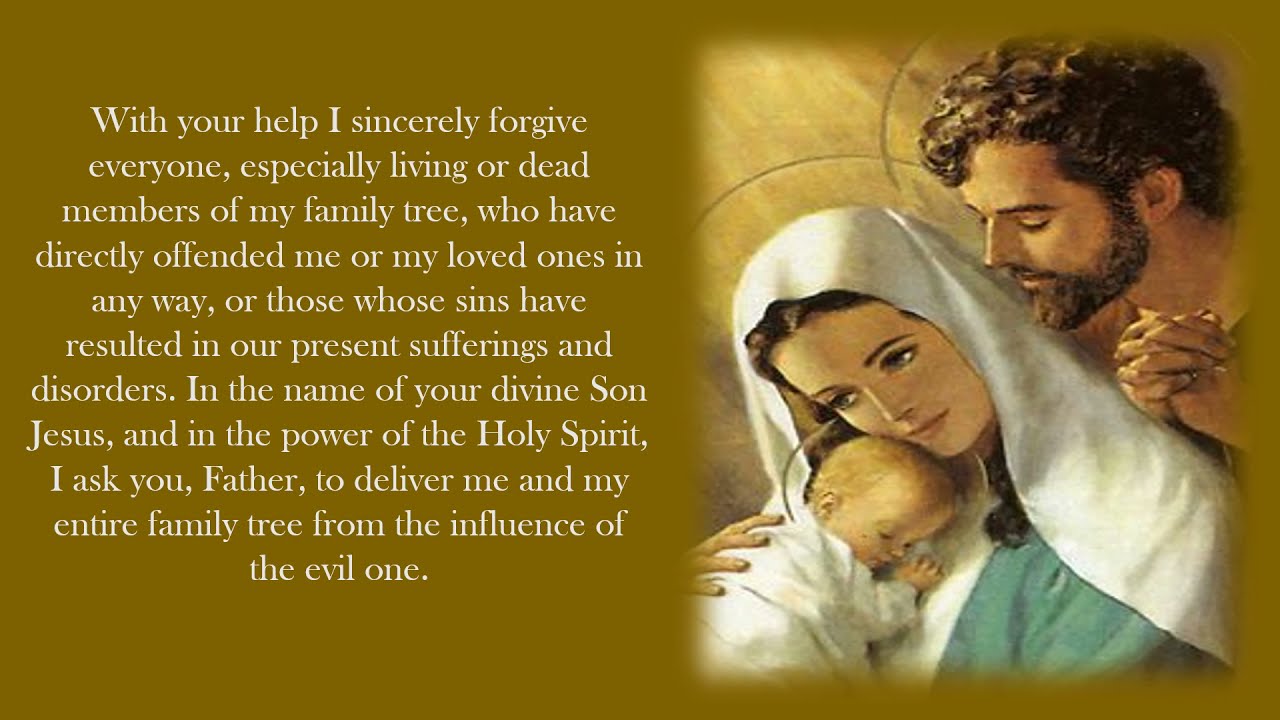
Heavenly Father, I come before you in the name of Jesus and in the power of the Holy Spirit. You know my family through every generation. Thank you for all the gifts you have given us and for your faithful love.
Lord Jesus, I bring to your Cross our family’s wounds—spoken and unspoken, known and unknown. I ask for mercy where there has been sin, for comfort where there has been grief, and for freedom where there has been bondage. In your name, I choose to forgive those who have harmed me and my loved ones, and I ask forgiveness for any harm we have caused.
Holy Spirit, reveal any patterns that do not reflect your truth. I renounce bitterness, fear, violence, addiction, and despair in my family line, and I ask you to replace them with your peace, courage, self‑control, and hope. Please bless my ancestors with your mercy, bless my living relatives with your grace, and bless future generations with your protection.
Father, pour your blessing upon our family tree. May your healing love flow through us, restoring what is broken and strengthening what is good. I ask this through Christ our Lord. Amen.
Complementary practices that support the journey
- Scripture meditation. Choose a verse (e.g., Psalm 23; Romans 8; John 14) and pray it for your family.
- Ignatian Examen. A short daily reflection can help you notice patterns and graces. See the practical guide to the Examen from Jesuit resources such as Pray As You Go: The Examen.
- Fasting or acts of charity. Pairing prayer with a small fast or concrete kindness deepens intention.
- Pastoral or professional support. If your family has experienced trauma, consider appropriate help alongside prayer. For accessible information on talking therapies, see the NHS guide to talking therapies.
Key principles and safeguards
When approached well, prayer for healing the family tree is gentle, hopeful and freeing. The following principles can help:
- Keep Christ at the centre. Focus on Jesus’ mercy, the Father’s love and the Spirit’s guidance—not on fear or fascination with darkness.
- Stay faith‑filled but grounded. Prayer is not a substitute for repentance, reconciliation, or therapy when indicated. Let grace inform good choices.
- Honour your ancestors. Tell the truth about harm but resist blame. Ask God to show mercy and to highlight what was good as well as what was painful.
- Respect personal boundaries. Pray with consent; do not pressure relatives to participate. Your intercession can be quiet and still effective.
- Seek wise oversight for complex situations. In cases involving spiritual oppression or severe trauma, involve trained pastoral leaders. A useful overview of safe practice is in the Church of England guidelines on deliverance ministry.
- Avoid perfectionism. Healing is often gradual. Celebrate small signs of peace and unity.
Examples and scenarios
To picture how prayer for healing the family tree can unfold, consider these brief scenarios:
Maya and conflict: Maya notices that arguments escalate quickly across her extended family, leading to long silent standoffs. She spends three evenings in prayer, forgiving specific hurts and asking Jesus to replace anger with patience. She then writes two short notes of appreciation to relatives. Within weeks, conversations feel calmer. Not perfect, but palpably better.
James and addiction patterns: With a history of alcohol misuse in his family, James prays over a simple family diagram, renouncing the pattern and inviting the Holy Spirit to strengthen self‑control. He also joins a support group. He finds that prayer gives him courage to make practical changes, and the group gives him tools to keep going.
Elena and grief: After multiple miscarriages in the wider family, Elena prays for the healing of unspoken grief, asking God to comfort those who mourn and to bring hope to future generations. She shares a remembrance ritual with close relatives. Prayer softens the silence and opens space for shared compassion.
Recommended external resources
- Catechism of the Catholic Church: Christian Prayer (Part Four) – theological grounding for intercession and Christian prayer.
- Church of England guidance on deliverance and safeguarding – principles for safe, accountable ministry when addressing spiritual concerns.
- Pray As You Go: The Examen – a simple daily practice to notice family patterns and God’s grace.
- NHS guide to talking therapies – if trauma or conflict requires professional support alongside prayer.
Related articles
Frequently asked questions about prayer for healing the family tree
Is there a “right” way to do it?
There is no single formula. The essentials are honesty before God, a spirit of forgiveness, clear renunciation of harmful patterns, and blessing for your family. Use Scripture and trusted prayers from your tradition, and adapt the steps to your circumstances.
Is prayer for healing the family tree officially recognised by churches?
Most churches encourage intercession, forgiveness and blessing; some use the phrase “healing the family tree” while others prefer “praying for family healing.” The core elements—Christ‑centred prayer, repentance, mercy and reconciliation—are widely embraced, even if terminology varies.
Could this make me dwell too much on the past?
It can, if approached without guidance. Keep the focus on Christ and on hope. Avoid excessive digging or speculation. If you feel stuck in rumination, pause and seek pastoral or professional support.
Do I need to involve my relatives?
Not necessarily. You can pray privately. If you wish to involve others, ask permission and be respectful of boundaries. Sometimes a simple, shared prayer for peace can be a beautiful starting point.
How often should I pray this way?
Occasionally and intentionally is usually best—for example, a few focused sessions over a month, then brief follow‑ups as needed. Regular daily prayer can continue in simpler forms, such as the Examen or a short blessing for your family.
Can I pray for ancestors who have died?
Many Christian traditions encourage praying for the dead, commending them to God’s mercy. Even if your tradition differs, you can still entrust your family history to God and ask him to redeem and heal what was wounded.
Conclusion on prayer for healing the family tree
Prayer for healing the family tree is a hopeful, compassionate way to invite God’s grace into the stories that formed you. Rather than assigning blame or chasing superstition, it turns towards Christ with forgiveness, renunciation of harmful patterns, and
