Our lady of sorrows prayer: essential, practical guide (7 prayers)
our lady of sorrows prayer: meaning, history and how to pray
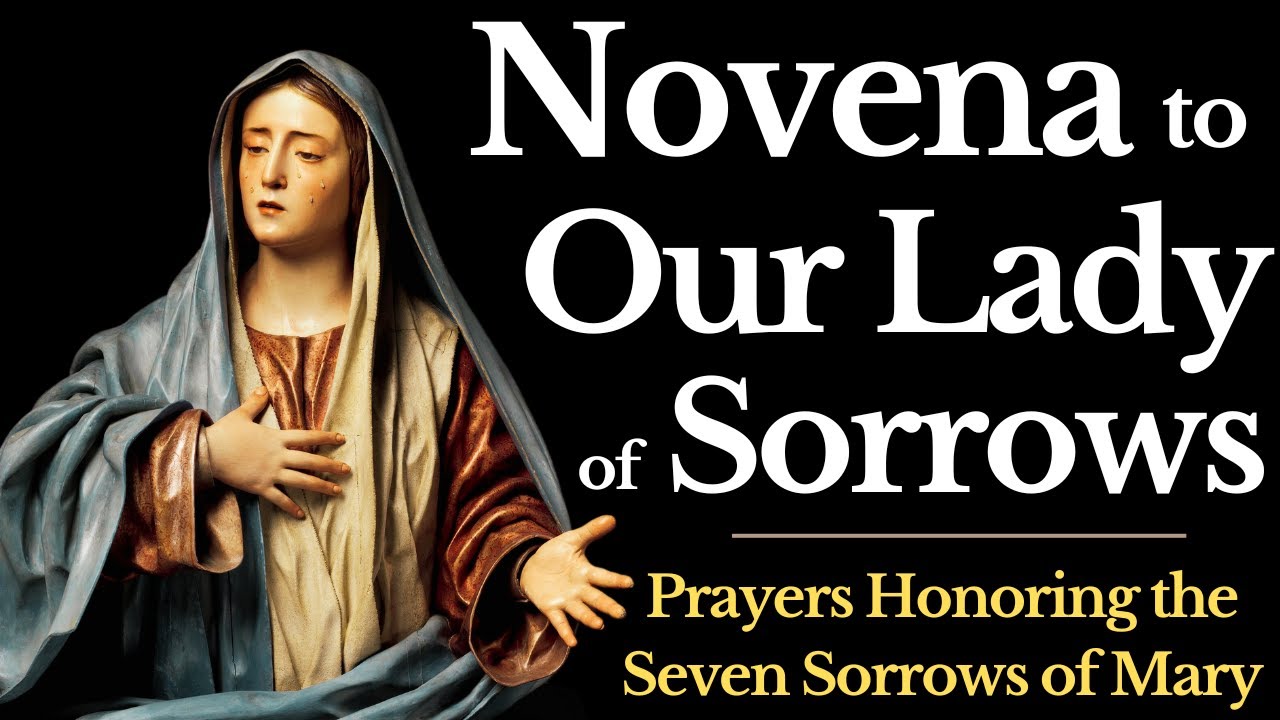
The our lady of sorrows prayer is a traditional Christian devotion that contemplates the seven great sorrows of Mary, the mother of Jesus, as recorded in Scripture and cherished in Christian memory. Whether you are new to this devotion or returning to it after a while, the our lady of sorrows prayer offers a simple, compassionate pathway to reflect on suffering, hope, and faithful love in everyday life.
In this guide, you will find a clear explanation of what the our lady of sorrows prayer is, why it matters, how to pray it step by step, and practical tips to make it meaningful. We will also point you to trustworthy resources and related articles if you want to explore further.
What is the our lady of sorrows prayer?
At its heart, the our lady of sorrows prayer invites us to stand with Mary—often called Mater Dolorosa, the Sorrowful Mother—as she accompanies her Son through pivotal moments of suffering. The devotion typically focuses on seven events, known as the Seven Sorrows or Seven Dolours, drawn from the Gospels. By meditating on these, Christians seek to grow in compassion, perseverance, and a deeper understanding of Christ’s redemptive love.
Many people discover the our lady of sorrows prayer in two forms: a short daily prayer that recalls Mary’s grief and asks her intercession, and a longer series of meditations sometimes called the Rosary or Chaplet of the Seven Sorrows. The feast of Our Lady of Sorrows is kept on 15 September, the day after the Feast of the Exaltation of the Holy Cross. For a concise historical overview of the devotion and its liturgical context, you can read the Our Lady of Sorrows article on Wikipedia, which outlines how this practice developed in Christian tradition.

If you prefer to pray or read about the devotion in Spanish, you may also find this helpful: devoción de la Virgen de los Dolores en español.
The Seven Sorrows remembered in the our lady of sorrows prayer
The seven moments (or “sorrows”) most commonly reflected on in the our lady of sorrows prayer are these:
- The prophecy of Simeon (Luke 2:25–35).
- The flight into Egypt (Matthew 2:13–15).
- The loss of the Child Jesus in the Temple (Luke 2:41–50).
- Mary meets Jesus on the way to Calvary (traditional account based on the Passion narratives).
- The Crucifixion and Death of Jesus (John 19:25–30).
- The body of Jesus is taken down from the Cross (Mark 15:42–46; John 19:38–40).
- The burial of Jesus (Luke 23:50–56; John 19:41–42).
These sorrows are not meant to overwhelm us, but to help us contemplate love that perseveres through pain. Many find that returning to each sorrow slowly—and even repeatedly over time—transforms how they face their own struggles and how they accompany others who suffer.
How to pray the our lady of sorrows prayer step by step
There are several ways to pray this devotion. Below are two tried and trusted approaches: a simple daily form and the Chaplet of the Seven Sorrows. Choose whichever supports your prayer life best. You can also follow a fuller devotional outline provided by reputable Catholic resources such as this EWTN guide to the Rosary of the Seven Sorrows.
The Rosary (or Chaplet) of the Seven Sorrows
This is a structured version of the our lady of sorrows prayer, traditionally prayed with a special chaplet of seven “decades”. If you do not have a chaplet, you can still pray along using an ordinary rosary or simply counting on your fingers.
- Begin with the Sign of the Cross.
- Optional opening: Pray an act of contrition and, if you wish, a short intention for your prayer (for example, for someone who is grieving or for courage in a personal trial).
- First Sorrow: Announce the Sorrow (e.g., “The prophecy of Simeon”). Reflect quietly for a moment.
- Pray one Our Father and seven Hail Marys, contemplating the first Sorrow as you pray.
- Conclude the first Sorrow with a brief aspiration if you know one, for example: “Mother of Sorrows, pray for us.”
- Repeat for each of the remaining six Sorrows: announce the Sorrow, pause, pray one Our Father and seven Hail Marys, and close with a short aspiration.
- At the end, pray a closing prayer—for example: “O Mother of Sorrows, obtain for me the grace to comprehend the sufferings of Jesus and to persevere in faith and charity.” Then finish with the Sign of the Cross.
The rhythm of the our lady of sorrows prayer in this form helps you dwell slowly and deeply on each moment of Mary’s grief. If you are following the liturgical year, you might pray it more frequently in Lent or near 15 September.
Short daily our lady of sorrows prayer
Sometimes you may have only a few minutes. A short daily our lady of sorrows prayer might look like this:
- Begin with a quiet pause and the Sign of the Cross.
- Recall one Sorrow (for example, the meeting of Jesus and Mary on the road to Calvary) and hold it in your heart for a minute.
- Pray one Our Father, three Hail Marys, and the short invocation: “Mother of Sorrows, be with me in my trials and lead me to the hope of the Resurrection.”
- End with gratitude and a simple resolution for the day (for example, a small act of kindness toward someone who is suffering).
Used this way, the our lady of sorrows prayer becomes a gentle companion to daily life—a reminder that Christian hope is forged in compassion and fidelity.
When and why Catholics choose the our lady of sorrows prayer
Many Catholics turn to the our lady of sorrows prayer when they need courage, consolation, or a deeper sense of God’s closeness in hardship. It is often prayed by those who are grieving, by parents concerned for their children, or by anyone who feels powerless in the face of a loved one’s suffering. The devotion highlights Mary’s steadfastness at the foot of the cross and encourages the same steadfast love in us.
From a liturgical standpoint, the Church commemorates Our Lady of Sorrows on 15 September, and some parishes offer special Masses or devotions around that date. For a succinct, authoritative note on the memorial, you can consult the USCCB explanation of the Memorial of Our Lady of Sorrows, which locates the devotion within the Church’s calendar and spiritual life.
Beyond a single day, however, the our lady of sorrows prayer is a year-round devotion. It can anchor times of personal transition, illuminate the meaning of compassion in family life, and even inform social concern by helping us see and respond to the wounds of our world with patient love.
Basic structure and variations of the our lady of sorrows prayer
While there is no single “mandatory” text, the our lady of sorrows prayer typically includes these elements:
- Contemplation of the Seven Sorrows in Scripture.
- Repetitive prayer (Our Father, Hail Marys), which creates a meditative rhythm.
- Short invocations or aspirations asking Mary’s intercession.
- An opening act of contrition and a closing prayer for perseverance in faith and charity.
Some traditions add the hymn “Stabat Mater” or include short Scripture readings before each Sorrow. Others keep it very simple. If you wish to see an older theological perspective on the Seven Dolours, the Catholic Encyclopedia’s entry on the Seven Dolours offers a classic overview.
Practical tips to deepen your our lady of sorrows prayer
- Make it personal: Before each Sorrow, quietly name a person or situation you want to hold before God. Linking intention with contemplation helps the our lady of sorrows prayer speak to your life.
- Use Scripture: Read the relevant verses for each Sorrow, ideally out loud. The text grounds your meditation and can reveal new insights.
- Keep a journal: Jot down a phrase, image, or resolution after you finish. Over time, you will notice patterns and growth.
- Pray with others: In family or small groups, take turns announcing the Sorrows and voicing intentions. The our lady of sorrows prayer can knit a community together in compassion.
- Be patient: If distractions come, gently return to the Sorrow at hand. Fidelity is more important than intensity.
Common mistakes and how to avoid them in the our lady of sorrows prayer
- Rushing the meditations: The aim is not to “get through” all seven quickly. Slow down and allow silence. Even one Sorrow prayed well is worthwhile.
- Focusing only on pain: The our lady of sorrows prayer is not pessimism. It holds suffering and hope together, always oriented toward the Resurrection.
- Overcomplicating the ritual: If you do not have a chaplet or a set formula to hand, pray simply. The essence is loving attention to Christ’s Passion with Mary.
- Praying without intention: A brief, concrete intention can transform a routine recitation into a heartfelt encounter.
How the our lady of sorrows prayer complements other devotions
Many people find that this devotion harmonises with the daily Rosary, Lectio Divina (prayerful reading of Scripture), or the Stations of the Cross. If you are interested in a Christ-centred devotion that also emphasises mercy and trust, you might explore the Divine Mercy Chaplet prayer, which complements the themes of compassion and perseverance present in the our lady of sorrows prayer.
Historically, religious orders such as the Servites have fostered the Seven Sorrows devotion, encouraging the faithful to unite their trials with Christ’s saving love. Contemporary guides and parish groups continue that tradition, helping newcomers to pray in a way that is both accessible and profound.
Recommended external resources
- Overview of Our Lady of Sorrows (Wikipedia) – concise background, iconography, and historical development.
- EWTN: Rosary of the Seven Sorrows – step-by-step instructions and prayers.
- USCCB: Memorial of Our Lady of Sorrows – liturgical notes and context.
- Catholic Encyclopedia: Seven Dolours of the Blessed Virgin Mary – classic theological perspective.
Related articles
Frequently asked questions about our lady of sorrows prayer
Is the our lady of sorrows prayer only for Catholics?
While this devotion is rooted in Catholic tradition and liturgy, many Christians from other backgrounds appreciate its biblical focus on Mary’s presence in the Gospel and at the Cross. Anyone drawn to reflect on Christ’s Passion through the eyes of his mother may find the our lady of sorrows prayer spiritually fruitful.
How long does the Chaplet of the Seven Sorrows take?
Prayed at a measured pace with short pauses for reflection, it typically takes 15–25 minutes. If you are short on time, consider focusing on one or two Sorrows or using the short daily form described above.
Do I need a special chaplet to pray the our lady of sorrows prayer?
No. A dedicated Seven Sorrows chaplet can help, but you can use an ordinary rosary or simply count the prayers on your fingers. The essential element is the meditation on each Sorrow.
Can I combine the our lady of sorrows prayer with the regular Rosary?
Yes. Some people pray the regular Rosary on certain days and the Seven Sorrows on others; others weave short Seven Sorrows reflections into their week. The key is to pray steadily in a way that supports your spiritual life.
When is the best time of year to start this devotion?
Any time is good. Some begin in Lent or in September, near the 15th, but the our lady of sorrows prayer is meaningful year-round, especially in moments of personal struggle or when supporting someone who is suffering.
What fruits should I expect from praying the our lady of sorrows prayer?
Common fruits include a gentler heart, deeper compassion, resilience in trials, and a closer relationship with Jesus and Mary. These often grow gradually through faithful, simple practice.
Where can I learn more or find an official text?
Parish prayer groups and diocesan websites often share printable guides. Online, you can consult resources such as the EWTN Seven Sorrows guide and the USCCB memorial page for context and prayers.
Conclusion on our lady of sorrows prayer
The our lady of sorrows prayer is a time-tested devotion that helps believers contemplate the Gospel through Mary’s faithful, suffering love. Whether you pray the full Chaplet of the Seven Sorrows or a short daily reflection, this practice can gently shape your heart in compassion and perseverance, drawing you closer to Christ’s Passion and the hope of the Resurrection.
By grounding your meditation in Scripture, praying slowly, and linking your intercessions to real people and needs, the our lady of sorrows prayer becomes a living source of strength. It does not glorify pain; it teaches us how love stands firm in the face of it, and how hope endures.
If you wish to go further, explore the trusted resources linked above, join a parish prayer group, or share the devotion with a friend who needs encouragement. However you begin, start simply: choose one Sorrow today and offer it with a sincere heart. Over time, you may find the our lady of sorrows prayer becoming a steady companion on your journey of faith.
