Oldest painting of jesus: complete, essential guide with 5 key facts
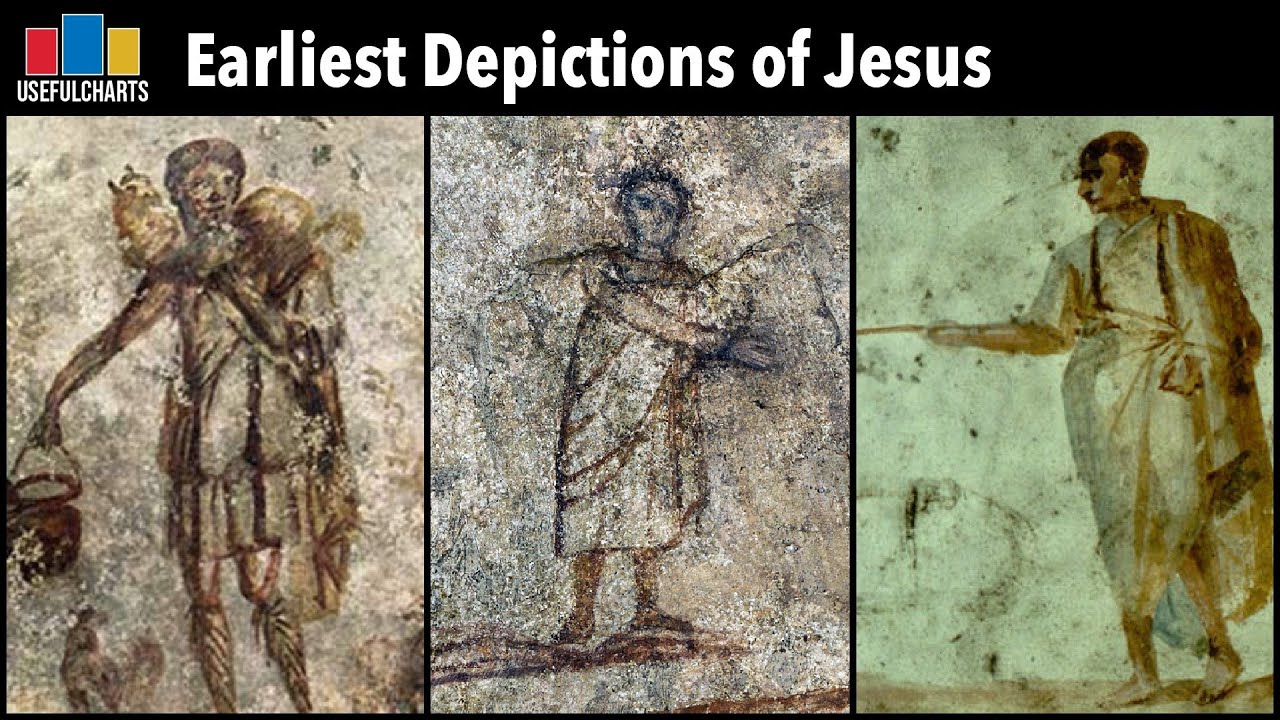
What is the oldest painting of jesus?
The phrase oldest painting of jesus captures a fascinating and often misunderstood quest in art history and early Christian studies. Rather than pointing to one single, uncontested masterpiece, it opens a window onto several very early images that were created by small communities of believers more than 1,700 years ago. Understanding these fragile, humble paintings helps us see how the first Christians pictured Christ, how their faith spread, and how ideas about Jesus developed over time.
In this guide, we will clarify what scholars usually mean by the oldest painting of jesus, explore the main contenders, explain how historians date and authenticate these works, and show why the search matters. You will also find practical links to reliable sources and answers to common questions, all in straightforward language.
Why the oldest painting of jesus matters
Art can say things that texts do not. The oldest painting of jesus—whatever example you choose to emphasise—reveals how the earliest Christians balanced modesty and symbolism with a growing desire to show the face of the person they worshipped. These early images were painted in quiet burial chambers, domestic spaces adapted for worship, and, later, monasteries far from imperial cities. Each contender for the oldest painting of jesus carries clues about community identity, theology, and the cultural world of the Roman Empire.
Beyond religious interest, there is historical value. The journey to identify the oldest painting of jesus involves archaeology, conservation science, stylistic analysis, and even debates about what counts as a “painting” in the first place. This interdisciplinary study illuminates how ancient people lived, worked, and believed.


Where scholars look for the oldest painting of jesus
There is no single artwork universally crowned as the oldest painting of jesus. Instead, specialists usually discuss a small group of early contenders, each significant for different reasons. Some are fragmentary. Some are indirect or symbolic. Others are later but crucial because they are the earliest surviving panel paintings or the earliest to show a recognisable facial likeness.
Roman catacombs and the Good Shepherd
In the catacombs of Rome, especially the Catacomb of Priscilla, Christians used imagery such as the Good Shepherd to communicate promise and protection. These frescoes date largely from the 3rd century. A youthful shepherd carrying a lamb over his shoulders appears again and again, standing in for Christ without attempting a literal portrait. While scholars debate which specific fresco might be the oldest painting of jesus in these catacombs, the Good Shepherd scenes provide some of the earliest painted references to him in a Christian setting and are cornerstones of the discussion.
These images mattered because they were legible both to Christians and to their neighbours. The shepherd motif was already familiar in Greco-Roman art, so it offered a gentle, coded way to present the figure of Jesus, particularly in contexts where Christians were still a minority. The restrained symbolism seen here marks an early phase in the journey towards later, more explicit portraits.
Dura-Europos: the earliest church paintings
A strong candidate for the oldest painting of jesus comes from the house church at Dura-Europos (in modern Syria), dated to around 235 CE. Its baptistry was decorated with narrative scenes believed to include Jesus healing the paralytic and possibly walking on water. These are not mere symbols; they are painted stories from the Gospels. Because the Dura-Europos murals form part of a dedicated Christian worship space, they offer early, contextual evidence of how communities presented Jesus visually.
Fragments and reconstructions of the Dura-Europos paintings show a move towards representing Jesus as an active figure in specific events. For many scholars, this makes the site a top contender when we speak about the oldest painting of jesus in a recognisable narrative mode, even if the works are damaged and their details sometimes uncertain.
From symbolism to likeness: Sinai’s Christ Pantocrator
By the 6th century, Christian art presents Jesus with a definitive facial likeness in panel paintings known as icons. Among the most celebrated is the Christ Pantocrator icon from Saint Catherine’s Monastery at Sinai. While this is not the oldest painting of jesus in the absolute sense, it is widely regarded as the earliest surviving panel icon of Christ. Created in encaustic (hot wax painting), it shows a mature, bearded Jesus in a frontal pose that became formative for Byzantine and later European art.
The Sinai icon is crucial because it gives us one of the earliest, enduring facial types of Christ. If your interest in the oldest painting of jesus includes the oldest surviving “portrait” with long-term influence, this icon stands out as a landmark—later than the catacomb frescoes, but vastly important for the history of Christian imagery.
Other early traces and near misses
Some artefacts hover at the edge of the conversation. The “Alexamenos graffito” (2nd–3rd century) appears to mock a crucified figure with a donkey’s head, sometimes interpreted as a caricature of Christian worship. It is not a painting and certainly not devotional, but it shows how early and how publicly references to Jesus appeared in the Roman world. Other early churches and mosaics, such as the 3rd-century site at Megiddo, offer crucial context for Christian art but do not present a direct painted image of Jesus.
How historians date and verify the oldest painting of jesus
Determining which candidate qualifies as the oldest painting of jesus requires careful, cumulative evidence. No single test settles everything; scholars combine archaeological context, stylistic analysis, scientific methods, and documentary records to build confidence around dates and identification.
- Archaeological context: Layers of building phases, associated objects (like lamps, inscriptions, or coins), and comparison with nearby rooms help date frescoes with reasonable accuracy.
- Stylistic analysis: Experts compare brushwork, colour palettes, and figure types with securely dated works from the same region and period.
- Scientific techniques: Pigment analysis, mortar study, and, where feasible, radiocarbon dating of organic binders or associated materials can offer date ranges.
- Textual corroboration: Early Christian writings and later accounts sometimes mention specific sites or artistic practices, providing indirect support.
- Conservation records: Documentation from early excavations, however incomplete, can be invaluable when reassessing a site or fresco long after its discovery.
Because the evidence is often fragmentary, scholars stress degrees of probability rather than absolute certainty. This is one reason why the oldest painting of jesus is better discussed as a small circle of contenders than a single crowned object.
What these earliest images show us about Jesus
Looking across the main contenders for the oldest painting of jesus, a consistent story emerges: early communities used images conservatively, then gradually embraced clearer portraits and rich narratives.
- Discretion and symbolism: The Good Shepherd in the catacombs presents Jesus indirectly, using a pastoral image that suggested care, sacrifice, and guidance.
- Narrative action: At Dura-Europos, Jesus is depicted performing miracles, bringing the Gospel stories to life and emphasising themes like healing, faith, and salvation through baptism.
- Defining a likeness: Later icons crystallise an image of Jesus that persists across centuries—frontal gaze, calm authority, and a theological message summed up in paint.
This progression from symbol to likeness is not a straight line everywhere, but the trend is visible. It illustrates how visual culture grows as communities seek to teach, remember, and worship through art.
Why there is no single answer to the oldest painting of jesus
Three reasons make a definitive, single answer elusive:
- Definition: What counts as a “painting”? Fresco on a wall? A portable panel? A small, rough sketch? Some evidence is too fragmentary to classify neatly.
- Dating limits: Archaeology gives ranges rather than exact years. Overlaps mean two sites might be almost contemporaneous.
- Purpose and subject: Is a symbolic image like the Good Shepherd sufficient to claim the title, or must the work show Jesus by name or unmistakable features?
Taken together, these caveats make “the oldest painting of jesus” a constructive conversation rather than a single headline. It is a question that leads to learning about places, practices, and people.
A practical guide to the leading contenders
Catacomb of Priscilla (Rome)
Often cited in discussions of the oldest painting of jesus, the Catacomb of Priscilla preserves Good Shepherd scenes and other Christian imagery that specialists place in the 3rd century. These frescoes are part of a wider burial landscape, and the art benefits from ongoing conservation and study. For many visitors, the catacombs provide the most immediate encounter with ancient Christian painting.
Dura-Europos baptistry (Syria, with surviving fragments)
If you are focusing on narrative scenes that likely present Jesus performing particular acts, the Dura-Europos church is a prime candidate for the oldest painting of jesus. The baptistry’s programme of images, combined with the site’s careful archaeological excavation, makes this one of the most thoroughly studied early Christian interiors.
Christ Pantocrator at Sinai (Egypt)
If your emphasis is on the oldest surviving portrait-icon of Jesus as a panel painting, then the 6th-century icon at Saint Catherine’s Monastery is essential. It is not the oldest painting of jesus in absolute terms, but it is among the earliest to define a stable, recognisable likeness that shaped later art across the Christian world.
Common misunderstandings and how to avoid them
- Assuming “oldest” means “best”: The oldest painting of jesus might be fragmentary or stylistically simple. Its value lies in what it reveals about the early community, not its polish.
- Confusing “oldest image” with “oldest portrait”: Symbolic images and narrative scenes may predate the earliest facial likeness; the categories are different.
- Overlooking context: A painting’s date is only part of the story; knowing where it was found and how it was used is just as important.
- Forgetting continuity: Later icons like the Sinai Christ are crucial precisely because they carried the image of Jesus forward, shaping centuries of devotion and art.
How the conversation intersects with Christian traditions
Discussions around images of Jesus have long intersected with wider Christian practice and differences in emphasis across traditions. For example, icon veneration has a special place in Eastern Christianity, while Western traditions developed distinctive devotional images, prayers, and feasts. If you are exploring how these traditions developed, you might find an overview of the differences between Orthodox and Catholic traditions helpful as background. Later devotions—such as those centred on mercy and compassion—also draw on the visual heritage shaped by centuries of representing Jesus; see this summary of the Divine Mercy Chaplet prayer for a modern example of how images and prayer practices can align.
Recommended external resources
- Overview of the Dura-Europos church and its baptistry paintings – A concise introduction to the site commonly cited in studies of the oldest painting of jesus.
- Catacomb of Priscilla: history and artworks – Context for 3rd-century frescoes including Good Shepherd imagery.
- Depictions of Jesus across history – Broad survey of changing iconography from the earliest centuries onwards.
- Christ Pantocrator (Sinai) icon – Background on one of the earliest surviving panel portraits of Jesus.
Frequently asked questions about oldest painting of jesus
Is there a single artwork that everyone agrees is the oldest painting of jesus?
No. Scholars usually refer to several early contenders rather than a single, unanimously accepted object. The catacomb frescoes in Rome and the Dura-Europos baptistry paintings are typically central to the discussion, while the Sinai icon is vital for understanding the earliest surviving portrait on a panel.
How old are the leading contenders?
The principal contenders often discussed in relation to the oldest painting of jesus date to the 3rd century. The Dura-Europos church is usually dated around 235 CE. The Good Shepherd frescoes from Roman catacombs generally fall within the 3rd to early 4th centuries. The Sinai Christ Pantocrator icon is later, usually dated to the 6th century, but is among the earliest surviving portrait-icons.
What does the earliest art actually show?
Early paintings tend to be either symbolic (the Good Shepherd, a pastoral stand-in for Christ) or narrative (miracle scenes in the Dura-Europos baptistry). A fully defined, frontal facial portrait becomes standard later, as seen in the Sinai icon, which is not the oldest painting of jesus but is foundational for the depiction of Jesus’ face in Christian art.
How do experts date these paintings?
They combine archaeological context (building layers, associated finds), stylistic comparison with dated works, and scientific analysis of materials. Because the evidence is often partial, dates are typically presented as ranges rather than precise years, which is why debates persist about which example is the oldest painting of jesus in absolute terms.
Can I visit these sites or see the artworks?
Yes, with caveats. Roman catacombs, including Priscilla, can be visited with official guides. The Dura-Europos site itself is in a conflict-affected region, but fragments and reconstructions are held in museums. The Christ Pantocrator icon is housed at Saint Catherine’s Monastery, a functioning monastery in Egypt; access varies and is subject to local conditions and monastery rules. Always check current guidance before planning travel.
Are there other very early images of Jesus?
There are early references, including a few carved scenes on sarcophagi (which are sculptures) and texts that describe images. There are also satirical or ambiguous images like the Alexamenos graffito. However, when focusing on painting, the catacomb frescoes and the Dura-Europos walls remain central to identifying the oldest painting of jesus.
Conclusion on oldest painting of jesus
The search for the oldest painting of jesus is not about crowning a single champion; it is about understanding how the earliest Christian communities chose to picture the one they followed. From the Good Shepherd scenes in the Roman catacombs to the narrative frescoes of Dura-Europos, these fragile works bring us close to the everyday faith and artistic language of the 3rd century.
If your interest is in the first narrative depictions, the Dura-Europos baptistry offers perhaps the strongest case for the oldest painting of jesus in a recognisable Gospel scene. If you are seeking the earliest enduring portrait type that shaped later art, the Sinai Christ Pantocrator stands out as a foundational panel icon, even though it is later than the catacomb frescoes.
Ultimately, the value of studying the oldest painting of jesus lies in the perspective it gives: a story of gradual clarity, from discreet symbols to confident portraits, all crafted by communities making sense of their faith in changing times. These images are more than historical clues; they are touchstones that still speak—quietly but powerfully—across the centuries.
