Josiah: 7 Essential Facts and Complete Guide to the Biblical King
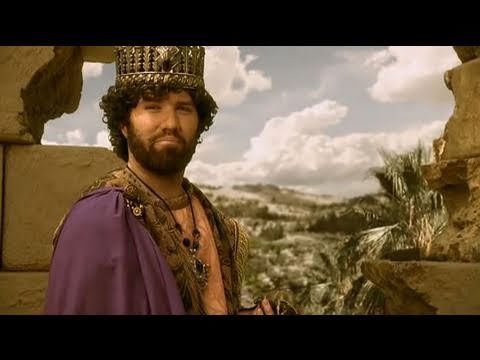
josiah: who he was, why he matters
Few ancient kings have captured the imagination quite like josiah. Celebrated in the Hebrew Bible for his sweeping religious reforms, he is often portrayed as a courageous reformer who sought to realign a nation with its spiritual foundations. For readers curious about history, faith, or leadership, josiah offers a compelling case study: a young monarch who confronted decline, rediscovered a forgotten law, and attempted a national renewal that still echoes in religious discussion today.
In this guide, we explore who josiah was, the world he lived in, the reforms he introduced, and what his story can teach us now. Whether you are reading as a person of faith or simply as someone interested in the cultural influence of the Bible, you will find in josiah a figure whose life sits at the intersection of history, religion, and ethical decision-making.
Who was josiah? Key facts at a glance
According to the biblical books of 2 Kings and 2 Chronicles, josiah was a king of Judah in the late seventh century BCE. He ascended the throne around the age of eight after the assassination of his father, Amon, and reigned for approximately three decades. His rule is often dated from about 640 to 609 BCE, a turbulent period when regional superpowers—the Assyrians, Egyptians, and rising Babylonians—struggled for dominance.
What sets josiah apart is not only his youth or the timing of his reign, but his resolve to lead religious reform. He is credited with purging idolatrous practices from Judah, centralising worship in Jerusalem, and celebrating a notably grand Passover. In the biblical narrative, he stands as an ideal: a king who “walked in the ways of David” and tried to recover the nation’s covenant identity.


The world around josiah: historical context
To understand josiah, we need to picture Judah as a small kingdom navigating the geopolitics of ancient Near Eastern empires. Assyria’s influence was fading, while Babylon’s strength was growing. Egypt, determined to protect its interests, occasionally marched through the Levant. In such a setting, judicious diplomacy mattered, but so did national identity. The religious life of Judah had become eclectic, with various local shrines and foreign rites blending with older traditions. The biblical accounts portray this religious mix as problematic—a core reason for the reforms attributed to josiah.
It is also significant that Jerusalem’s temple, the central sanctuary, had endured periods of neglect and syncretism. This context shapes the dramatic moment when a “book of the law” was reportedly found in the temple during renovations, a discovery that galvanised josiah’s agenda.
The discovery of the Law: the book found in the Temple
One of the hallmark episodes in josiah’s story is the discovery of a sacred scroll during temple repairs. When the scroll was read aloud, it deeply affected the king, prompting a renewed commitment to covenantal obedience. The narrative suggests that this rediscovered text gave fresh clarity to what the nation’s worship and ethics should look like.
What might the book have been?
Scholars commonly propose that the book corresponded to part or all of Deuteronomy, given its emphasis on covenant, centralised worship, and ethical renewal. The language of the reforms fits this interpretation, as Deuteronomy calls for worship at a chosen place and for the removal of competing cultic practices. Not every scholar agrees on specifics, but most see a strong Deuteronomic character in the movement josiah championed. For an accessible overview of the biblical material, see the passages in 2 Kings 22–23 (for example, the translation available at BibleGateway’s NIVUK text of 2 Kings 22–23).
josiah’s reforms: what changed and why
The reforms associated with josiah touched religion, culture, and public life. Their aim, as the biblical text describes, was to align everyday worship with covenant law, remove practices seen as idolatrous, and strengthen the shared identity of the people.
Removing idols and the cult of Baal
Central to the narrative is the removal of rival shrines, images, and altars dedicated to other deities. In a world where religious syncretism was common, this was a bold and public act. For context on one of the central rival cults, you may find it useful to read more about Baal and the religious climate of the ancient Near East. This background illuminates why josiah’s programme was so firm about clearing out idolatry. For a concise overview, see this exploration of the cult of Baal.
Centralising worship in Jerusalem
Another defining aspect of josiah’s reforms was centralisation: the consolidation of sacrificial worship at the Jerusalem temple. This likely had practical benefits (standardised practice, oversight, and a unifying national focus) as well as theological significance (one God, one sanctuary). Smaller local shrines, while longstanding and often cherished, were seen as inconsistent with the law as newly understood.
Passover revival
The biblical account highlights a remarkable Passover celebration convened under josiah. It is portrayed as unmatched in scale and intent since earlier, more stable times. This Passover was not merely ceremonial; it symbolised a national recommitment to the story of deliverance and the ethical obligations that story entails—justice, compassion, and communal responsibility.
The human dimension: leadership under pressure
It is easy to picture josiah’s reform as a straightforward, top-down programme, but leading change in an entrenched culture is rarely simple. Loyalists to local shrines, priests whose livelihoods depended on older customs, and families attached to inherited traditions would have felt the impact. Josiah’s leadership required resolve and a willingness to face opposition. The story reminds us that reform involves both public policy and private conviction, both structural change and grassroots adaptation.
Prophets during josiah’s reign
Prophetic voices play an important role in understanding this period. Jeremiah, possibly active towards the latter part of josiah’s reign, called the people to sincere faithfulness, warning against superficial religiosity. Zephaniah’s preaching (often dated to the reign of josiah) stresses the need for moral integrity and the consequences of injustice and idolatry. For a brief, encouraging reflection rooted in Zephaniah’s message, see a short meditation on Zephaniah 3:17, which can enrich the spiritual backdrop of the king’s time.
These prophetic perspectives matter because they show that reform is not just about removing objects or changing venues of worship; it is about transformed hearts, equitable social structures, and faithful daily practice. In that sense, the story of josiah is inseparable from the prophetic call to justice and humility.
Archaeology and historical debates
Outside the biblical text, direct evidence for josiah is limited, as is common for many ancient figures. Nevertheless, scholars piece together the history using comparative data, inscriptions from neighbouring empires, and the broader archaeological picture of Judah in the late Iron Age. Although certainty is elusive, the general contours of a reforming king in a volatile international context fit well with what we know. For balanced, readable reference material, see entries in major encyclopaedias such as Encyclopaedia Britannica’s article on Josiah and the overview provided by Wikipedia’s page on Josiah, which both summarise the scholarly discussion and the biblical narrative.
One historical flashpoint in josiah’s life is his death at Megiddo. The Bible reports that he confronted Egyptian forces under Pharaoh Necho II and was mortally wounded. Some details of this event are debated, but the political logic—Judah caught between imperial powers—rings true. His death was a turning point that led swiftly to national instability.
Lessons from josiah for today
What can a 7th-century BCE king offer to modern readers? Quite a lot. Here are practical reflections inspired by josiah’s story:
- Rediscovery can change a community. A neglected principle, once recovered, can clarify purpose. For josiah, the recovered law reoriented national life; today, a rediscovered value—integrity, compassion, stewardship—can do the same in organisations and families.
- Reform requires courage and patience. Removing what harms a community is a first step; building sustainable habits is the longer journey. Josiah’s actions highlight both sides: decisive change and a call for enduring practice.
- Leadership is moral as well as managerial. Technical competence matters, but leaders also shape a community’s ethics. Josiah’s reforms were moral choices that touched public worship, social justice, and everyday behaviour.
- Symbols and rituals carry power. The Passover under josiah was not mere pageantry; it renewed collective memory. Healthy traditions today—celebrations, milestones, shared commitments—can strengthen communal identity.
How to read the story of josiah well
Approaching ancient texts can be daunting. The following suggestions can help you read the story of josiah thoughtfully and fruitfully:
- Read the primary sources first. The accounts in 2 Kings 22–23 and 2 Chronicles 34–35 are the foundation. Note similarities and differences; each book has its perspective.
- Seek historical context. Understanding Assyria, Egypt, and Babylon helps make sense of josiah’s political choices.
- Pay attention to the prophets. Voices like Jeremiah and Zephaniah highlight the ethical and spiritual dimensions behind policy changes.
- Avoid anachronism. Resist imposing modern categories onto ancient situations. Instead, look for enduring principles—integrity, justice, fidelity—that travel across time.
- Balance faith and reason. Whether you read as a believer or an interested observer, hold together reverence for the text and appreciation for historical inquiry.
Common misconceptions about josiah
“Reform was only about destruction”
Some readers focus solely on the removal of idols and forget the constructive side of josiah’s programme: renewed covenant, centralised worship to encourage unity, public readings of the law, and a monumental Passover. The reforms were both corrective and creative.
“He acted alone”
While josiah was a decisive leader, reform takes people. Priests, scribes, administrators, and ordinary families all played roles. Lasting change requires a coalition of the willing, not just a visionary at the top.
“The story is only about the past”
It is tempting to treat josiah as a figure sealed in antiquity. Yet his example speaks to any situation where communities rediscover core values and try to live them out amid competing pressures. The story’s resonance goes beyond its historical setting.
Recommended external resources
- Encyclopaedia Britannica: Josiah – A concise, balanced overview of the king and his reforms.
- Wikipedia: Josiah – A broad summary with references to further reading and scholarly debates.
- BibleGateway (NIVUK): 2 Kings 22–23 – Primary source text for the discovery of the law and the reforms.
- Bible Odyssey: King Josiah – Contextual articles from scholars on the historical and literary background.
Related articles
Frequently asked questions about josiah
When did josiah live?
Josiah reigned in Judah during the late seventh century BCE, roughly from 640 to 609 BCE. His reign fell in a time of shifting power, with Assyria in decline and Babylon emerging, while Egypt sought to assert influence across the Levant.
What was the “book of the law” that inspired his reforms?
The biblical narrative reports that a scroll was found in the temple during repairs. Most scholars think it was all or part of Deuteronomy, given its emphasis on covenant, exclusive worship of the one God, and the centralisation of sacrificial practice in Jerusalem.
What were the main features of josiah’s reforms?
Key actions included the removal of idols and local shrines, centralising worship at the Jerusalem temple, and the celebration of a major Passover. These steps aimed to restore covenant faithfulness, strengthen national identity, and curb practices viewed as idolatrous.
Which prophets were active during josiah’s time?
Zephaniah and Jeremiah are commonly associated with this period. Their messages called for genuine repentance, justice, and humility—values that complement the structural reforms josiah enacted. Their presence reminds us that moral transformation must accompany policy changes.
How did josiah die?
According to the Bible, josiah was fatally wounded at Megiddo after confronting Egyptian forces led by Pharaoh Necho II. His death precipitated a period of turbulence for Judah, leading eventually to Babylonian dominance.
Why is josiah significant for readers today?
He represents the power of rediscovery and the courage of reform. Whether in faith communities, workplaces, or civic life, josiah’s story encourages us to revisit foundational principles, act with integrity, and nurture practices that sustain communal wellbeing.
Conclusion on josiah
The life of josiah stands as a vivid portrait of renewal. In a fragile geopolitical moment, he pursued reform rooted in rediscovered law and a clarified moral vision. His actions—removing idols, centralising worship, and restoring Passover—were not merely administrative. They were expressions of identity, ethics, and hope for a better future.
For modern readers, josiah offers more than a window into ancient Judah. He models the courage to challenge entrenched habits, the humility to listen to a demanding text, and the wisdom to unite community life around meaningful practices. Whether you approach his story through faith or historical curiosity, josiah invites a thoughtful response: to remember what truly matters, to act with integrity, and to build traditions that elevate and sustain our common life.
In the end, the legacy of josiah is not only the reforms he enacted but the enduring reminder that rediscovering and living by core values can renew a people—then as now.
