How to explain the rosary to a non catholic: 5 essential, simple tips
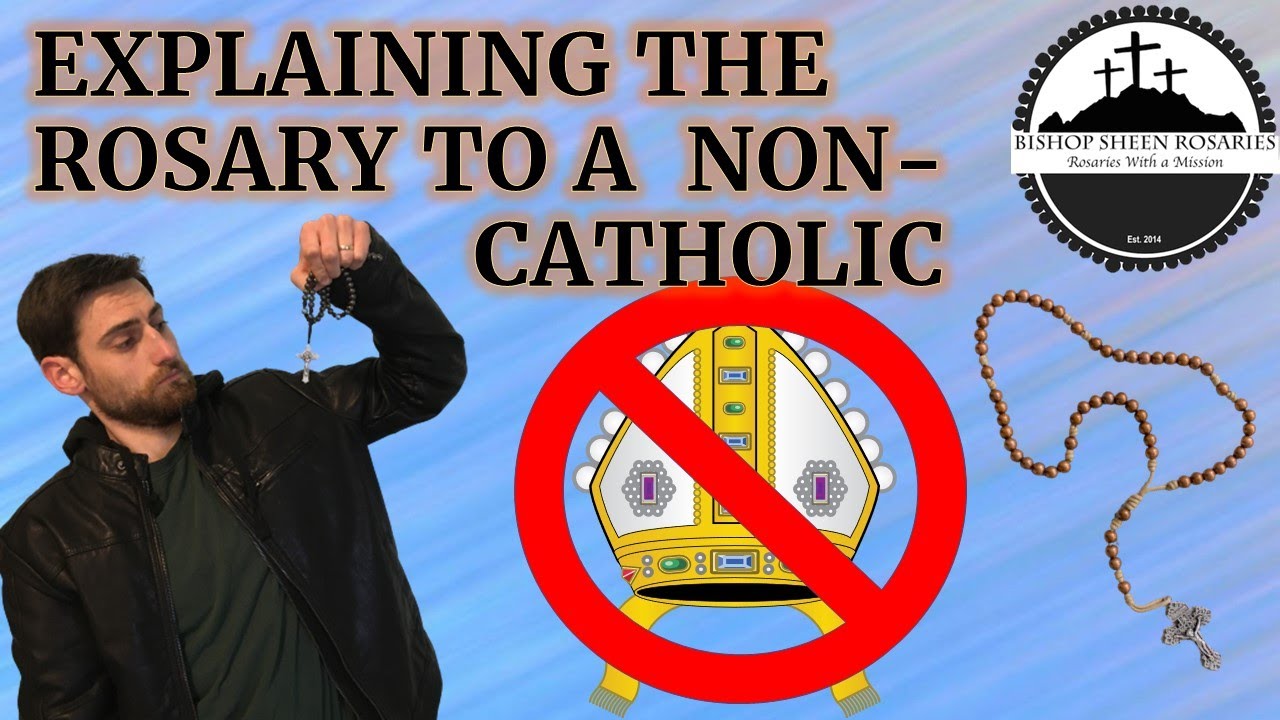
How to explain the rosary to a non catholic
If you have ever wondered how to explain the rosary to a non catholic, you are not alone. Many people outside the Catholic Church have heard of the rosary but are unsure what it is, why it matters, or how it is used. This guide offers a friendly, clear and practical approach so you can share what the rosary means, how it is prayed, and why it can be a meaningful spiritual habit, even for those who are simply curious about Christian prayer.
We will cover the essentials in straightforward language, give you short scripts you can adapt, and flag common misunderstandings to avoid. Whether you are preparing for a conversation with a friend, a colleague or a family member, you will find here a simple structure for how to explain the rosary to a non catholic with confidence and respect.
A simple answer to how to explain the rosary to a non catholic
Start with the heart of the matter. If someone asks, give them a short, honest summary. Here is a one-paragraph version of how to explain the rosary to a non catholic:
“The rosary is a structured Christian prayer that uses a set of beads to help you meditate on key moments in the life of Jesus. The words include well-known prayers like the Our Father and the Hail Mary, but the focus is on reflecting on the Gospel stories—his birth, teachings, death and resurrection. The beads keep your place so your mind is free to ponder. Catholics believe Mary, the mother of Jesus, prays with us and points us to her Son.”


This answer keeps it short, avoids jargon, and emphasises that the rosary is Christ-centred meditation supported by simple, memorised prayers.
Rosary basics: words, beads and purpose
What is the rosary?
The rosary is both a set of prayers and the string of beads used to count them. It has a crucifix, a short section of introductory beads, and then five groups of ten beads (called “decades”). Each decade accompanies a brief meditation on a “mystery”—a moment from the life of Christ. There are four sets of mysteries: Joyful, Luminous, Sorrowful and Glorious. These span scenes from the Annunciation and Nativity through Jesus’ ministry, Passion and Resurrection.
When thinking about how to explain the rosary to a non catholic, it helps to underline that the aim is prayerful reflection on Scripture. The beads are not talismans; they are a simple tool that aids focus and rhythm.
What do the prayers say?
The rosary weaves together traditional Christian prayers:
- The Sign of the Cross (beginning and end).
- The Apostles’ Creed (a short summary of the Christian faith).
- The Our Father (the Lord’s Prayer taught by Jesus).
- The Hail Mary (drawn from biblical greetings to Mary and a request for her prayers).
- The Glory Be (praise of the Trinity).
- Optional prayers like the Fatima Prayer or concluding prayers.
The repetition is not for its own sake; it creates a gentle cadence so you can settle into meditation. A helpful analogy when deciding how to explain the rosary to a non catholic is to compare it with a breathing exercise or a walking meditation: the rhythm is meant to quieten the mind and deepen reflection.
What do Catholics believe they are doing?
From a Catholic perspective, praying the rosary is a way to contemplate Christ with Mary. Catholics ask Mary to “pray for us” because she is considered a close disciple and mother in the faith, not a goddess. The content of the mysteries is biblical, and the central figure is always Jesus. The rosary’s structure helps people who find unstructured silence difficult; it offers a simple, repeatable pattern to guide daily prayer.
A step-by-step way to present it: how to explain the rosary to a non catholic
If you need a practical framework, use these steps. They are adaptable to different personalities and contexts, and they keep your explanation grounded, gentle and clear.
- Start with common ground. Acknowledge that many faiths use repetitive or structured prayers as a path to meditation. Mention that the rosary is a Christian form of such practice.
- Describe the purpose first. Say that its purpose is to meditate on key Gospel events and draw closer to Christ.
- Show the beads. A quick visual cues understanding. Point out the decades and how each decade pairs with a specific mystery.
- Explain one decade. Demonstrate: announce a mystery, pray one Our Father, ten Hail Marys while reflecting, then a Glory Be.
- Use a simple analogy. For example, “It is like looking through a family photo album of Jesus’ life—each photo sparks a short reflection.”
- Invite questions. Offer to clarify differences between veneration of Mary and worship, and the role of Scripture in the mysteries.
- Respect boundaries. If the person is not comfortable praying, leave it at explanation. If they are curious, suggest trying one short decade together.
One-minute explanation template
Here is a concise script you can adapt when deciding how to explain the rosary to a non catholic in everyday conversation:
“Think of the rosary as a guided Christian meditation. The beads help you keep track while you reflect on scenes from the Bible about Jesus. The repeated prayers create a calm rhythm, and Catholics ask Mary to pray with them—not instead of Jesus, but to focus more on him. One ‘decade’ takes a couple of minutes: you name a scene, say an Our Father, ten Hail Marys while you quietly picture that scene, then a short doxology of praise.”
Analogies and examples that help
Good analogies make all the difference when working out how to explain the rosary to a non catholic. Here are three that usually land well:
- Photo album: Each mystery is a “photo” from Jesus’ life. You dwell on it for a minute, remember the story and draw meaning for today.
- Playlist: The rosary is a curated sequence. You move through tracks (decades), each with a theme, and the repetition lets the message sink in.
- Breathing exercise: The rhythm of the prayers slows you down, like mindful breathing, so you can concentrate on God, not on counting thoughts.
Real-life examples also translate well. For instance, someone might pray the Sorrowful Mysteries on a difficult day to unite their struggles with Christ, or the Joyful Mysteries at Christmas to savour the hope of the Incarnation. Families sometimes pray a decade together after dinner, turning the day’s noise into a few minutes of shared calm.
Common concerns and how to address them
“Isn’t repetition condemned in the Bible?”
Jesus warns against “vain repetition”—empty, showy chatter (Matthew 6:7). The rosary is not babbling for attention; it is prayerful meditation. Repetition is a feature of many biblical prayers and psalms, and it can help the heart rest in God. When planning how to explain the rosary to a non catholic, emphasise intention: the words are a quiet backdrop to thoughtful contemplation.
“Do Catholics worship Mary?”
No. Worship is for God alone. Catholics honour Mary as the mother of Jesus and a faithful disciple, asking for her prayers in the same way Christians ask one another to pray. The rosary’s focus is Jesus’ life, death and resurrection; Mary’s role is to accompany and direct attention to him.
“Where is it in the Bible?”
The rosary’s structure developed over time, but its content is biblical: the Our Father is directly from Jesus; the Hail Mary’s first lines are from Luke 1; the Glory Be praises the Trinity. The mysteries are Gospel scenes. If someone asks how to explain the rosary to a non catholic with Scripture, point to the narratives behind each mystery and the Christ-centred reflections they inspire.
“Aren’t beads superstitious?”
Beads are simply a counting aid. Many traditions use them to keep track without breaking concentration. There is nothing magical in the beads themselves; the value lies in the prayer.
“Can non-Catholics pray the rosary?”
Yes, if they wish. Many Christians from other traditions appreciate the meditative structure and the focus on Gospel events. Others may prefer to adapt the prayers or the mysteries. When deciding how to explain the rosary to a non catholic, it can help to say, “You are free to try a single decade and see whether it helps you pray.”
Mistakes to avoid when showing how to explain the rosary to a non catholic
Even with the best intentions, it is easy to stumble. Here are common missteps and how to avoid them:
- Overloading with detail. You do not need to recite every optional prayer. Focus on purpose and one decade.
- Using jargon. Words like “doxology” or “Marian devotion” may confuse. Translate into everyday terms.
- Rushing through. A calm pace shows that the rosary is unhurried and reflective.
- Skipping Scripture. Anchor each mystery in the corresponding Bible scene. Even a single sentence helps.
- Sounding defensive. If someone raises concerns, thank them, clarify and keep the tone warm and factual.
- Making it a test of faith. The goal is to explain, not to pressure. Respect the other person’s conscience.
Practical scripts and scenarios
To a Christian friend from another tradition
“We use the rosary as a way to enter the Gospels. Each decade highlights a scene from Jesus’ life. The repeated prayers are there so we are not hunting for words; we can quietly reflect on Scripture. Mary’s role is to pray with us as a fellow disciple who points us to her Son.”
To a secular colleague curious about the beads
“It is a mindfulness-like Christian practice. The beads stop you counting in your head so you can concentrate on a short reflection about Jesus—for example, the story of his birth or a teaching. The rhythm helps slow your breathing and settle your thoughts.”
To an interfaith audience
“Like many traditions, Catholics use a prayer rope or beads to support meditative prayer. The rosary pairs a simple rhythm with reflection on sacred stories. It is meant to shape the heart over time—towards compassion, courage and hope.”
To a teenager or young adult
“Picture a five-track playlist. Each track is a big moment from Jesus’ life. The chorus is the Hail Mary—it repeats so the message can sink in. You listen, reflect and ask for help to live it out.”
Materials and visual aids that help the explanation
Visuals make a difference. A simple rosary, a one-page diagram, or a short card listing the mysteries can anchor your words. If you are preparing how to explain the rosary to a non catholic in a small group, consider printing a basic outline with an image of the beads and the sequence of prayers. Many people are reassured when they can see the pattern rather than imagine it.
Apps and websites can also help. Official guides and trusted resources provide step-by-step instructions and background. A thoughtful next step is to share an official overview and invite the person to read a single mystery, reflect for a minute, and ask questions.
Going deeper: history and meaning in brief
The rosary’s current form took shape in the Middle Ages, though repetitive prayer with beads is older. The point of mentioning this when thinking about how to explain the rosary to a non catholic is to show continuity: Christians have long used memorised prayers to sustain meditation. Over centuries, the Church has encouraged the rosary as a way for ordinary people to contemplate the central mysteries of the faith without needing lengthy books or formal training.
The Luminous Mysteries, for example, were added in 2002 to highlight key moments in Jesus’ public ministry—his Baptism, the Wedding at Cana, the Proclamation of the Kingdom, the Transfiguration and the Institution of the Eucharist. This development shows that the rosary’s backbone is the Gospel itself.
How to handle difficult questions graciously
Inevitably, deeper questions arise. When you are planning how to explain the rosary to a non catholic, it helps to keep these principles in mind:
- Stay with essentials. Keep circling back to Christ, Scripture and prayerful meditation.
- Use “I” language. Share how the rosary helps you rather than making sweeping claims.
- Welcome doubt. Questions are not threats; they are invitations to clarify and learn together.
- Offer sources. Point to official guides so the person can check what you have said.
Helping someone try one decade for the first time
A gentle “taste and see” approach often works best. Here is a five-minute practice you can propose when considering how to explain the rosary to a non catholic who is open to trying it:
- Choose one mystery (for example, the Nativity). Read one or two verses from Luke 2.
- Announce the mystery and say an Our Father.
- Pray ten Hail Marys slowly. On each bead, picture one detail from the scene (the manger, the shepherds, Mary’s joy).
- Conclude with the Glory Be. Sit quietly for a few seconds.
- Ask: “What stood out? What encouraged or challenged you?”
By keeping it short, you show that the rosary is accessible and anchored in Scripture, not an endless slog.
Recommended external resources
- Official USCCB guide on how to pray the Rosary with step-by-step instructions and the full text of the prayers.
- Apostolic Letter Rosarium Virginis Mariae (Vatican) explaining the theology and spirituality of the Rosary.
- Background and history of the Rosary (Wikipedia) for a broad overview and historical context.
Related articles
Frequently asked questions about how to explain the rosary to a non catholic
How long does the rosary take?
Praying all five decades usually takes 15–20 minutes. A single decade takes about two minutes. When showing someone how to explain the rosary to a non catholic in practical terms, it helps to suggest starting with just one decade.
Do I need beads to pray the rosary?
Beads are helpful but optional. You can use your fingers, a simple knotted cord, or a phone app. The structure matters more than the object.
What if I get distracted?
That is normal. Gently return to the mystery. The repetition is designed to help you refocus without frustration. Distraction is not failure; it is part of learning to pray.
Is it acceptable to pray the rosary silently?
Yes. Many people pray silently, while others whisper. The aim is reflection, not volume. Silence can deepen attention to the mystery.
Can I adapt the rosary if I am not Catholic?
Some do. You could meditate on the same Gospel scenes with the Lord’s Prayer and simple personal prayers. If you are deciding how to explain the rosary to a non catholic who is cautious, you might suggest this as a first step.
Why involve Mary at all?
From the Catholic view, Mary is a model disciple who prays with the Church. Asking her to pray is like asking a respected elder to intercede. The focus remains Christ, and the mysteries are centred on his life.
Conclusion on how to explain the rosary to a non catholic
In summary, the most effective approach to how to explain the rosary to a non catholic is to be simple, scriptural and sincere. Present it as a Christ-centred meditation supported by a gentle rhythm of familiar prayers. Show the beads, walk through one decade, and keep the focus on the Gospel scenes that shape the heart and mind.
Use plain analogies—photo album, playlist, breathing exercise—to make the idea accessible. Anticipate common concerns and address them calmly, especially the difference between honouring Mary and worshipping God. Offer reputable resources for further reading and, if appropriate, guide the person through a single, short decade anchored in Scripture.
Above all, remember that how to explain the rosary to a non catholic is not about winning an argument but about sharing a pathway to prayer. Respect curiosity, honour questions, and trust that a clear, friendly explanation can open a gentle door to contemplation of the life of Jesus.
