How old was mary and joseph when they got married: complete guide
how old was mary and joseph when they got married
The question of how old was mary and joseph when they got married is one that blends curiosity, historical interest, and faith. While the New Testament does not give explicit ages, historians and theologians have long explored the cultural context, early Christian traditions, and legal customs of ancient Judea to arrive at reasonable estimates. Understanding the likely ages of Mary and Joseph not only satisfies a historical query; it also helps us imagine their lives with greater realism and empathy.
In what follows, we will examine the biblical sources, look at Jewish marriage customs of the Second Temple period, consider early Christian writings, and weigh scholarly perspectives. By the end, you’ll have a clear, nuanced picture of what we can and cannot know about how old was mary and joseph when they got married—and how to evaluate claims you may encounter online or in popular media.
Why how old was mary and joseph when they got married matters
At first glance, the ages of Mary and Joseph might seem like a minor detail. But the question of how old was mary and joseph when they got married opens up richer themes: the normal rhythms of life in first-century Galilee, the responsibilities placed on young people, and the striking courage of a couple faced with extraordinary events. Seeing Mary and Joseph as real people—shaped by their time and place—can deepen appreciation for the Gospel narratives and for the traditions that grew around them.
There is also a practical reason to explore this topic carefully. Myths and assumptions abound. Some claim certainties where none exist; others ignore the context of ancient marriage. A balanced perspective, grounded in evidence, helps avoid both sensationalism and oversimplification.


What the Bible says (and does not say) about their ages
Do the Gospels tell us how old was mary and joseph when they got married?
No. The canonical Gospels never state the ages of Mary or Joseph. Matthew and Luke provide crucial details about their betrothal and marriage, but not their years. This silence means that any firm claim about how old was mary and joseph when they got married must rest on historical inference rather than direct scriptural quotation.
Betrothal versus marriage: why the distinction matters
The Gospels distinguish between betrothal and marriage. In Jewish custom of the time, betrothal (erusin) was a legally binding agreement, stronger than modern engagement. A betrothed couple was considered husband and wife in a legal sense, though the couple did not yet live together; a formal ceremony (nissuin) and the husband bringing the wife into his home marked the completion of marriage.
Why does this matter for our question? Because when we ask how old was mary and joseph when they got married, we must be clear whether we mean at betrothal or at the time they began living together. The Annunciation occurs during the betrothal period (Luke 1:27), and Joseph’s decision to take Mary into his home follows divine reassurance (Matthew 1:24). These stages may have occurred within months, but they could influence the way traditions report ages.
Marriage customs in Second Temple Judaism
To answer how old was mary and joseph when they got married in a historically responsible way, we look to the norms of ancient Judea. Sources indicate that young women often married in their mid-teens, sometimes slightly earlier, while men tended to be older, marrying once they could provide for a household. The variation was significant, depending on family means, local custom, and personal circumstances.
Typical ages for brides and grooms
While precise averages are impossible to state, many historians suggest that girls were typically betrothed soon after puberty, with marriage following within a year or two. Men often married later, once they had an established trade or sufficient economic stability. Consequently, when asking how old was mary and joseph when they got married, a plausible range might put Mary in the 12–16 bracket (most commonly estimated at 12–14 for betrothal) and Joseph in his late teens to early or mid-twenties. These are reasoned estimates, not certainties.
Economic and legal factors
Marriage arrangements involved family agreements, dowries, and social considerations. A man capable of supporting a wife and potential children would be preferable, nudging the typical groom’s age upwards. Meanwhile, cultural norms around modesty and household formation tended to encourage relatively young marriage for women.
Early Christian traditions and later texts
After Scripture, early Christian writings and later traditions offer portraits that shape popular understanding. Some of these traditions affected later art and devotional practice, especially regarding Joseph’s age.
The Protoevangelium of James and Joseph as an older widower
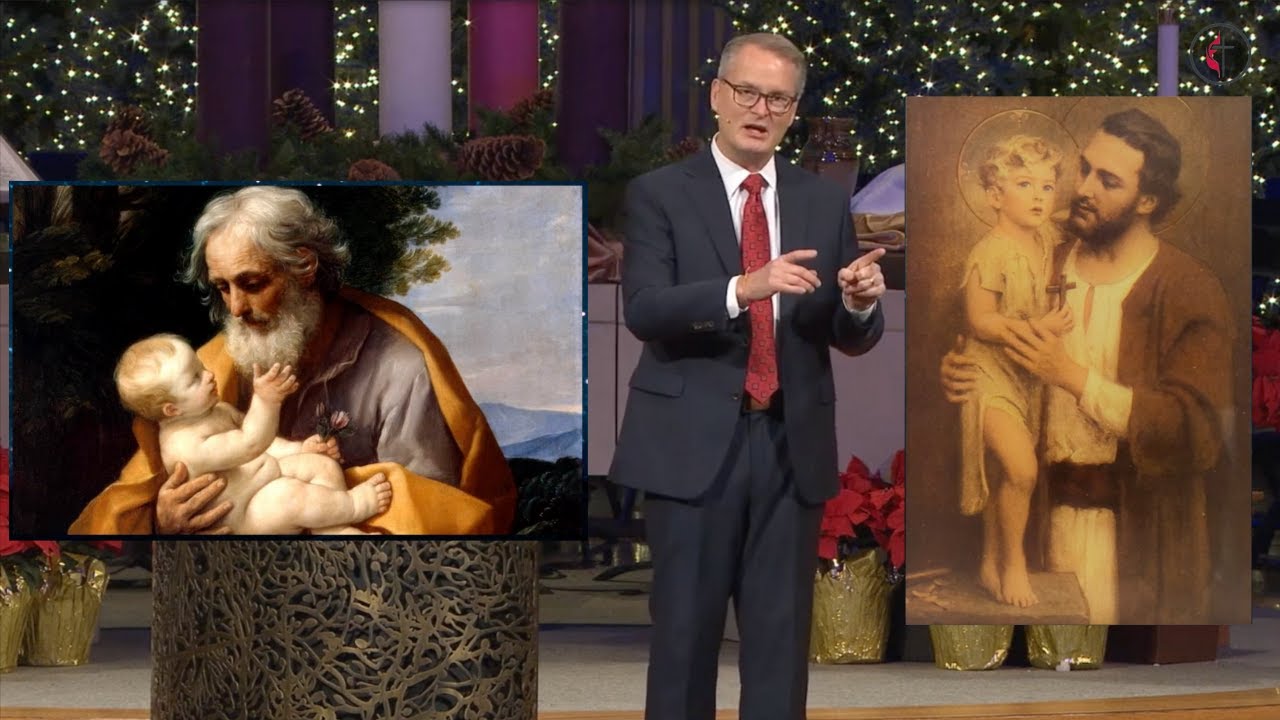
One of the earliest non-canonical sources, the Protoevangelium of James (second century), portrays Joseph as an older widower chosen to be Mary’s guardian, emphasising Mary’s perpetual virginity and Joseph’s protective role. In this narrative, Mary is a young girl dedicated to God, while Joseph is much older, sometimes imagined as having children from a previous marriage. Although influential, the text is not part of the biblical canon, and historians approach it as a theological and devotional work rather than a straightforward biography.
This tradition explains why, in Christian art, Joseph is often depicted as elderly. It provides a theological rationale—highlighting the miraculous nature of Jesus’ birth and Mary’s exceptional vocation. Still, it does not settle how old was mary and joseph when they got married in a historical sense; it presents a pious interpretation shaped by the concerns of its time.
Medieval and denominational perspectives
Across centuries, Christian communities received these traditions differently. Some emphasised Joseph’s advanced age; others envisioned him as a younger working man. Denominational differences in theology and devotional culture often colour these portrayals. For a broader background on how traditions sometimes diverge between branches of Christianity, see this overview of Orthodox vs Catholic perspectives, which can provide context for why certain images of Joseph became more prominent in different communities.
So, how old was mary and joseph when they got married? A reasoned estimate
Given the silence of the Gospels and the variability of later tradition, the best approach is to combine cultural context with cautious inference. In first-century Galilee, it would be normal for Mary to be a young teenager at betrothal—commonly estimated around 12–14. Joseph, as a working craftsman (tekton), might well have been in his late teens or early twenties, old enough to have completed training and begun steady work. On this view, a likely scenario is that Mary was in early adolescence at betrothal, and Joseph a few years older.
Alternative traditions place Joseph much older, possibly middle-aged or elderly, sometimes a widower. This reflects theological priorities rather than historical evidence. That does not invalidate the tradition’s devotional value, but if the goal is historical probability, a younger Joseph remains plausible. Art historians and biblical scholars frequently point out that a mature but not elderly Joseph fits the Gospel’s depiction of a man who travels, works with his hands, takes decisive action, and protects his young family.
Therefore, when people ask how old was mary and joseph when they got married, a fair summary might be: Mary likely in her early teens at betrothal, and Joseph likely in his late teens to mid-twenties—while recognising that some early traditions present Joseph as significantly older for theological reasons.
Timelines, life expectancy, and common misconceptions
A number of myths cloud the question of how old was mary and joseph when they got married. One is the misuse of “life expectancy” statistics. Average life expectancy in antiquity was low largely due to infant and child mortality. Those who survived childhood could and did live into their forties, fifties, or beyond. So the idea that everyone died around 30 is simply wrong. This matters because it affects how we imagine an “older” Joseph; a man in his forties or fifties was hardly unheard of, though the younger-working-adult model still fits the Gospel’s active Joseph well.
Another confusion involves betrothal. Since betrothal was legally binding, some readers think Mary and Joseph were fully married at the Annunciation. In legal terms, they were husband and wife, but their household had not yet formed. That is why Matthew’s account of Joseph “taking Mary into his home” is pivotal: it marks the transition to shared life following divine instruction.
How historians assess claims and sources
Because no biblical text lists exact ages, historians weigh multiple strands of evidence when addressing how old was mary and joseph when they got married. Useful criteria include:
- Primary sources: What do the canonical Gospels actually say (and not say)?
- Cultural context: What were the norms of marriage and household formation in Judea and Galilee?
- Non-canonical traditions: What theological motives might shape a text like the Protoevangelium of James?
- Plausibility: Does a proposed age align with Joseph’s role as a householder and craftsman, and with Mary’s portrayal in Luke?
- Continuity: How did early Christian communities receive and reinterpret earlier traditions?
Applied together, these criteria help sift confident statements from conjecture.
Examples and common mistakes to avoid
When thinking about how old was mary and joseph when they got married, consider these frequent pitfalls:
- Confusing betrothal with a modern engagement and assuming it carried no legal weight.
- Reading medieval artwork as literal biography rather than theological expression.
- Assuming modern Western marriage ages as a universal standard.
- Treating non-canonical texts as if they were equal in historical status to the Gospels.
- Using average life expectancy figures to argue that no one lived beyond 30.
Mary in devotion and daily life
Mary’s youth at betrothal—if we adopt the historically common estimate—can deepen appreciation for her courage at the Annunciation. Her “yes” carries the weight of a life lived in trust. Devotional traditions like the devotion to Our Lady of Sorrows remind believers that Mary’s path included both grace and grief, from Bethlehem to Calvary. While not directly answering how old was mary and joseph when they got married, such devotions highlight the human dimension of their story.
Recommended external resources
- Overview of marriage in ancient Israel (historical context)
- Betrothal (erusin) in Jewish law and practice
- Mary, mother of Jesus (biographical overview and traditions)
- Saint Joseph (roles, titles, and traditional depictions)
These resources offer accessible summaries of the context and traditions relevant to how old was mary and joseph when they got married. As always with encyclopaedias, consult the references at the end of each article for scholarly sources and primary texts.
Frequently asked questions about how old was mary and joseph when they got married
Does the Bible give the ages of Mary and Joseph?
No. The Gospels never specify their ages. Any claim about how old was mary and joseph when they got married is therefore an inference based on historical context, not a direct quotation from Scripture.
Were girls really married that young in ancient Judea?
Many were betrothed soon after puberty, with full marriage following within a year or two. This reflected social norms around family formation and economic life. That said, individual cases varied.
Was Joseph an elderly widower?
Some early Christian traditions, notably the Protoevangelium of James, present Joseph as an older widower with children. This view served theological aims, particularly emphasising Mary’s perpetual virginity. Historically, a younger Joseph is entirely plausible and fits the Gospels’ portrayal of an active craftsman and protector.
What is the difference between betrothal and marriage in this context?
Betrothal (erusin) was legally binding, unlike modern engagement. The couple was considered husband and wife in a legal sense, but did not live together until the marriage was completed (nissuin) and the wife was brought into the husband’s home.
Can we state exact ages for Mary and Joseph?
No. We can only offer ranges. Many historians suggest Mary was likely in early adolescence at betrothal (often around 12–14) and Joseph in his late teens to mid-twenties, though older ages for Joseph are found in some traditions.
Why does this discussion matter for faith?
It situates the Holy Family in a real historical world. Understanding how old was mary and joseph when they got married highlights their responsibilities, social context, and the courageous choices they made—without turning the story into speculation detached from evidence.
Conclusion on how old was mary and joseph when they got married
In the end, the Scriptures do not give a precise answer to how old was mary and joseph when they got married. However, when we consider Second Temple Jewish customs, the legal meaning of betrothal, and the practicalities of household formation, a reasoned estimate emerges: Mary was likely a young teenager at betrothal, and Joseph a somewhat older working man, perhaps in his late teens to mid-twenties. Some early traditions depict Joseph as much older, a view shaped by theological concerns rather than strict historical reporting.
Recognising these nuances helps us avoid extremes. It is possible to respect devotional traditions while acknowledging that they may not provide exact historical data. Approached with care, the question of how old was mary and joseph when they got married humanises the Holy Family and encourages a fuller appreciation of their faith, resilience, and everyday lives.
As you encounter claims online or in books, remember to weigh the evidence: what the Gospels say, what history makes plausible, and what later tradition contributes. With that balance, how old was mary and joseph when they got married becomes not just a curiosity, but an invitation to understand the world of the Gospels more deeply.
