How Many Versions of the Bible Are There? 25 Fascinating Facts
Respuesta Rápida
The Bible exists in hundreds of versions and thousands of translations, each reflecting different linguistic, theological, and cultural approaches to rendering its ancient Hebrew, Aramaic, and Greek texts into modern languages. This diversity aims to make the Scriptures accessible and meaningful to various audiences worldwide.
Seven key facts about Bible versions include:
- Hundreds of English Versions: Over 450 unique English translations exist.
- Original Languages: Translated from Hebrew, Aramaic, and Greek manuscripts.
- Formal vs. Dynamic Equivalence: Two main translation philosophies.
- Historical Context: Driven by language evolution and theological developments (e.g., Reformation).
- Canonical Differences: Variations in accepted books (e.g., Deuterocanonicals).
- Target Audiences: Translations for specific groups (e.g., academic, youth, denominational).
- Digital Accessibility: Widely available via apps and online platforms.
Have you ever walked into a bookstore’s Bible section and felt overwhelmed by the sheer number of choices? King James Version, New International Version, ESV, NLT, The Message… it’s enough to make your head spin! You might have wondered: “How many versions of the Bible are there, really? And why are there so many? Are they all saying the same thing?” 🤔 It’s a question that reflects a topic of immense interest and importance among scholars, theologians, and curious readers alike.
The truth is, the Bible, a collection of sacred texts revered by billions, exists in a remarkable diversity of versions and countless translations. This multitude isn’t a sign of confusion, but rather a testament to the enduring power of its message and the dedicated efforts to make God’s Word accessible and understandable across different languages, cultures, and historical eras. It’s like a magnificent diamond, meticulously cut and polished in various ways, each facet revealing its beauty and brilliance from a slightly different angle.


Understanding how many versions of the Bible there are isn’t just about cataloging different editions. It’s about grasping the complex process of biblical translation, appreciating the nuances of ancient languages, and recognizing how different interpretations can enrich our spiritual understanding. It empowers us to choose the version that best suits our needs for study, devotion, or sharing. For us here at oracioncristiana.org, exploring such foundational aspects of Scripture deepens our faith and clarifies our path. So, let’s delve right in and uncover the 7 fascinating facts about how many versions of the Bible there are!
1. What Is a “Version” of the Bible? (A Matter of Translation)
Let’s start with a clear definition. A “version” of the Bible typically refers to a distinct translation of its ancient Hebrew, Aramaic, and Greek original texts into a modern language, driven by scholarly efforts to convey the Scriptures accurately and understandably to a new audience.
Think of the Bible not as a single book, but as a library of ancient texts. These texts were originally written in:
- Old Testament: Primarily Biblical Hebrew, with some parts in Aramaic.
- New Testament: Primarily Koine Greek.
When we speak of “versions” in English, we’re referring to the countless efforts by scholars and teams to render these ancient texts into contemporary English. Each version makes different interpretive choices, aiming for a balance between accuracy, readability, and literary style. It’s like taking an ancient, intricately woven tapestry and carefully re-creating it for a modern audience, striving to preserve every thread and color. This process is essential because languages evolve, and new archaeological discoveries (like ancient manuscripts) continually deepen our understanding of the original texts.
2. The Sheer Numbers: Hundreds of English Versions, Thousands of Translations
The diversity of Bible versions is truly astounding, reflecting its global reach and enduring relevance. There are literally hundreds of unique English versions (translations, paraphrases, and revisions) of the Bible, and globally, parts or all of the Bible have been translated into over 3,500 languages.
Let’s put those numbers into perspective:
- English Translations: While estimates vary, it’s widely believed that there are over 450 distinct English translations of the complete Bible, with countless more partial translations or paraphrases. This includes major versions like the King James Version (KJV), New International Version (NIV), and English Standard Version (ESV).
- Global Reach: The Bible remains the most translated book in human history. As of 2022, the complete Bible has been translated into 737 languages, and at least one book of the Bible has been translated into 3,500 languages. This incredible effort is driven by missionary organizations like Wycliffe Bible Translators.
This staggering number underscores humanity’s profound spiritual hunger and the tireless dedication of countless scholars and missionaries to make God’s Word accessible to everyone on Earth. It’s like a massive global river, constantly flowing and branching out, carrying the life-giving waters of Scripture to every corner of the world. This vast diversity is a testament to the Bible’s enduring power and universal appeal.
3. Translation Philosophies: Formal vs. Dynamic Equivalence
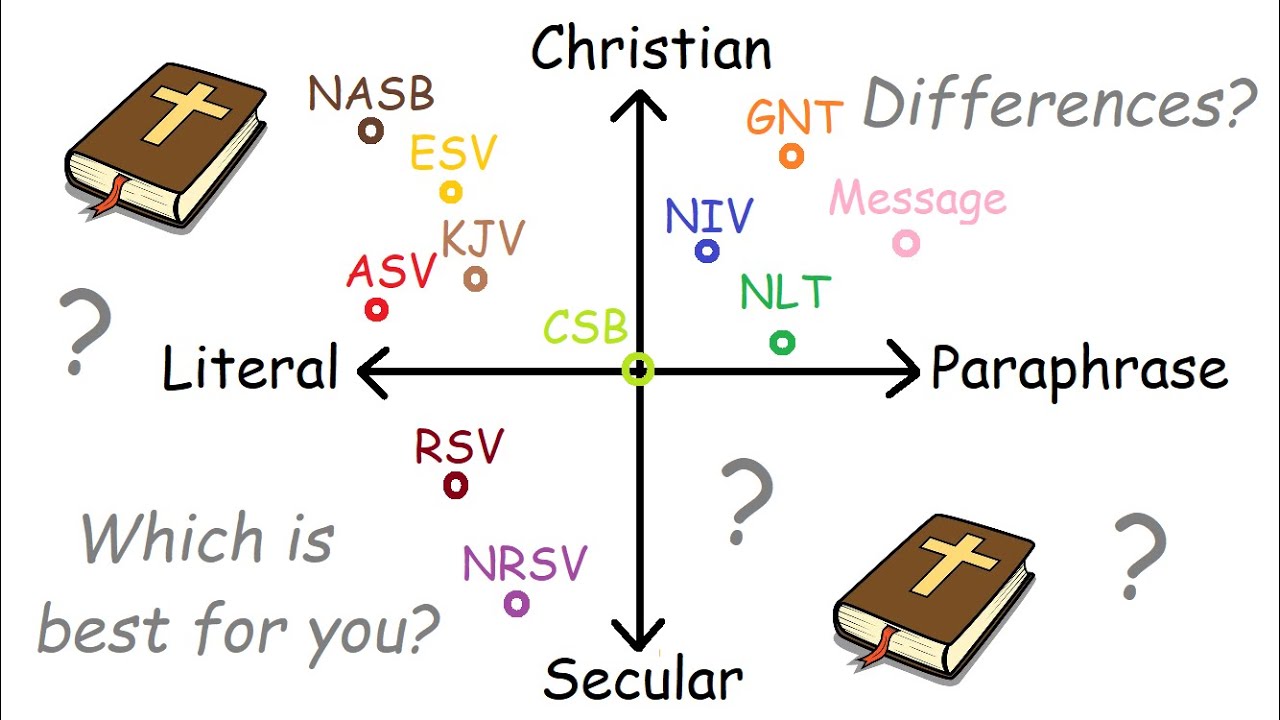
Behind every Bible version lies a conscious decision about how to translate the ancient texts. Bible translations generally fall along a spectrum between two primary philosophies: “formal equivalence” (word-for-word) and “dynamic equivalence” (thought-for-thought).
Understanding these two approaches helps explain why translations differ:
- Formal Equivalence (Word-for-Word):
- Goal: To be as literal as possible, matching the grammatical structure and vocabulary of the original Hebrew, Aramaic, and Greek texts.
- Strength: Offers high precision for detailed study and preserves the feel of the original text.
- Examples: King James Version (KJV), New American Standard Bible (NASB), English Standard Version (ESV).
- Dynamic Equivalence (Thought-for-Thought):
- Goal: To convey the original meaning or message of the text in natural, contemporary language, even if it requires deviating from a literal word order.
- Strength: Offers high readability and clarity, making the text easily understandable for modern readers.
- Examples: New International Version (NIV), New Living Translation (NLT), The Message (MSG).
Most translations fall somewhere in between these two extremes, creating a spectrum of choices. It’s like a skilled musician: one might strive to play every note exactly as written (formal), while another seeks to capture the emotional essence and communicate it powerfully to a new audience (dynamic). Both are valuable, depending on the listener’s (reader’s) purpose. You can learn more about translation philosophies from Bible Gateway.
4. Canonical Differences: Variations in Accepted Books
While most Christian Bibles contain 66 books, some versions include additional texts, leading to variations in the canon. Differences in Bible versions can also arise from variations in the “canon”—the collection of books officially recognized as inspired Scripture, particularly between Protestant, Catholic, and Orthodox traditions.
- Protestant Canon: Typically includes 66 books (39 Old Testament, 27 New Testament). This canon was formalized during the Reformation, based on the Hebrew Bible.
- Catholic Canon: Includes 73 books (46 Old Testament, 27 New Testament). The additional books in the Old Testament (e.g., Tobit, Judith, Wisdom, Sirach, Baruch, 1 & 2 Maccabees) are known as the Deuterocanonical books by Catholics (or Apocrypha by Protestants). These books were part of the Septuagint (the ancient Greek translation of the Hebrew Bible) and were accepted by the early Church.
- Eastern Orthodox Canon: Can include even more books than the Catholic canon, with some variations among different Orthodox Churches.
These differences in canon reflect distinct historical developments and theological understandings of which books are considered divinely inspired. It’s like different family albums: while they all share core family photos, some contain additional cherished pictures that others might not have. This is a significant point of distinction that impacts not just the number of books, but also certain doctrinal interpretations. You can learn more about the Deuterocanonical books from Catholic.com.
5. Historical Context: Driving Forces Behind New Translations
The proliferation of Bible versions is deeply tied to historical events and ongoing needs. The continuous creation of new Bible versions is driven by historical developments such as language evolution, new archaeological discoveries of ancient manuscripts, and the theological movements that seek to make God’s Word more accessible and relevant to contemporary readers.
Think about the forces at play:
- Language Evolution: Languages change over time. The English of the 17th-century King James Version is challenging for many modern readers. New translations keep the language fresh and understandable.
- New Manuscript Discoveries: Major archaeological finds, like the Dead Sea Scrolls (discovered mid-20th century), provided scholars with older and more complete Hebrew texts of the Old Testament, leading to updated translations.
- The Reformation: A key catalyst for making the Bible accessible to laypeople in their common languages (e.g., Luther’s German Bible, the Tyndale Bible in English).
- Missionary Expansion: As Christianity spread globally, the need for translations into thousands of local languages became paramount.
These historical and ongoing factors ensure that the Bible remains a living, dynamic text, continuously being re-rendered to speak powerfully to each new generation and culture. It’s like a timeless message, constantly being re-delivered in new envelopes, ensuring its contents are always fresh and understood. This ongoing process highlights the enduring importance of biblical scholarship and linguistic accessibility.
6. Target Audiences: Tailoring for Specific Readers
Not all Bible versions are created equal, nor are they intended for the same reader. Many Bible versions are specifically tailored for different target audiences, catering to diverse linguistic needs, reading levels, theological preferences, and specific denominational or academic purposes.
This thoughtful approach ensures maximum accessibility and relevance:
- For Academic Study: Versions like the New American Standard Bible (NASB) or the English Standard Version (ESV) prioritize literal accuracy and are often favored for in-depth theological study.
- For General Readability: Translations like the New International Version (NIV) or New Living Translation (NLT) aim for clear, contemporary English, making them popular for personal devotion and easy comprehension.
- For Younger Audiences: Some versions use simpler language or include features designed to engage children and youth.
- For Specific Denominations: Certain versions are produced with specific denominational perspectives in mind (e.g., the New World Translation for Jehovah’s Witnesses, or various Catholic Bibles).
This tailoring ensures that the Bible’s message can effectively reach and resonate with a wide array of readers, from seasoned scholars to new believers, and from children to adults. It’s like a wise teacher who adapts their lesson to each student, ensuring everyone can grasp the profound truths being taught. This focus on the reader highlights the pastoral and educational aims of biblical translation.
7. Digital Age: Enhancing Accessibility and Study Tools
The advent of modern technology has revolutionized how we access and interact with Bible versions. The digital age has profoundly impacted Bible accessibility, with countless versions now available instantly through online platforms and mobile apps, offering enhanced study tools, comparative features, and audio renditions.
This technological leap has transformed Bible engagement:
- Instant Access: Platforms like Bible Gateway and apps like YouVersion Bible App provide immediate access to hundreds of translations with a few taps or clicks.
- Comparative Study: Digital tools allow users to compare multiple versions side-by-side, highlighting different renderings and enriching understanding.
- Audio Bibles: Many apps offer audio versions, making the Bible accessible for auditory learners or those with visual impairments.
- Study Tools: Integrated features like commentaries, lexicons, maps, and cross-references (like those found in Blue Letter Bible) enhance in-depth study.
The digital age has democratized access to Scripture, empowering individuals to engage more deeply with God’s Word than ever before. It’s like a vast, ancient library suddenly becoming instantly accessible to everyone, everywhere, in the palm of their hand. This technological integration ensures that the timeless message of the Bible remains vibrant and relevant in our contemporary world.
Which Bible Version Will You Explore Next?
The question of how many versions of the Bible there are reveals a truly fascinating landscape, rich with historical depth, linguistic nuance, and theological purpose. From the ancient roots of its original languages to the countless modern translations, each version plays a vital role in making God’s eternal Word accessible and meaningful to every heart.
May this exploration deepen your appreciation for the Bible’s diversity and inspire you to engage with its truths more profoundly. What an incredible treasure to behold, in so many beautiful forms!
Now, I’d love to hear from you. The comments section is open!
→ Which of these 7 fascinating facts about Bible versions resonated most deeply with your understanding or surprised you the most?
→ Do you have a favorite Bible version, and what is it about that particular translation that speaks to you?
→ What’s one practical step you plan to take this week to explore a new Bible version or use a digital study tool to deepen your understanding of Scripture?
Let’s share our insights and encourage one another in our oracioncristiana.org community!
