How many people saw jesus after the resurrection: complete guide
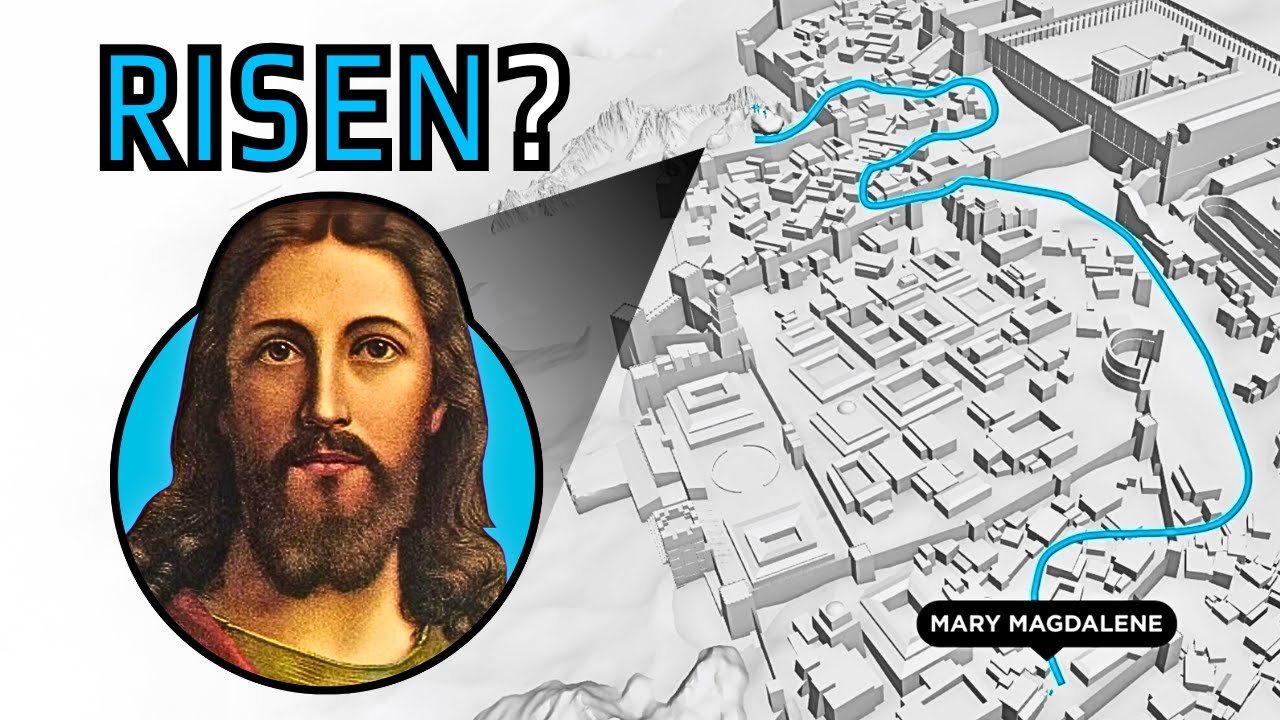
how many people saw jesus after the resurrection
Many readers of the New Testament eventually wonder how many people saw jesus after the resurrection. It is a deceptively simple question with layers of meaning: it touches on history, faith, memory, and the way accounts were recorded and passed on. Whether you approach the topic devotionally, historically, or out of sheer curiosity, a clear answer requires looking closely at the earliest sources, understanding how they describe “appearances”, and recognising where we have precise numbers and where we do not.
This guide offers a friendly, carefully sourced overview for non-specialists. We will explore the core texts, set out the appearances in order, consider totals, and point out where interpreters differ. You will also find practical tips for giving a balanced answer when someone asks how many people saw jesus after the resurrection, as well as related resources for further reading.
Why asking how many people saw jesus after the resurrection matters
At first glance, it is simply a counting exercise. But the deeper significance is threefold. First, the New Testament writers present the resurrection as a public claim: that real people encountered the risen Jesus. Knowing how many people saw Jesus helps you grasp the scope of that claim. Second, the sources are not identical. They agree on the central message yet describe different moments and audiences, so any responsible answer involves weighing and synthesising multiple texts. Third, this question is a doorway into early Christian history: it reveals how traditions were preserved, what the first communities emphasised, and why certain details (like a large group of witnesses) became important.
Ultimately, asking how many people saw jesus after the resurrection opens up discussion about evidence, testimony, diversity among the accounts, and the meaning that Christians attach to the events celebrated every Easter.


Sources and method for counting how many people saw jesus after the resurrection
To answer how many people saw jesus after the resurrection, we rely on two kinds of New Testament sources:
- Paul’s early summary in 1 Corinthians 15:3–8, which lists several appearances, including one to “more than five hundred” people.
- The four Gospels and Acts, which narrate multiple encounters with varying detail and order.
Many scholars view 1 Corinthians 15:3–8 as embedding an early creed, possibly within a few years of the events. You can read it directly in context at 1 Corinthians 15:3–8 (NIV) on BibleGateway. For an overview of the various appearances set across the canonical texts, a useful reference is the overview of post-resurrection appearances on Wikipedia, which collates verses under each episode.
Methodologically, we will:
- List the appearances reported in the Gospels and Acts, noting individuals and groups.
- Add Paul’s list from 1 Corinthians 15, including the distinctive mention of “more than five hundred”.
- Avoid double-counting where episodes obviously overlap (for example, the first meeting of the Eleven in Jerusalem appears in multiple Gospels).
- Offer a cautious range, since some groups are unspecified in size and the “five hundred” group is not named in the Gospels.
The earliest list: Paul’s summary in 1 Corinthians 15
Paul’s list is compact but crucial when calculating how many people saw jesus after the resurrection. He reports appearances to:
- Cephas (Peter)
- The Twelve
- More than five hundred brothers and sisters at once
- James
- All the apostles
- Finally, Paul himself
Three details matter for counting. First, the “more than five hundred” is a specific, large number; even if conservative, it sets the total above five hundred witnesses. Second, the list includes overlapping groups (“The Twelve” and “all the apostles”)—we must be careful not to add them as separate individuals without evidence of unique attendees. Third, Paul’s personal encounter is post-ascension and visionary (Acts 9), yet he includes it in the chain of appearances. If your question limits itself strictly to the forty days between the resurrection and the ascension, you might or might not include Paul’s experience in the total.
Gospel and Acts accounts: who is named and which groups appear?
The Gospels offer narrative scenes that complement Paul’s summary. Even though they do not mention the “five hundred”, they provide named individuals and small groups. Below is a straightforward tour of the main episodes, with references you can read in full via Luke 24 (NIV) on BibleGateway and the concluding chapters of John’s Gospel (John 20–21). You can also consult Encyclopaedia Britannica’s overview of the Resurrection for historical and theological context.
1) Women at the tomb
All four Gospels agree that women were first at the tomb, discovering it empty and receiving angelic messages. Appearances to Mary Magdalene are reported explicitly (John 20:11–18; Mark 16:9 in the longer ending), and Matthew 28:9–10 depicts Jesus meeting “the women”. Named figures include Mary Magdalene, Mary the mother of James, Salome, and Joanna, with others implied. The exact number varies by Gospel, but it is clearly more than one.
2) Mary Magdalene
John 20 describes a personal encounter between Jesus and Mary Magdalene in the garden near the tomb. This is significant for two reasons: it is a direct, named witness, and it highlights that any accurate answer to how many people saw Jesus must account for the testimony of women, not just the apostles.
3) Peter (Cephas)
Luke 24:34 refers to an appearance to Simon (Peter), and Paul lists Cephas first in 1 Corinthians 15. This is generally treated as a separate, individual encounter.
4) Two disciples on the road to Emmaus
Luke 24:13–35 narrates Jesus appearing incognito to two disciples, traditionally one named Cleopas and another unnamed companion. This clearly adds two more witnesses.
5) The group in Jerusalem without Thomas (often called “the Ten”)
John 20:19–23 describes Jesus appearing to the gathered disciples on the evening of the first day, with Thomas absent. Luke 24:36–49 also narrates a similar gathering. The size is not numerically specified in Luke, but the Johannine tradition calls this the first meeting of the group minus Thomas.
6) The group in Jerusalem with Thomas (often called “the Eleven”)
John 20:24–31 presents the second scene a week later with Thomas present, including the famous exchange about touching Jesus’ wounds. Luke 24 likely correlates with one or both group appearances, though harmonisations vary.
7) By the Sea of Galilee (the seven)
John 21 narrates an appearance by the Sea of Tiberias to seven disciples, including Peter, Thomas, Nathanael, the sons of Zebedee, and two others. This gives us a clearly numbered group of seven.
8) On a mountain in Galilee
Matthew 28:16–20 describes the Eleven meeting Jesus on a mountain in Galilee, where he gives the Great Commission. The size is the Eleven, but some interpreters wonder whether this setting could overlap with Paul’s “more than five hundred” mention; however, the text itself does not say so.
9) “All the apostles”
Paul says Jesus appeared to “all the apostles”. This could refer to a larger circle beyond the Eleven/Twelve, a recognised category of early Christian envoys. The number is not given, so it is safest not to assign a fixed count for this line item without speculation.
10) James
Paul names James (commonly understood as James, the brother of Jesus) as a recipient of an appearance. This is not narrated in the Gospels directly but is an important, named individual in Paul’s list.
11) The ascension gathering
Acts 1 describes Jesus appearing over forty days and then ascending in the presence of his followers. The exact number present at the ascension is not specified. Acts later mentions about 120 believers being together in Jerusalem (Acts 1:15), but that figure pertains to a subsequent gathering and should not be assumed for the ascension scene itself.
12) Paul
Finally, Paul includes his own encounter (Acts 9; 1 Corinthians 15:8). If your interest is strictly the period before the ascension, you may note this as separate and later. Still, Paul’s inclusion shows how early Christians counted witnesses, even beyond the forty days.
So, how many people saw jesus after the resurrection in total?
We can now attempt a careful tally. The only explicit large number is “more than five hundred at once” from 1 Corinthians 15. Add to that the named and numbered individuals: Mary Magdalene (and potentially more women), Peter, the two on the Emmaus road, the group in Jerusalem (twice, with and without Thomas), the seven at the Sea of Galilee, the Eleven in Galilee, James, “all the apostles” (unspecified), and possibly others implied during the forty days.
In the most cautious terms, the minimum answer to how many people saw jesus after the resurrection is “over five hundred,” because of Paul’s statement. If we include the individuals and small groups in addition to that, we move beyond five hundred to approximately five hundred and a handful more—often rounded informally to “over 500 witnesses”. If one includes Paul’s later experience, the number rises again by one. However, because “all the apostles” is undefined, and because the Gospels sometimes describe similar gatherings that could overlap, a precise grand total beyond “more than five hundred” cannot be given with certainty. Still, it is reasonable to say that well over 500 people are reported as having seen the risen Jesus across the sources.
In practical conversation, a crisp, fair summary is: According to the New Testament, more than five hundred people saw Jesus at once, alongside multiple individual and small-group appearances—to women followers, to Peter, to the Eleven and wider apostles, to James, and later to Paul. That is the best-supported way to express how many people saw jesus after the resurrection without overstating what the texts specify.
Key points to keep in mind when counting
- Paul’s “more than five hundred” is unique to 1 Corinthians 15 and not duplicated in the Gospels, so we should not insist on a narrative parallel that is not there.
- Some episodes may overlap (for example, Luke and John may report the same Jerusalem gatherings with different details).
- Do not overlook women’s testimony—Mary Magdalene and other women feature prominently in the resurrection narratives and therefore in any answer about how many people saw Jesus.
- “All the apostles” is a meaningful category but not a headcount; an exact number is unknown.
- Whether to include Paul depends on whether you are counting only pre-ascension appearances or all recognised post-resurrection appearances.
Common mistakes when answering how many people saw jesus after the resurrection
Because the accounts vary in perspective and detail, certain errors recur. Here are the most frequent pitfalls to avoid:
- Double counting the same episode across Gospels. If Luke and John recount the same first Sunday evening appearance, they still describe just one appearance.
- Turning approximations into exact totals. “More than five hundred” is deliberately open-ended; converting it to “exactly 500” or “exactly 501” misrepresents the text.
- Ignoring names and small groups because the “five hundred” looms so large. Mary Magdalene, Peter, the two from Emmaus, and the seven in Galilee all matter for a complete picture.
- Assuming all gatherings include the same people. The Eleven, “all the apostles”, and later the 120 in Acts 1:15 are different references; they should not be conflated.
- Forgetting timeframes. Decide if you are counting only the forty days or also Paul’s later encounter.
How to give a balanced answer in conversation
When someone asks how many people saw jesus after the resurrection, you can respond clearly and concisely:
- Start with Paul’s headline: “More than five hundred at once.”
- Add the named appearances: Mary Magdalene, Peter, the two on the Emmaus road, the Eleven (with and without Thomas), the seven by the lake, James, and “all the apostles”.
- Clarify overlaps and unknowns: some scenes are the same moment told by different authors; some group sizes are not stated.
- Offer a careful range: “Well over 500 people,” with Paul’s own later experience if the scope includes post-ascension appearances.
Historical and theological reflections
From a historical angle, the variety of witnesses—individuals, small groups, and a large assembly—has been part of Christian apologetic argument since antiquity. Paul’s remark that “most of whom are still living” (1 Corinthians 15:6) implies, at the time of writing, that some eyewitnesses could theoretically be consulted. From a theological angle, the breadth of witnesses underlines that the resurrection claim was not reserved to a single visionary but was experienced across a community that later carried the message worldwide.
If you want to explore the wider cultural questions that often arise around Easter—the festival when Christians celebrate these appearances—try this readable overview on whether is Easter pagan?, which explains the holiday’s origins and Christian meaning. You might also appreciate a concise primer addressing do Jewish people celebrate Easter?, a common interfaith question that comes up every spring.
For further context on the narrative timelines, you can consult primary texts directly in modern translations. Besides 1 Corinthians 15, reading Luke 24 and John 20–21 in full helps you see how the stories interlock and why harmonisations sometimes differ. A useful synthesised overview can be found in the collated table of appearances on Wikipedia, while Encyclopaedia Britannica’s article on the Resurrection provides broader historical and doctrinal background.
Recommended external resources
- 1 Corinthians 15:3–8 (NIV) at BibleGateway for the earliest summary of appearances, including “more than five hundred”.
- Luke 24 (NIV) at BibleGateway for multiple Jerusalem and Emmaus appearances.
- Post-resurrection appearances overview on Wikipedia for a cross-referenced list of texts.
- Resurrection entry at Encyclopaedia Britannica for historical and theological context.
Related articles
- Is Easter pagan? History and meaning of the festival
- Do Jewish people celebrate Easter? A quick interfaith explainer
Frequently asked questions about how many people saw jesus after the resurrection
Is the “more than five hundred” appearance mentioned in the Gospels?
No. The group of “more than five hundred” comes from Paul’s summary in 1 Corinthians 15:6. The Gospels do not narrate that particular event. Some readers suggest the Galilean mountain in Matthew 28 could overlap with it, but that is only a hypothesis—the text does not say so, so we cannot assert it with confidence.
Do we count Paul’s experience on the road to Damascus?
Paul includes himself in the chain of witnesses (1 Corinthians 15:8). If you are counting all post-resurrection appearances recognised by early Christians, then yes, include him. If you are limiting yourself to the forty days before the ascension, then Paul’s encounter is a separate, later experience and can be noted but not added to that pre-ascension total.
What about the women—are they included in formal counts?
They should be. The Gospels emphasise that women, especially Mary Magdalene, were among the first to encounter the risen Jesus. Any balanced answer to how many people saw Jesus must include them. Their testimonies are integral to the narrative and to early Christian proclamation.
Did any non-followers or authorities see the risen Jesus?
The New Testament does not narrate post-resurrection appearances to Roman authorities or to hostile crowds. The witnesses described are disciples and believers, including those who
