How many archangels? A complete, essential guide to 3 key traditions
how many archangels: a clear guide across traditions
If you have ever wondered how many archangels there are, you are in good company. The answer is not as straightforward as a single number. It varies depending on religious tradition, scriptural canon, and historical interpretation. This guide explains what an archangel is, where the idea comes from, how different faiths count them, and why the totals differ—so you can understand how many archangels are recognised in diverse sources and how scholars and believers approach the question today.
At its heart, asking how many archangels there are is really a way of asking how different communities read their sacred texts and how they describe the roles of the highest messengers of God. From three named figures in some Christian Bibles to seven venerable names in Eastern Christianity, and four prominent ones in Islamic tradition, the spectrum is wide. Let’s unpack it with clarity and respect for each perspective.
How many archangels: the essentials
An archangel is typically understood as a high-ranking angelic being. The English word comes from the Greek archangelos, meaning “chief messenger.” While angels appear frequently in Scripture and religious literature, explicit references to “archangel(s)” are relatively rare. Because of this, how many archangels are recognised depends heavily on which texts a community treats as authoritative.
In the Bible used by most Protestants, only two angels are named (Michael and Gabriel), and only one of them is called an archangel explicitly (Michael). In Catholic and Orthodox Bibles, a third angel (Raphael) is named in the Book of Tobit. Certain Jewish and early Christian writings outside the standard Protestant canon—such as 1 Enoch and 2 Esdras (also known as 4 Ezra)—name additional archangels, especially Uriel and others. Islamic tradition commonly highlights four: Jibril (Gabriel), Mikail (Michael), Israfil, and Azrael (a name widely attested in later tradition).

How many archangels in the Bible?
To answer how many archangels the Bible names, we have to consider which Christian canon we mean.
Hebrew Bible / Old Testament (shared texts)
In the book of Daniel, Michael appears as a prince of Israel and a powerful protector. Gabriel also appears as a messenger. However, the term “archangel” itself is not used in the Hebrew text. The number of named archangels here is therefore not explicit.
New Testament
- Jude 1:9 refers to “Michael the archangel.”
- 1 Thessalonians 4:16 mentions “the voice of an archangel” (without naming which).
- Luke 1 narrates Gabriel’s announcements to Zechariah and Mary, though Gabriel is not called an “archangel” in this passage.
Based on the New Testament alone, the only figure specifically called an archangel is Michael. Hence, for readers who ask how many archangels are named in the New Testament, the answer is technically one.
Deuterocanonical books (Catholic and Orthodox canons)
In the Book of Tobit (Tobit 12:15), Raphael says: “I am Raphael, one of the seven angels who stand ready and enter before the glory of the Lord.” Here we learn two things: Raphael’s name and the idea that seven special angels stand in God’s presence. While the text does not use the term “archangel” in that exact line, Christian tradition commonly treats Raphael as an archangel. This is important for the question of how many archangels the wider Christian canon recognises, because it introduces both Raphael and the symbolic “seven.”
How many archangels in Judaism beyond the Tanakh
Second Temple Jewish literature, especially 1 Enoch (an ancient work highly influential in early Judaism and Christianity), presents a larger angelology. 1 Enoch names multiple archangels, commonly including Michael, Gabriel, Raphael, and Uriel among others. Another text, 2 Esdras (4 Ezra), also names Uriel as a heavenly guide. While not part of the Hebrew Bible, these books shaped Jewish and Christian thought, which is why people asking how many archangels there are often encounter the number seven.
For an accessible overview of these writings and their angelic lists, you might like this encyclopaedic overview of archangels and the Encyclopaedia Britannica article on archangels, both of which outline how names and numbers vary across sources. For readers interested in a Catholic theological framework on angels more broadly (not only archangels), the Catechism of the Catholic Church: Angels (CCC 328–336) offers a concise reference.
How many archangels in Christianity
Christian answers to how many archangels exist range from one to seven, depending on tradition.
Roman Catholic perspective
The Catholic Church liturgically venerates three archangels by name: Michael, Gabriel, and Raphael. These three are drawn from canonical (for Catholics) sources: Michael and Gabriel from the Bible shared with other Christians, Raphael from the Book of Tobit. Catholics do recognise that other angelic names appear in apocryphal literature, but they refrain from using those names in public liturgy. So, if a Catholic asks how many archangels are officially named in the Church’s worship and calendar, the answer is three.
Eastern Orthodox perspective
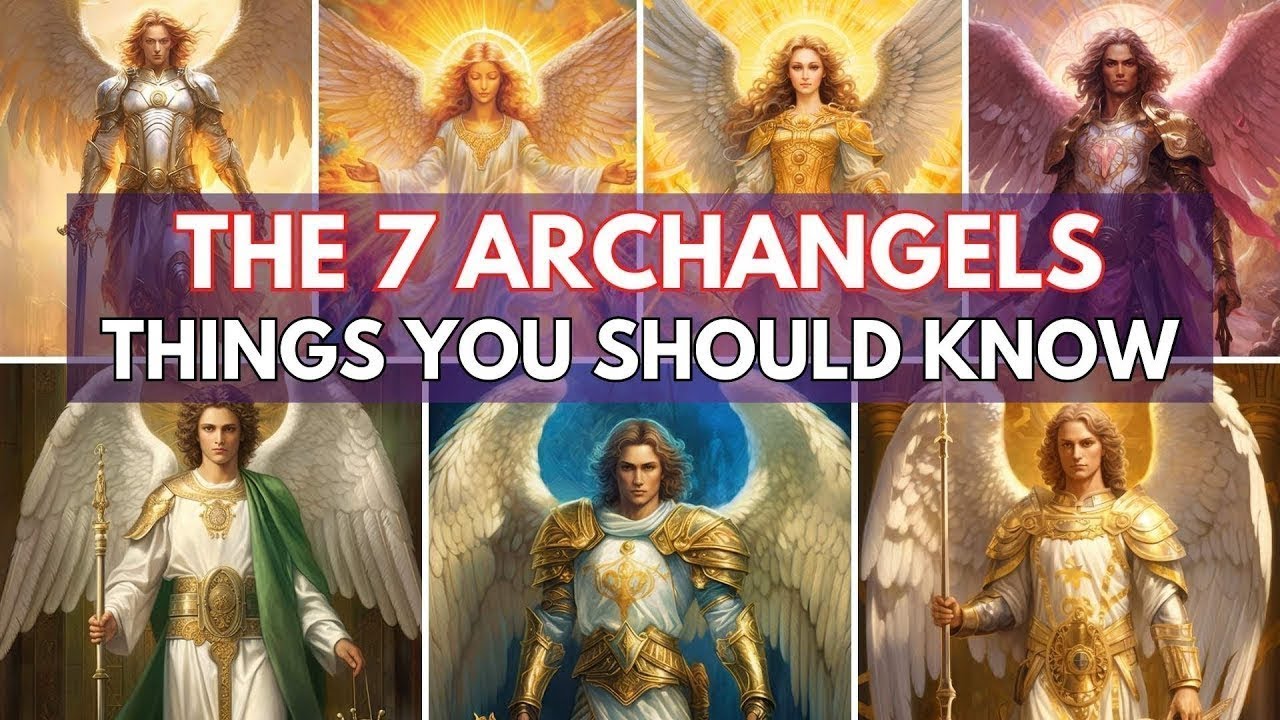
Eastern Orthodoxy venerates a broader set commonly referred to as the Seven Archangels: Michael, Gabriel, Raphael, Uriel, Selaphiel (or Salaphiel), Jegudiel (or Jehudiel/Ihudiel), and Barachiel. Some traditions also mention Jerahmeel. Icons and hymns frequently celebrate the synaxis (assembly) of the archangels. Consequently, if you ask an Orthodox Christian how many archangels are venerated, “seven” is a frequent and meaningful answer.
The different treatment of names between Western and Eastern Christians reflects a broader difference in how canons and liturgical customs developed. For a wider context on ecclesial differences (not limited to angelology), you may find this overview of Orthodox vs Catholic helpful.
Protestant perspectives
Most Protestant traditions accept the 66-book canon. This means that Michael is explicitly called an archangel in Jude 1:9, Gabriel appears by name, and Raphael is not part of the biblical canon. Many Protestants therefore conclude that how many archangels the Bible endorses by name is one (Michael), though they acknowledge Gabriel’s prominence as a messenger in Luke. Some will speak generally of “archangels” because of 1 Thessalonians 4:16, without specifying names beyond Michael.
How many archangels in Islam
Islamic tradition commonly highlights four archangels: Jibril (Gabriel), Mikail (Michael), Israfil, and Azrael. Jibril is the messenger of revelation, associated with delivering the Qur’an to the Prophet Muhammad. Mikail is associated with provision (such as rain), Israfil is often linked with sounding the trumpet on the Day of Resurrection, and Azrael is associated with death. While the Qur’an names Jibril and Mikail explicitly, Azrael is widely known through later tradition. If you ask a Muslim friend how many archangels are central in Islam, “four” is a typical answer.
Why do answers to how many archangels vary?
Four factors explain the variety:
- Canon: Different communities recognise different collections of Scripture. Catholics and Orthodox include deuterocanonical books like Tobit; Protestants generally do not. Jewish and early Christian apocrypha add names such as Uriel.
- Terminology: The title “archangel” appears sparingly. Some texts present named angels with high rank without explicitly calling them “archangel,” prompting cautious interpretation.
- Liturgy and devotion: Eastern and Western liturgical traditions developed distinct lists of venerated names. This affects how many archangels people consider familiar or official.
- Symbolism of seven: In biblical literature, seven often symbolises completeness. Tobit’s reference to seven angels “who stand before God” encouraged the idea of a fixed group of seven archangels.
Common enumerations you will encounter
When people ask how many archangels there are, several key enumerations recur. Here are the most common:
One
Michael alone is called an archangel in the New Testament (Jude 1:9). Some Christians therefore answer that the Bible names only one archangel explicitly.
Three
Michael, Gabriel, and Raphael. This is the usual Catholic list of archangels named and venerated in liturgy. If asked how many archangels the Catholic Church names in its calendar, the answer is three.
Four
In Islam: Jibril, Mikail, Israfil, and Azrael. If the question is how many archangels in mainstream Islamic teaching, four is a standard response.
Seven
Michael, Gabriel, Raphael, Uriel, Selaphiel, Jegudiel, and Barachiel are commonly listed in Eastern Orthodoxy and in certain Jewish and early Christian writings. If you are exploring how many archangels are recognised in Eastern Christian devotion, seven is the usual number.
Roles and symbolism associated with archangels
Understanding roles helps explain why certain figures are highlighted and why asking how many archangels there are can lead to different answers:
- Michael: defender and leader in spiritual battle; protector of God’s people.
- Gabriel: divine messenger, associated with annunciations and revelations.
- Raphael: healer and companion; guide in journeys (as in Tobit).
- Uriel: “light of God,” associated in some traditions with wisdom, repentance, and judgement.
- Selaphiel: intercession and prayer.
- Jegudiel: labour, reward, and leadership.
- Barachiel: blessings and providence.
- In Islam, Jibril, Mikail, Israfil, and Azrael reflect revelation, sustenance, eschatology, and death respectively.
These roles reveal patterns: revelation, protection, healing, prayer, judgement, and blessing. Variations in how many archangels each tradition recognises often trace back to which roles those communities wish to emphasise in teaching and worship.
Texts that expand the list
Beyond the canons used by most modern churches, early Jewish literature such as 1 Enoch and 2 Esdras had a lasting impact on how people answer how many archangels there might be. 1 Enoch names additional figures and explores a rich angelology that influenced both Jewish and Christian imagination. If you want a primer on this influential work, see this accessible summary of the Book of Enoch. While many communities read Enoch as informative rather than canonical, it helps explain why Uriel and the idea of seven archangels became prominent in several traditions.
How to answer “how many archangels?” in conversation
Because the number depends on context, here are concise, respectful replies:
- From a New Testament-only perspective: one (Michael is explicitly called “archangel”).
- From a Catholic liturgical perspective: three (Michael, Gabriel, Raphael).
- From an Eastern Orthodox devotional perspective: seven (Michael, Gabriel, Raphael, Uriel, Selaphiel, Jegudiel, Barachiel).
- From an Islamic perspective: four (Jibril, Mikail, Israfil, Azrael).
If someone asks you how many archangels there are “according to the Bible,” clarify which canon they mean. In ordinary English, saying “It depends on tradition; most Christians venerate three or seven” is both accurate and balanced.
Common mistakes when discussing how many archangels
- Assuming there is a single universal answer. Across Judaism, Christianity, and Islam, how many archangels are recognised differs for good historical reasons.
- Confusing angels named in apocrypha with those accepted in all canons. Some names (e.g., Uriel) come from texts many communities respect but do not canonise.
- Equating devotional lists with doctrinal essentials. Veneration of seven archangels in Eastern Christianity is part of its liturgical life; Western churches honour three by name; both affirm the broader truth that countless angels serve God.
- Overextending esoteric or New Age lists. Names like Chamuel or Zadkiel appear in later mystical traditions; these are not universally accepted across historic faiths.
Historical development in brief
In early Judaism, angelology flourished in the centuries around the time of the Second Temple. Works like 1 Enoch elaborated hierarchies, names, and missions. Early Christians inherited this literature and interpreted it in light of Christ and the apostles’ teaching. Over time, church canons and liturgies crystallised. The Western church anchored its public prayer around Michael, Gabriel, and Raphael, while the East cherished a richer liturgical celebration of seven archangels. Meanwhile, Islamic teaching, emerging in the 7th century CE, articulated its own authoritative set of archangels.
Thus, when you ask how many archangels each tradition affirms, you are stepping into a living history of interpretation and devotion rather than a single, static headcount.
Recommended external resources
- Overview of archangels across traditions
- Encyclopaedia Britannica: Archangel
- Catechism of the Catholic Church on angels (CCC 328–336)
Related articles
- Introduction to the Book of Enoch and its themes
- Key differences between Orthodox and Catholic traditions
Frequently asked questions about how many archangels
What does the word “archangel” actually mean?
It comes from the Greek archangelos: arch- (chief) + angelos (messenger). So, an archangel is a “chief messenger.” Because the title is rare in Scripture, different traditions infer how many archangels there are by looking at named angels and contextual clues.
Which archangels are named in most Christian Bibles?
Michael and Gabriel are named in all major Christian Bibles. Raphael is named in the Book of Tobit, which is included in Catholic and Orthodox canons but not in most Protestant Bibles. Michael is the only figure explicitly called “archangel” in the New Testament (Jude 1:9), which shapes one common answer to how many archangels there are.
Why do some Christians say three archangels, while others say seven?
The difference comes from canon and liturgy. Catholics venerate three by name (Michael, Gabriel, Raphael). Eastern Orthodox devotion often venerates seven (adding Uriel, Selaphiel, Jegudiel, and Barachiel). Both honour angels as God’s servants; they simply emphasise different lists.
Does the Bible ever give a total number like “seven archangels”?
Tobit 12:15 mentions seven angels who stand before God, which many interpret as a reference to a special group—often called archangels by tradition. While not every canon includes Tobit, this verse strongly influences the frequent answer of seven when people ask how many archangels there are.
What about Islam—how many archangels are there?
Islamic tradition commonly highlights four: Jibril (Gabriel), Mikail (Michael), Israfil, and Azrael. This is a well-known and widely taught enumeration, shaping how many archangels Muslims refer to in everyday explanations.
Are names like Uriel and Chamuel biblical?
Uriel appears in Jewish and early Christian writings outside the Protestant canon (e.g., 1 Enoch, 2 Esdras). Chamuel and several others are linked more to later mystical or devotional traditions. Whether a name is accepted depends on the community’s canon and practice, which is why how many archangels are acknowledged varies.
How should I answer the question quickly without causing confusion?
A concise and fair reply is: “It depends on tradition. Many Christians name three (Michael, Gabriel, Raphael), Eastern Christians often venerate seven, and Islam commonly teaches four.” That gives a respectful overview of how many archangels are recognised across major faiths.
Conclusion on how many archangels
The straightforward question “how many archangels are there?” opens into a rich tapestry of Scripture, tradition, and worship. In brief: the New Testament calls Michael an archangel; Catholics venerate three by name (Michael, Gabriel, Raphael); Eastern Orthodox devotion often honours seven; and Islamic teaching emphasises four. Each answer reflects the texts a community treats as authoritative and the roles they highlight in prayer and teaching.
If you are speaking strictly from Scripture as read by most Protestants, the safest reply to how many archangels the Bible names is one (Michael), with Gabriel as a prominent but not explicitly titled archangel. In Catholic and Orthodox contexts, three and seven are the natural answers, respectively. In Islam, four is the common teaching. These differences are not contradictions but windows into how faith communities read, pray, and hand on their beliefs about God’s messengers.
Ultimately, asking how many archangels there are is a prompt to learn how traditions shape the language of belief. Whether you encounter one, three, four, or seven, the underlying message is consistent: these beings serve God, carry divine messages, protect, heal, guide, and call people to holiness. Understanding the sources behind each enumeration will help you answer with confidence and respect in any setting.
