How did joseph meet mary: essential, definitive guide to 5 sources
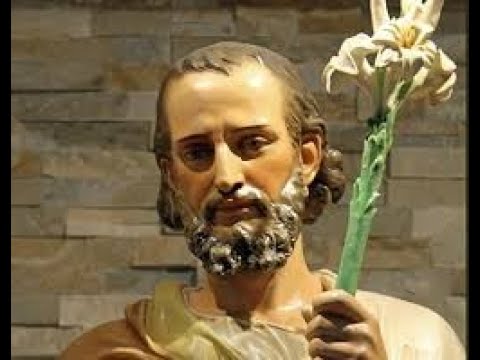
how did joseph meet mary
For many readers of the Nativity accounts, the question how did joseph meet mary is as intriguing as it is elusive. The Gospels give us essential information about their betrothal, their character and the divine call that shaped their lives. Yet they do not narrate a romantic first meeting. Understanding what the earliest sources do and do not say, the customs of first-century Judea, and the later traditions that sought to fill the gaps can help us appreciate the people at the heart of the Christmas story and the world in which they lived.
This article explores the biblical texts, historical context and reliable later traditions to answer, as far as possible, how did joseph meet mary. We will consider what “betrothal” meant, how families typically arranged marriages, what apocryphal writings suggest, and how scholars reconstruct everyday life in Nazareth. By the end, you will have a clear, balanced grasp of the evidence and the most plausible scenarios.
The biblical question: how did joseph meet mary?
When we turn to the New Testament, we find only two canonical sources that speak directly about Joseph and Mary: the Gospels of Matthew and Luke. Both affirm that they were legally bound in betrothal, that Mary conceived by the Holy Spirit, and that Joseph, described as “righteous”, accepted his role in God’s plan. Neither, however, offers a scene that explicitly answers how did joseph meet mary.
Does Matthew explain how did joseph meet mary?
Matthew opens with a genealogy linking Joseph to King David, then moves swiftly to the facts: “When his mother Mary had been betrothed to Joseph, before they came together she was found with child by the Holy Spirit.” Matthew’s emphasis is less on how did joseph meet mary and more on how Joseph responded—his initial resolve to divorce quietly, his dream, and his obedience. You can read the passage in context at the official Catholic NABRE site: Matthew 1:18–25 (USCCB).


Does Luke answer how did joseph meet mary?
Luke provides rich detail about the annunciation to Mary, Elizabeth’s pregnancy, and the birth in Bethlehem, but he is similarly silent on the practicalities of their first meeting. He describes Mary as “a virgin betrothed to a man whose name was Joseph, of the house of David.” Again, the focus is theological rather than biographical. If you would like the full text, see Luke 1 (USCCB) and the early verses of Luke 2.
What the Gospels do not say about how did joseph meet mary
The evangelists tell us who they were and what God was doing through them, but they do not narrate the family arrangements, introductions or first conversations. That means any detailed answer to how did joseph meet mary relies on historical context and later traditions. This gap is not a failure of the texts; it reflects their purpose: to proclaim the good news of Jesus Christ, not to present a modern-style biography of his parents.
Marriage customs in first-century Judea
To approach the question of how did joseph meet mary, we need to understand how marriages ordinarily came about in their time and place. In first-century Jewish society, marriage was typically a family matter arranged with care and consent, embedding two households in a network of kinship, honour and mutual responsibility.
Betrothal: more than an engagement
“Betrothal” (often reflected in the terms kiddushin or erusin in rabbinic sources) was a legally binding state, not a casual promise. The process usually involved:
- Agreement between families, often initiated by parents or guardians.
- A formal consent and exchange (including a bride-price or dowry arrangements).
- A period—commonly about a year—during which the bride remained in her family home while the groom prepared the household.
- A final wedding procession and the bringing of the bride into the groom’s home (nissuin), sealing the union.
Matthew’s language, “before they came together,” fits neatly into this structure. Mary and Joseph were already in a binding betrothal when the remarkable events surrounding Jesus’ conception unfolded.
Family arrangements and meetings
Within this framework, it is likely that Joseph and Mary’s families knew each other, or were introduced through trusted intermediaries. The couple would almost certainly have met, perhaps several times, in the presence of relatives. Private courting in the modern sense was not the norm, although there was room for personal consent. Therefore, a plausible answer to how did joseph meet mary is that they met through a customary, family-arranged betrothal, with supervised interactions consistent with local expectations of modesty and propriety.
Age, social standing and work
While exact ages are not given in Scripture, cultural patterns suggest Mary was a young woman and Joseph somewhat older. Joseph is called a “tekton”—a craftsman, often rendered “carpenter”—which implies he had a recognised trade and the means to support a household. Their social standing would have been modest, rooted in village life. These details do not answer how did joseph meet mary directly, but they shape the most realistic scenarios of their introduction.
Apocryphal and later traditions about how did joseph meet mary
Because the canonical Gospels are silent about a first meeting, early Christians were naturally curious. An influential 2nd-century text, the so-called Protoevangelium of James, offers a dramatic account of Mary’s background and betrothal. It claims Mary had been dedicated to the Temple and that priests sought a guardian for her; Joseph was chosen when his rod miraculously signified God’s choice. This narrative, while not part of the Bible, shaped Christian imagination and art for centuries. You can read a scholarly overview at the article on the Protoevangelium of James.
Medieval iconography often depicts Joseph as an older widower chosen by a divine sign, while Mary is shown as a dedicated virgin. These images reflect theology and devotion more than historical reportage. They offer one way to narrate how did joseph meet mary, but they must be treated as pious tradition, not established fact.
Why these traditions matter
Even if not historically verifiable, such traditions express convictions about God’s providence, Mary’s purity and Joseph’s protective role. They also highlight values prized by early Christians—faithfulness, humility and obedience—which align well with the canonical portraits, even when the narrative details differ.
Plausible reconstructions: ways how did joseph meet mary
When historians reconstruct everyday life in Nazareth, they draw on archaeology, social history and comparative customs from Jewish and Greco-Roman sources. From this, several sensible scenarios emerge for how did joseph meet mary.
Kinship networks and introductions
Small villages in Galilee tended to be close-knit, with extended families interwoven through marriage. It is entirely plausible that Mary’s and Joseph’s families were acquainted, either by distant kinship or shared community ties. A match could have been proposed by elders, discussed with the young couple, and formalised with betrothal rites. In this scenario, how did joseph meet mary is answered simply: through family-led introduction followed by customary visits under supervision.
Synagogue and community gatherings
The synagogue and public festivals offered communal settings where families interacted. While modesty norms were upheld, such gatherings were natural places for households to know one another. Joseph, as a tradesman, would have been visible in the communal life of Nazareth and neighbouring villages. Thus, a respectful introduction arranged at or around communal events is another credible path to how did joseph meet mary.
Work, travel and neighbouring settlements
Galilean craftsmen sometimes travelled for work to nearby towns. It is possible Joseph’s work brought him into contact with Mary’s family, particularly if relatives lived nearby (Luke emphasises Mary’s kinship with Elizabeth in Judea, showing families did maintain wider connections). While speculative, this adds another historically grounded way to imagine how did joseph meet mary without resorting to romance-novel invention.
The deeper meaning beyond “how did joseph meet mary”
Understanding the practicalities enriches our reading, but the Gospels invite us to look deeper. The theological emphasis rests on God’s initiative and on the virtues of Mary and Joseph in receiving it. Asking how did joseph meet mary naturally leads to questions about covenant, trust and vocation within ordinary life.
Betrothal as covenantal promise
In the biblical world, betrothal was a pledge of future life together made before God and community. That Mary conceived during this period intensifies the drama but also reveals the stakes: Joseph’s decision to protect Mary’s reputation shows covenantal loyalty. Their story shows how divine grace meets human faithfulness—not in isolation, but within family, law and tradition.
Joseph’s righteousness and Mary’s consent
Matthew highlights Joseph’s righteousness; Luke highlights Mary’s consent (“Let it be to me according to your word”). While these texts do not answer how did joseph meet mary, they do answer who they were: a just man and a willing servant, whose lives were aligned with God’s purposes. These enduring portraits are, arguably, more important than the omitted biographical details.
Common misunderstandings to avoid
- Assuming the Gospels give a “meet-cute”: They do not. The focus is theological proclamation.
- Assuming modern dating: First-century Jewish norms emphasised family arrangements and legal betrothal.
- Confusing later legend with Scripture: Apocryphal stories may inspire, but they are not canonical history.
- Overlooking Joseph’s agency: His obedient response is central to Matthew’s narrative.
Different Christian traditions and perspectives
Across Christian traditions, interpretations of Joseph and Mary’s early life vary in emphasis. Some Eastern icons preserve themes from the Protoevangelium, while many Western presentations emphasise the legal and social context of betrothal drawn from Scripture. For a wider overview of how traditions sometimes differ, see this article on the differences between Orthodox and Catholic traditions. These differences rarely change the core conclusion: the canonical Gospels do not narrate precisely how did joseph meet mary.
Language, identity and the wider setting
The Gospels portray Joseph and Mary within Jewish society under Roman rule. Questions about identity—Jew, Gentile, Samaritan—shape the New Testament world in which Jesus will later minister. For a concise primer that can illuminate the cultural boundaries of their world, see this note on the meaning of Gentiles in the Bible. Appreciating these distinctions helps us imagine the networks and customs through which a marriage like Joseph and Mary’s would be formed.
Evidence and sources: where to read more
If you want to explore the primary sources and respected summaries further, start with the Gospel texts and then consult reliable introductions to Joseph and Mary’s lives in history and tradition:
- Matthew 1:18–25 at USCCB (NABRE) — The key passage on Joseph’s dilemma and obedience.
- Luke 1 at USCCB (NABRE) — The annunciation to Mary and the setting of their betrothal.
- Protoevangelium of James — An early non-canonical narrative influencing later tradition about how Joseph was chosen.
- Encyclopaedia Britannica: Saint Joseph — A succinct, mainstream overview of Joseph’s role in Christian tradition.
Practical takeaways if you are studying this topic
- Begin with the canonical texts: they set non-negotiable boundaries for any answer to how did joseph meet mary.
- Use historical context to fill gaps plausibly: family-arranged betrothal is the likeliest framework.
- Read apocryphal traditions appreciatively but critically: they offer insight into devotion, not necessarily history.
- Consult multiple traditions: Eastern and Western Christianity may highlight different emphases.
Frequently asked questions about how did joseph meet mary
Is there a single biblical verse that tells us how did joseph meet mary?
No. The Gospels of Matthew and Luke state that Joseph and Mary were betrothed, but they do not describe a first meeting. The emphasis is on divine action and their faithful response, not on the social details of the courtship.
Were Joseph and Mary’s marriage arrangements typical for their time?
In all likelihood, yes. Their betrothal and the cultural cues in the Gospels fit what we know about first-century Jewish marriage customs: family-brokered matches, a legally binding betrothal period, and a wedding that formally brought the bride to the groom’s home.
Does the Protoevangelium of James give a reliable account?
It gives a rich narrative that influenced Christian art and devotion, including a miraculous sign choosing Joseph. However, it is not part of the Bible and should be read as an early Christian attempt to fill narrative gaps rather than as confirmed history.
Could Joseph and Mary have known each other since childhood?
It is possible, particularly in a small village like Nazareth where families were interconnected. Still, we cannot say this with certainty. Any reconstruction that claims they were childhood friends—or strangers—goes beyond the biblical record.
Why does it matter how did joseph meet mary?
Understanding the likely way they came together helps us read the Nativity accounts with cultural sensitivity. It reminds us that God’s extraordinary work unfolded within ordinary human structures—families, law, and local custom—even if the precise details are not recorded.
Was Joseph older than Mary?
Traditions often present Joseph as older, sometimes a widower. The Bible does not state his age. The emphasis on his trade and responsibility may suggest he was established enough to form a household, but ages remain an educated inference.
Conclusion on how did joseph meet mary
When we ask how did joseph meet mary, the most honest answer is: the Bible does not say, and the earliest Christian writers did not preserve a definitive account. What it does give us is a clear picture of their betrothal within Jewish law, their rootedness in a real village community, and their faithful cooperation with God’s plan. In that setting, the most plausible scenario is a family-arranged match, with introductions and meetings conducted according to the modesty and customs of their time.
Later traditions—especially the Protoevangelium of James—offer imaginative, sometimes beautiful narratives about divine signs and Joseph’s selection. These can be appreciated for their devotional value while remembering that they do not carry the authority of the canonical Gospels. As you continue to explore how did joseph meet mary, let the firm biblical portrait of a righteous Joseph and a willing Mary anchor your understanding.
In the end, the lack of a “meet-cute” does not diminish their story. Rather, it highlights the ordinary pathways—family, community, covenant—through which extraordinary grace entered the world. That balance of the everyday and the divine
