Hell: 7 key beliefs and origins – an essential, complete guide
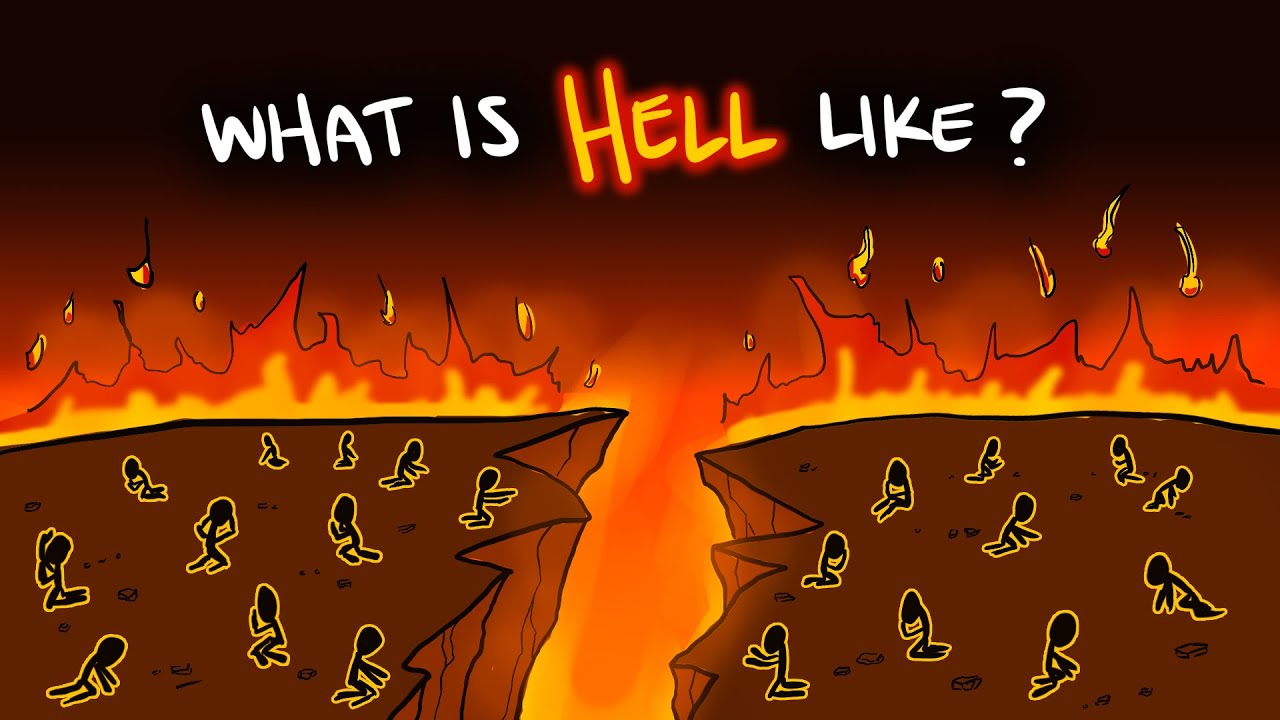
Hell: meanings, history, beliefs, and debates
Hell is one of the most enduring and debated ideas in human culture. Whether you approach it through religion, philosophy, literature, or everyday language, hell raises profound questions about justice, mercy, meaning, and the ultimate consequences of our choices. This guide offers a clear, balanced overview of what people mean by hell, where the idea comes from, how it varies across traditions, and why it still matters today.
Rather than sensational imagery, we’ll focus on the big picture: how beliefs about hell developed, how different communities interpret them, and how to read claims about judgement and the afterlife responsibly. Along the way, you’ll find practical explanations, examples, and resources if you want to explore further.
What people mean by hell
At its simplest, hell refers to a post‑mortem state or condition of punishment, loss, or separation from what is good and holy. For some, it is a literal place of retribution; for others, it is a metaphor for the ruin brought by vice, injustice, or estrangement from God. In many traditions, hell functions as a moral horizon: it frames life as meaningful and accountable, and it insists that egregious evil does not get the final word.
Many people also use the word in a non‑religious sense: “a hell of a week” or “war is hell”. These phrases tap into a cultural memory of suffering and chaos, without implying belief in the supernatural. This dual use—religious and metaphorical—shapes much of the public conversation.


Etymology and related terms
The English word “hell” descends from Old English hel/helle. Related concepts appear worldwide. In the Hebrew Bible, Sheol is the realm of the dead, often morally neutral; later Jewish literature talks about Gehenna as a place of punishment or purification. Greek texts speak of Hades and Tartarus, while Latin writers use infernum or inferi (the underworld). In Islam, Jahannam is the Qur’anic term with layered imagery of fire and judgement. Hindu and Buddhist sources describe Naraka, often understood as temporary states of purgation rather than eternal doom, and Chinese traditions speak of Diyu, an elaborate underworld of courts and punishments.
A brief history of the idea of hell
Early Israelite thought emphasised Sheol as the shadowy abode of the dead, not necessarily a place of torment. During the Second Temple period, ideas about resurrection, judgement, and reward or punishment after death developed, influenced in part by apocalyptic literature and contact with other cultures. In Greco‑Roman contexts, Hades and Tartarus offered maps of the underworld that shaped later imagination. By late antiquity, Jewish and Christian writings integrated themes of divine justice and mercy, setting the stage for debates that continue today.
Medieval Europe elaborated the imagery of hell through sermons, mystery plays, and visionary literature. Dante’s Inferno and, later, Milton’s Paradise Lost became cultural touchstones, even for readers who never embraced the associated theology. These works gave us much of the iconography people still picture today, from concentric circles of punishment to charismatic devils and flames. Modern times introduced philosophical scrutiny—asking whether eternal punishment can be compatible with perfect goodness—and pastoral sensitivity to how fear‑driven preaching affects people.
For a concise overview of the concept across traditions, see general summaries like Wikipedia’s article on hell and an encyclopaedic treatment at Encyclopaedia Britannica’s entry on hell.
Hell in Christianity
Christian sources include a mix of images: fire, darkness, exclusion, and “weeping and gnashing of teeth”. Some passages speak of “eternal punishment”, others suggest destruction or perishing, and still others highlight the potential for mercy. As a result, Christians have developed several major interpretations:
- Eternal conscious separation or torment: hell as the enduring state of rejecting God’s love, often described through the language of fire and loss.
- Annihilationism (conditional immortality): the idea that the finally unrepentant will cease to exist rather than endure unending suffering.
- Universal reconciliation: the hope that, ultimately, all will be healed and restored, even if through severe purification.
- Figurative or metaphorical models: the imagery describes the catastrophic consequences of sin and estrangement rather than a literal geography.
The Catholic Church teaches that hell is the definitive self‑exclusion from communion with God and the blessed, the result of dying in a state of unrepented mortal sin. The Orthodox tradition often emphasises the same divine presence experienced differently: love is delight to the receptive, but painful to those who reject it. Protestant views vary widely—from classical Reformed accounts to contemporary conditionalism and hopeful inclusivism. For an accessible comparison of ecclesial differences on core doctrines that also touch on afterlife questions, see key contrasts between Orthodox and Catholic Christianity. You can read a concise doctrinal summary in the Catechism (e.g., paragraphs 1033–1037) via the official Vatican archive of the Catechism of the Catholic Church.
Hell in Islam
In Islam, Jahannam features prominently as a realm of justice and purification. Qur’anic descriptions include levels, scorching heat, and remorse, but also stress God’s sovereignty and mercy. Many Muslims hold that believers with sins may be purified before entering Paradise, while those who persist in rejection face enduring consequences. Islamic scholarship explores the balance between divine justice and mercy in depth, acknowledging both the seriousness of judgement and the hope for forgiveness.
Other religious perspectives
Hindu and Buddhist traditions often frame Naraka as a series of purgative states shaped by karmic causality. They are severe but not necessarily everlasting: when karmic consequences are exhausted, the being moves on. East Asian accounts of Diyu enumerate courts and punishments that respond to specific misdeeds, serving as moral instruction as well as cosmological description. Indigenous traditions worldwide frequently incorporate underworld journeys or realms of the dead that function as moral maps of the universe, even when they do not describe a singular hell.
Philosophical and ethical debates about hell
As moral reflection deepened, thinkers posed searching questions: Can eternal punishment be proportionate? Is hell compatible with perfect goodness? How might free will factor into final outcomes? Different models of hell answer these challenges in different ways.
Justice, freedom, and finality
- Justice: If moral agents are truly responsible for their actions, a final reckoning can seem appropriate. Yet critics argue that finite sins cannot merit infinite suffering.
- Freedom: Some propose that hell honours human freedom: love cannot be coerced, and a freely chosen separation could, in principle, endure.
- Rehabilitation vs retribution: Is the aim restoration or repayment? Traditions differ on whether post‑mortem purification is possible and, if so, for whom.
- Proportionality: Conditional immortality argues that ending existence is a proportionate outcome to a definitive refusal of the good, avoiding unending torment.
Philosophers survey these arguments in overviews like the Stanford Encyclopedia of Philosophy’s entry on Heaven and Hell, which outlines the main moral and metaphysical positions.
Competing models at a glance
- Eternal conscious torment posits hell as the lasting consequence of freely chosen separation from God, often justified by the infinite worth of the good rejected.
- Annihilationism holds that God ultimately respects the choice to refuse life, resulting in non‑existence rather than endless agony.
- Universal reconciliation contends that divine love eventually heals all, though this may involve a long and painful purification analogous to hellish experience.
- Metaphorical accounts interpret scriptural images as signposts to realities—loss, ruin, alienation—rather than literal topography.
Sources that shaped ideas of hell
Historical sources matter. Second Temple Jewish writings explore judgement and resurrection with increasing specificity. Early Christian authors, preaching to mixed audiences in the Roman world, used vivid images already familiar from Jewish and Greco‑Roman contexts. Later, medieval visions and poetic epics painted detailed landscapes of torment. Apocryphal literature, such as the Enochic tradition, also influenced popular imagination; for an introduction, see this summary of the Book of Enoch.
It’s important to recognise that not every vivid picture is doctrine. Works like Dante’s Inferno shaped Western conceptions of hell but are literary creations that weave theology, politics, and art into a single tapestry. They should be read as imaginative interpretations rather than literal maps of the afterlife.
Hell in culture, language, and everyday life
Beyond doctrine, hell lives in everyday speech. We call a nightmare journey “a road to hell”, use “raise hell” for rowdy behaviour, and speak of “hellish” conditions during disasters or wars. These metaphors underscore the concept’s cultural reach: it names any moment when ordinary life breaks down and suffering threatens to overwhelm.
Art and literature have also returned to hell again and again to explore justice and despair, freedom and fate. From medieval frescoes to modern films, the underworld provides a theatre for examining what we fear and value. Such cultural treatments can be insightful, but they also risk flattening nuance—presenting hell as a circus of horror rather than a moral and spiritual question.
Practical implications: how beliefs about hell shape life
Beliefs about hell can influence personal behaviour, communal norms, and pastoral practice. Positively, they can reinforce the gravity of moral choices, promote justice for victims of great evil, and motivate compassion, repentance, and reform. Negatively, fear‑based preaching can harm mental health, especially for those prone to scrupulosity or anxiety. Many religious leaders today emphasise hope, responsibility, and love of the good, rather than fear of punishment, as healthier motivators.
At the communal level, teachings about judgement can inspire charitable works, advocacy for the marginalised, and resistance to cruelty. The conviction that cruelty “belongs in hell” has historically underwritten movements for reform, even among people who disagree about the afterlife itself.
How to read texts about hell responsibly
Interpreting claims about hell benefits from careful reading. If you engage with scripture, tradition, or theological argument, these steps help:
- Consider genre: Parables, poetry, prophecy, and apocalyptic visions use imagery to make moral points. Vivid metaphors often signify realities larger than literal fire and smoke.
- Check context: Who is speaking, to whom, and why? Warnings can be pastoral—aimed at waking people up to consequences—not full technical descriptions.
- Mind translation: Words like Sheol, Hades, Gehenna, and “eternal” carry nuances across languages. Footnotes and study tools can clarify.
- Engage tradition: Communities interpret texts through centuries of reflection. Comparing viewpoints (e.g., Eastern and Western) illuminates blind spots and strengths.
- Keep ethics in view: Any account of hell should cohere with broader convictions about goodness, love, justice, and human dignity.
- Hold humility: The afterlife is, by definition, beyond direct observation. Firm convictions need not become speculative certainties.
Common misunderstandings about hell
- The devil rules hell: In classic Christian thought, the devil is not a ruler but a defeated creature; hell is not his kingdom.
- Purgatory equals hell: In Catholic teaching, purgatory is purification for those destined for heaven; hell is definitive separation.
- All traditions teach the same thing: Views vary widely—from eternal separation to eventual restoration to temporary states of purgation.
- Fire must be literal: Many theologians treat “fire” as a metaphor for intense loss, regret, or the painful experience of rejected love.
- Dante is doctrine: Poetic and artistic depictions are formative culturally, but they are not identical to official teachings.
Recommended external resources
- Encyclopaedia Britannica: comprehensive article on hell for a reliable, cross‑tradition overview.
- Wikipedia: detailed entry on hell including history, terminology, and cultural references.
- Stanford Encyclopedia of Philosophy: Heaven and Hell for ethical and metaphysical debates.
- BBC Religion: Christian beliefs about hell for a concise journalistic summary.
Related articles
- Orthodox vs Catholic: key differences relevant to afterlife beliefs
- Book of Enoch: summary and themes of judgement
Frequently asked questions about hell
Is hell eternal in all traditions?
No. While some Christian interpretations teach eternal conscious separation from God, others argue for annihilationism (ultimate non‑existence for the unrepentant) or universal reconciliation (eventual restoration for all). In many Eastern religions, states akin to hell are severe but temporary, ending when karmic consequences are exhausted. The variety reflects different answers to questions about justice, freedom, and the nature of the soul.
Did ancient Jews believe in hell as we think of it today?
Early texts emphasise Sheol, a shadowy realm of the dead, rather than a place of torment. During the Second Temple period, ideas of resurrection and judgement developed, and terms like Gehenna appeared as images of punishment or purification. Later Jewish writings continue to display diversity: some envisage corrective discipline, others lasting loss. Modern assumptions about hell often read later concepts back into earlier texts, which can be misleading.
Do Orthodox, Catholic, and Protestant Christians teach the same view of hell?
They share belief in divine justice and the gravity of rejecting the good, but details differ. Catholic teaching speaks of hell as definitive self‑exclusion from communion with God; Orthodoxy often frames the same divine love as bliss to the receptive and painful to the resistant; Protestants range from traditional eternal separation to conditional immortality. For broader context on ecclesial differences, see this overview of Orthodox vs Catholic Christianity.
Is hell a literal place with fire and devils?
It depends on the tradition and the interpreter. Many theologians read images of fire and darkness as metaphors for profound loss, regret, or the experience of resisting love. Others defend a more literal reading. Across viewpoints, the core idea is serious: hell signifies the tragic consequences of refusing the good, whether expressed as separation, destruction, or purgation.
How should we talk about hell without causing harm?
With clarity, humility, and compassion. Avoid sensationalism, respect conscience, and focus on what the doctrine seeks to protect: the worth of persons, the seriousness of moral choices, and the hope that justice and mercy ultimately prevail. Pastoral conversations should be sensitive to mental health, encouraging responsible living through love of the good rather than fear alone.
Does believing in hell improve moral behaviour?
Research is mixed. Belief in accountability can support prosocial behaviour, but fear‑based motivation can backfire or cause anxiety. Many communities emphasise positive motivations—love, gratitude, and hope—alongside sober warnings about consequences. Ethical maturity usually grows best under encouragement and example, not just threats.
Conclusion on hell
Hell is a powerful, multifaceted idea that touches questions of justice, freedom, and the meaning of our lives. Across cultures and centuries, people have wrestled with what it would mean for ultimate reality to be both good and accountable—and how that goodness responds to evil. Whether portrayed as separation, destruction, or purification, hell functions as a moral signpost, reminding us that our choices matter and that love cannot be coerced.
Because hell has been imagined in many ways—from Sheol and Gehenna to Hades, Jahannam, Naraka, and beyond—it’s vital to read sources carefully, attend to genre and context, and engage with living traditions rather than stereotypes. Philosophical debates about proportion, freedom, and mercy sharpen the questions, while pastoral concerns remind us to speak in ways that heal rather than harm.
For those who believe, hell underscores the gravity of rejecting the good; for those who do not, the concept still serves as a cultural warning about the destructive paths individuals and societies can take. Either way, reflecting on hell can prompt more thoughtful living: a renewed commitment to justice, compassion, and the flourishing of our neighbours—so that the worst possibilities we imagine never become the realities we create.
