Glory to the father and to the son: 5 key, essential meanings and uses
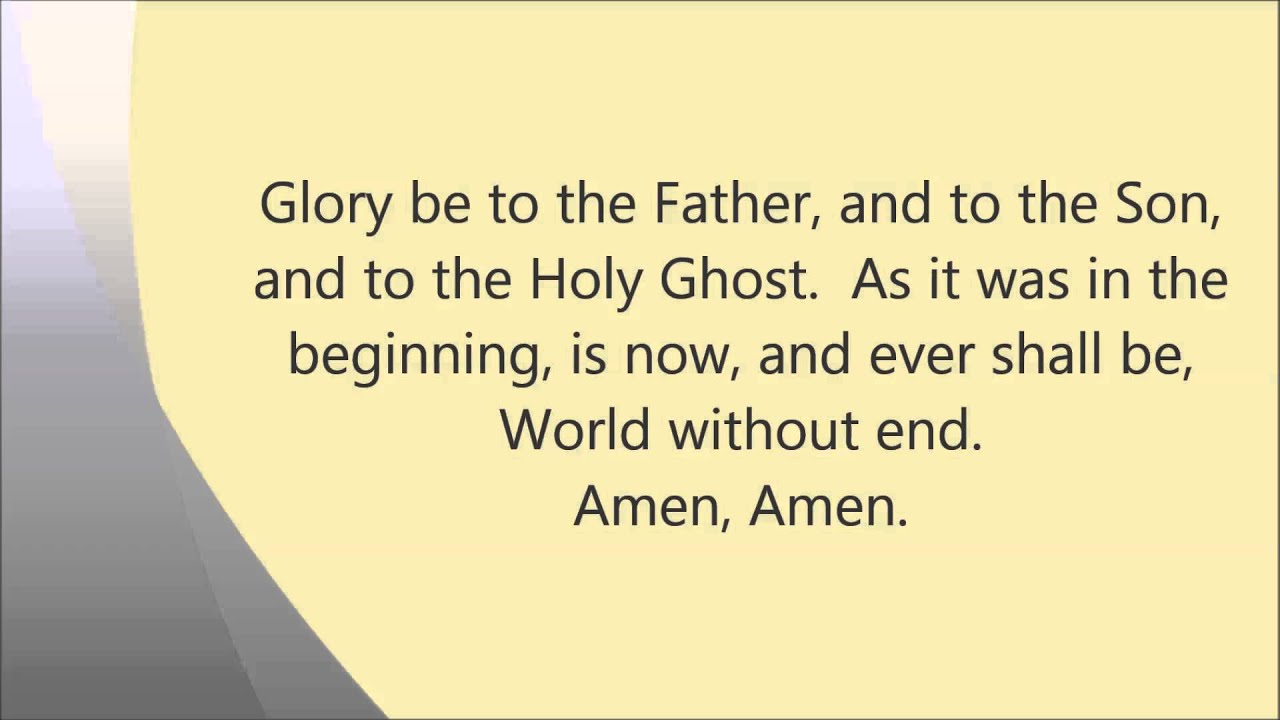
glory to the father and to the son
Short, simple, and packed with meaning, the phrase glory to the father and to the son sits at the heart of Christian prayer. Across centuries and denominations, this doxology has helped believers praise God succinctly and beautifully. Whether recited on its own or as part of the Psalms, it gathers up worship into one Trinitarian line that many know by heart. If you have ever wondered what it means, where it comes from, and how to use it meaningfully today, this guide will walk you through the essentials in clear, friendly terms.
In many traditions, glory to the father and to the son extends to include “and to the Holy Spirit; as it was in the beginning, is now, and ever shall be, world without end. Amen.” You may hear this in church services, find it printed at the end of Psalms, or use it personally to bring prayer to a close. It is the “minor doxology” (brief praise), sometimes called the Gloria Patri in Latin, and it is one of the most widely shared Christian expressions of worship.
Because the words are so concise, glory to the father and to the son works both as a stand-alone act of devotion and as a connector between parts of worship. Below, we explain its meaning, background, practical use, and common misunderstandings, and we offer tips to help you pray it with attentiveness rather than by rote.
What does glory to the father and to the son mean?
At its simplest, the phrase is a declaration of praise directed to God the Father and God the Son, together with God the Holy Spirit. Christians believe in one God in three persons—Father, Son, and Holy Spirit. To say glory to the father and to the son is to honour the divine nature fully revealed in Jesus Christ while acknowledging the unity of the Trinity. In most liturgical settings, the phrase includes the Spirit explicitly, completing the Trinitarian form.

“Glory” here means more than admiration. It refers to God’s splendour, weightiness, beauty, and holiness. When people say glory to the father and to the son, they are ascribing that splendour to God and orienting their hearts towards his presence. The phrase is both praise and a reminder of Christian belief.
The longer version—“as it was in the beginning, is now, and ever shall be”—emphasises God’s eternality. It says, in effect: God’s glory is not new; it is the eternal reality of who God is, unchanged and unchanging. In just a few words, the doxology becomes a mini-creed as well as a prayer.
Origins and history of glory to the father and to the son
The expression has roots in early Christian worship. The earliest Christians inherited the habit of blessing and praising God from Jewish prayer. Over time, brief formulas emerged to conclude psalms and prayers with Trinitarian praise. The Latin name Gloria Patri (“Glory [be] to the Father”) gives the doxology its traditional title.
Early Church and patristic use
By the fourth century, as Trinitarian doctrine was clarified in councils, glory to the father and to the son (together with the Spirit) became common in worship, especially in the daily recitation of the Psalms. Appending a doxology to each psalm helped Christians read Israel’s Scriptures in the light of Christ, confessing the Trinity as they moved through the psalter.
Medieval monastic prayer
Monastic communities firmly embedded the doxology in the Liturgy of the Hours (the Divine Office). In these settings, glory to the father and to the son acted as a hinge between psalms, marking a moment to stand or bow and reaffirm the faith before moving to the next text.
Reformation and English-language prayer
In the sixteenth century, English-speaking Christians met the doxology in the Book of Common Prayer. The familiar wording “Glory be to the Father, and to the Son, and to the Holy Ghost” became standard in Anglican worship. Many Protestant traditions kept the doxology within psalm singing or adapted it for their services.
Modern ecumenical use
Today, you will hear glory to the father and to the son across Catholic, Orthodox, Anglican, and Protestant congregations, often with slightly different translations. This shared core underlines how widely the phrase is loved and how deeply it serves Christian unity in worship.
Where and how Christians use glory to the father and to the son today
Because it is brief and memorable, the doxology fits many settings. Here are common ways you might encounter or use it.
In church services
- At the end of a psalm or canticle, to conclude with praise.
- During the Liturgy of the Hours or Morning and Evening Prayer, as a regular refrain.
- After readings or intercessions, as a congregational response.
- Before or after hymns, depending on local custom.
In personal prayer and devotion
- As a way to begin or end a time of prayer.
- To pause and re-centre during a busy day.
- As an act of worship when words are hard to find.
Some devotions weave the doxology into their structure because it naturally sums up praise. For example, many Christians praying the chaplet or meditative devotions will add glory to the father and to the son at key moments to refocus on God. If you are exploring structured devotions, the Divine Mercy Chaplet prayer explained simply shows how short repeated prayers can deepen attention and trust.
Theology within glory to the father and to the son
Every time the phrase is spoken, it quietly affirms core Christian beliefs:
- One God, three persons: Father, Son, and Holy Spirit share the same divine nature.
- Equality within the Trinity: ascribing “glory” to Father and Son (and Spirit) recognises their oneness and co-equal divinity.
- God’s eternity: “as it was in the beginning” stresses that God’s glory is uncreated and everlasting.
- Worship as response: to say glory to the father and to the son is to respond to God’s self-revelation with praise.
For a clear summary of the Trinity in Catholic teaching, you may find the Catechism helpful: see the Vatican’s section on the Most Holy Trinity. For an overview of doxology as a genre in Christian worship, Britannica offers a concise entry: What a doxology is and how it is used.
How to pray glory to the father and to the son
Praying this doxology well is less about technique and more about attentiveness. Here is a simple approach you can adapt.
- Pause and become present. Take a breath. Recognise that you stand before God.
- Speak slowly. Say glory to the father and to the son (and to the Holy Spirit) with care, not rushing to the end.
- Attend to each person. As you name Father, Son, and Holy Spirit, picture offering a single act of worship to the one God.
- Include the ending if you wish. “As it was in the beginning…” reminds you that God’s glory is eternal and stable.
- Conclude with “Amen”, sealing the prayer with agreement.
If you pray with others, agree on the wording beforehand. In a small group, one person can lead the first half and everyone may join for “as it was in the beginning…”. In some traditions, people bow slightly at the words “Glory be…”, a simple embodied sign of reverence.
Sometimes, repeating glory to the father and to the son a few times helps a distracted mind settle. Try adding it after each psalm or Bible paragraph in your personal reading to keep your heart aligned with praise.
Variants and translations of glory to the father and to the son
You will encounter several wordings, all pointing to the same meaning. Differences usually reflect translation choices and denominational tradition.
- Traditional English (Anglican): “Glory be to the Father, and to the Son, and to the Holy Ghost; as it was in the beginning…”
- Contemporary English: “Glory to the Father, and to the Son, and to the Holy Spirit; as it was in the beginning…”
- Latin: “Gloria Patri, et Filio, et Spiritui Sancto; sicut erat in principio, et nunc, et semper, et in saecula saeculorum. Amen.”
- Byzantine/Eastern form: “Glory to the Father and to the Son and to the Holy Spirit; now and ever, and unto ages of ages. Amen.”
You can read more about the history and variants at this overview of the Gloria Patri. The Church of England also provides context for how and where the doxology appears within services in its Common Worship resources.
Common mistakes and misconceptions
“Three gods” misunderstanding
Because the wording names Father, Son, and Holy Spirit, some assume Christians worship three gods. In fact, glory to the father and to the son is precisely a confession of one God in three persons. The doxology is monotheistic and Trinitarian, not tri-theistic.
Confusing it with the Gloria in excelsis
The Gloria in excelsis (“Glory to God in the highest…”) is a longer hymn of praise used in many Eucharistic services. The doxology is the short one. If you are new to church, it is easy to mix them up, but they serve different moments.
Using it as filler
Because it is brief, some people rush or tack it on automatically. Try not to let glory to the father and to the son become a filler. Slow down, mean it, and it will nourish your prayer.
Forgetting the Holy Spirit
In casual speech, people sometimes say only the first half. In worship, include the Holy Spirit explicitly, maintaining the full Trinitarian shape of praise.
Music and chant for glory to the father and to the son
Musical settings help many people pray the doxology more attentively. There are simple tones in Gregorian chant for Latin, and straightforward melodic lines in Anglican chant for English. In community settings, a familiar tune allows everyone to join in, even if the words vary slightly by tradition.
Composers across centuries have set the Gloria Patri: from plainchant tones to Renaissance polyphony and contemporary arrangements. If your congregation sings the Psalms, you may notice that glory to the father and to the son often uses the same psalm tone, maintaining the flow of prayer.
Whether spoken or sung, the essential aim remains the same: to offer pure praise, without distraction, to the Triune God.
Scripture links and related prayers to glory to the father and to the son
While the exact wording of the doxology is not a Bible verse, it summarises biblical teaching. Key texts include Jesus’ instruction to baptise “in the name of the Father and of the Son and of the Holy Spirit” (Matthew 28:19), and numerous New Testament doxologies ending with “Amen”. It is common to append the doxology to the Psalms, drawing together Old Testament praise and New Testament revelation.
Different traditions employ it within their prayer books and daily offices. If you are curious about how Catholic and Orthodox practices compare in using glory to the father and to the son, this overview is a helpful primer: Orthodox vs Catholic: key differences and shared heritage.
Devotional life often pairs the doxology with other short prayers, such as the Kyrie (“Lord, have mercy”) or Jesus Prayer. Structured devotions also make space for it; to see one such devotion in practice, you can read this gentle guide to the Divine Mercy Chaplet prayer and notice how repeated phrases foster focus and trust.
Practical tips for meaningful use
- Say it slowly. Resist the urge to rush; let each clause open up space for worship.
- Align breath and words. A calm breath before “Glory to the Father…” can shift your attention from distraction to presence.
- Use it as a bookend. Begin and end a time of reading or prayer with glory to the father and to the son to keep praise at the centre.
- Teach it to children. Its short form makes it easy for families to memorise together.
- Notice posture. A simple bow or stillness can underscore the reverence the words express.
Recommended external resources
- Historical background and global variants of the Gloria Patri
- Encyclopaedia Britannica overview of doxology
- Catechism of the Catholic Church on the Trinity
- Church of England Common Worship resources and texts
Frequently asked questions about glory to the father and to the son
Is “Glory to the Father” the same as the “Gloria in excelsis”?
No. The short doxology—glory to the father and to the son (and to the Holy Spirit)—is often called the Gloria Patri or “minor doxology”. The “Gloria in excelsis” (“Glory to God in the highest…”) is a longer hymn of praise used particularly in Eucharistic services. They serve different purposes and moments in worship.
Is the doxology found in the Bible?
The exact wording is not a verse, but it is a faithful summary of biblical teaching, especially Matthew 28:19 and the many New Testament doxologies (for example, Romans 11:36; Ephesians 3:21). Appending glory to the father and to the son to Psalms reflects the Christian reading of Scripture in the light of the Trinity.
Why do some versions say “Holy Ghost” and others “Holy Spirit”?
“Holy Ghost” is older English and appears in traditional texts like the Book of Common Prayer. Modern translations generally use “Holy Spirit” to reflect contemporary usage. The meaning is the same; the choice depends on tradition and context.
Do I need to include “as it was in the beginning…” every time?
In public worship, follow the custom of the church you are visiting. For personal prayer, you may use either the shorter form or the full ending. The full form highlights God’s eternity, but even the brief glory to the father and to the son remains a complete and meaningful prayer.
Is it appropriate to sing it in Lent?
Yes, although some traditions reduce or omit certain joyful acclamations like “Alleluia” in Lent. Practices vary. If in doubt, follow the custom of your congregation. The doxology itself remains a fitting act of praise at any time.
How can I keep it from becoming routine?
Vary your pace, add a brief silence before and after, or speak it in a different setting (for example, outdoors on a walk). You can also read a psalm, then say glory to the father and to the son, then sit quietly for a minute to let the words settle.
Is this used only by one denomination?
No. The doxology is shared across Christian traditions—Catholic, Orthodox, Anglican, and many Protestant churches—though the exact wording and position in services may vary. Its widespread use makes it a unifying thread in Christian worship.
Conclusion on glory to the father and to the son
Across languages, rites, and centuries, glory to the father and to the son has given Christians a simple, sturdy way to praise God. In one breath, it gathers up belief in the Trinity, affirms God’s unchanging glory, and grounds our prayer in worship rather than anxiety or self-focus. Whether you pray it alone at home or sing it with a congregation, its few words can anchor your heart.
Used thoughtfully, glory to the father and to the son is more than a liturgical formula; it is a habit of praise that shapes how you see the world. It reminds you that all begins and ends in God’s glory. Try adding it to the start and end of your prayers or reading, and notice how it recentres your attention.
If you are exploring different Christian traditions, you will find that this doxology can build bridges: its meaning is shared even when melodies and translations differ. Let glory to the father and to the son be your steady refrain—today and in the days to come—as it was in the beginning, is now, and ever shall be. Amen.
