Glory to god in the highest and peace to his people on earth prayer: key guide
glory to god in the highest and peace to his people on earth prayer
The glory to god in the highest and peace to his people on earth prayer is one of the most beloved and enduring hymns of praise in the Christian tradition. Known widely as the “Gloria” or “Gloria in excelsis Deo”, it captures a joyful, angelic proclamation from the Gospel of Luke and invites worshippers to honour God’s greatness while asking for his peace. Whether you encounter it in a Sunday Mass, an Anglican Eucharist, or a community service, the glory to god in the highest and peace to his people on earth prayer offers a concise, beautiful summary of Christian worship: praise, thanksgiving, and trust in God’s mercy.
In this guide, we will explain what the glory to god in the highest and peace to his people on earth prayer is, where it comes from, how it is used across Christian traditions, and how you can pray it meaningfully in daily life. We will also walk through the text’s structure, suggest a simple routine for praying it at home, highlight common mistakes, and answer frequently asked questions so you can approach this prayer with clarity and confidence.
What is the glory to god in the highest and peace to his people on earth prayer?
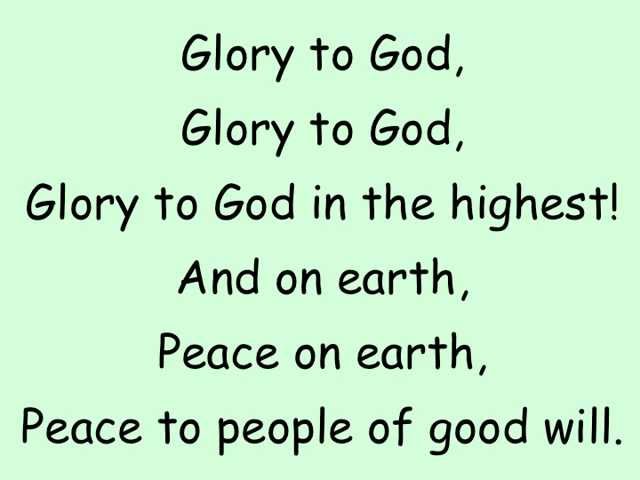
At its heart, the glory to god in the highest and peace to his people on earth prayer is a hymn of praise that Christians sing or recite to glorify God the Father and confess Jesus Christ as Lord and Saviour. The opening line—“Glory to God in the highest”—is drawn from the angelic song in Luke 2:14, announced at the birth of Jesus. The version with “and peace to his people on earth” is familiar in many English liturgical settings, particularly in Anglican and other Protestant traditions, while other translations say “and on earth peace to people of good will.” Regardless of wording, the prayer proclaims God’s glory and seeks his peace.
Why the glory to god in the highest and peace to his people on earth prayer matters today
We live in a world that can feel noisy, fractured, and hurried. The glory to god in the highest and peace to his people on earth prayer invites us to pause and redirect attention away from ourselves towards God—his holiness, mercy, and saving work in Christ. In just a few minutes, it teaches us to recognise who God is, to praise him, to confess our need, and to ask for peace. This is why congregations treasure it: sung or spoken, it centres worship on the Lord rather than on our own preferences or moods.


Biblical roots and historical development
The prayer’s opening comes from the angels’ proclamation at the Nativity: “Glory to God in the highest heaven, and on earth peace…” You can read the verse at Luke 2:14 in the NRSVUK on Bible Gateway. Early Christians took this angelic acclamation and, over time, expanded it into a fuller hymn of praise. By the second century, a form of the “Gloria” was used in morning prayers; later it became a fixed part of the Eucharistic liturgy in the West and has remained so in Catholic, Anglican, and Lutheran worship.
While translations vary, the theology is consistent: God alone is worthy of the highest glory; Jesus Christ, the Only Son, is Lord; and the Holy Spirit is worshipped with the Father and the Son. For an overview of the hymn’s development and use across centuries, see this helpful summary: Background on the Gloria in excelsis Deo (Wikipedia).
Structure and meaning: a line-by-line meditation
To pray the glory to god in the highest and peace to his people on earth prayer with depth, it helps to understand its flow. The Gloria moves from pure praise to trust in Christ’s mercy, then to confession of faith in the Trinity, before it ends in a confident “Amen”.
“Glory to God in the highest, and peace…”
The opening phrase sets the tone: God is supreme in majesty, and his desired gift for the earth is peace—shalom—wholeness, reconciliation, and flourishing. When you voice this, you place God’s honour first and ask for his peace to shape your life and community.
“We praise you, we bless you, we adore you, we glorify you, we give you thanks…”
These verbs are a cascade of gratitude. They express praise for who God is (praise, bless, adore) and thanksgiving for what God does (give you thanks for your great glory). In prayer, let these phrases expand your sense of God’s goodness. Consider recalling a specific reason to give thanks as you say them.
“Lord God, heavenly King, O God, almighty Father”
Here we name God with biblical titles that emphasise his sovereignty and loving care. “Father” is intimate; “almighty” is majestic. Both belong together in Christian worship.
“Lord Jesus Christ, Only Begotten Son, Lord God, Lamb of God, Son of the Father”
This section turns to Christ. “Lamb of God” echoes the sacrificial imagery of Scripture, pointing to Jesus’ self-giving love that takes away the sin of the world. The Gloria is not a vague hymn to a distant deity; it is Christ-centred.
“You take away the sin of the world, have mercy on us… receive our prayer”
After praise comes petition. The prayer acknowledges our need for mercy and asks Christ to hear us. It is both adoration and supplication—worship that breathes, exhale and inhale.
“For you alone are the Holy One, you alone are the Lord, you alone are the Most High, Jesus Christ…”
These exclusive claims are not arrogant; they are a confession of who Jesus is. The Gloria reaffirms the uniqueness of Christ as Saviour.
“With the Holy Spirit, in the glory of God the Father. Amen.”
The prayer ends with a Trinitarian seal: Father, Son, and Holy Spirit are worshipped together. “Amen” makes the community’s assent audible: “So be it.”
How the Gloria is used in worship
In the Roman Catholic Mass, the Gloria is normally sung or said on Sundays outside Advent and Lent, and on solemnities and feasts. It is not said on most weekdays unless the day is a feast. The official norms are set out in the General Instruction of the Roman Missal; you can consult the authoritative guidelines at the Vatican site: General Instruction of the Roman Missal (official Vatican text).
In Anglican Churches, including the Church of England, the Gloria often appears in services of Holy Communion and other rites. You may see the wording “and peace to his people on earth,” which is the phrasing referenced in this article. For examples, see the Common Worship Gloria (Church of England).
In many Lutheran and other Protestant traditions, the Gloria likewise holds a place of honour as a sung hymn of praise at the start of the service of the Word. Whether chanted, set to a simple tone, or sung in a choir arrangement, the intention is the same: communal joy and reverence before God.
How to pray the glory to god in the highest and peace to his people on earth prayer
Although the Gloria belongs in public worship, you can pray it fruitfully at home, in small groups, and during personal devotions. The glory to god in the highest and peace to his people on earth prayer works both as a stand-alone hymn of praise and as part of a structured prayer time that includes scripture, silence, and intercession.
Here is a simple approach. First, prepare a quiet space and take two slow breaths. Next, read Luke 2:14 to remember the source of the words. Then speak or sing the Gloria unhurriedly, allowing each phrase to register. After the final “Amen”, sit in silence for thirty seconds and notice any line that particularly resonated. Close by praying for God’s peace to rest on specific people or places. In these few minutes, the glory to god in the highest and peace to his people on earth prayer becomes more than text: it becomes a meeting place with God.
A simple routine for the glory to god in the highest and peace to his people on earth prayer
- Settle your body and mind with slow, steady breathing.
- Read a short scripture first (for instance, Luke 2:14) to anchor your focus.
- Recite or sing the Gloria clearly, without rushing.
- Pause after “receive our prayer” to quietly offer personal petitions.
- Conclude with “Amen” and a moment of grateful silence.
Examples for home and group prayer
- Morning devotion: Begin your day with the glory to god in the highest and peace to his people on earth prayer to set a tone of praise before tackling tasks.
- Family prayer: After dinner, invite each person to choose one Gloria phrase and share why it struck them.
- Small group: Use the Gloria to open your meeting, then intercede for local needs, connecting “peace on earth” to concrete situations.
- Musical meditation: Play a simple setting and follow along with the text, letting the music slow you down.
Practical tips to deepen your prayer
- Use the names of God: When you say “heavenly King” or “Lamb of God,” pause and let the title shape your image of God.
- Link praise to gratitude: Add a short, specific thanksgiving after “we give you thanks for your great glory.”
- Connect “peace” with intercession: Name a person or nation needing peace right after the opening line.
- Alternate formats: On some days, sing it; on others, speak it slowly. Variety prevents drifting into autopilot.
- Journal a phrase: Write down one line and carry it through your day as a breath prayer.
Common mistakes with the glory to god in the highest and peace to his people on earth prayer
Because it is familiar, the Gloria can be recited automatically. The most common misstep is rushing through it without attention. Slow the pace and let silence frame its lines. Another pitfall is treating it as merely “the opening song” rather than as heartfelt worship; the glory to god in the highest and peace to his people on earth prayer is a declaration about God before it is anything else. A third mistake is becoming anxious about wording differences across translations. The message remains the same: God’s glory and his gift of peace in Christ.
Lastly, avoid isolating the Gloria from life. If you pray “peace on earth,” consider one practical action you can take towards reconciliation—in your home, workplace, or community.
Variations across Christian traditions
Different churches use different approved translations. In many Roman Catholic parishes, you may hear “and on earth peace to people of good will,” reflecting a literal rendering of the Latin text. In Anglican Common Worship and some Protestant services, “and peace to his people on earth” often appears. Both are faithful in meaning. The rest of the text also has small variations, but the theological heart is unchanged: God’s glory, Christ’s lordship, and the Spirit’s presence. If you are attending a service in a new tradition, do not worry about exact phrasing—enter the praise and let the communal prayer carry you.
Fitting the Gloria into your wider prayer life
Because the hymn is centred on praise, it pairs well with other devotions focused on mercy and intercession. If you want a structured way to complement the Gloria with a prayer of trust in God’s compassion, consider the guide to the Divine Mercy Chaplet. And if you are curious about how different traditions approach the Gloria within their liturgies, this overview of differences between Orthodox and Catholic worship offers useful context.
Recommended external resources
To explore the history, wording, and liturgical use of the glory to god in the highest and peace to his people on earth prayer, these resources are reliable and accessible:
- General Instruction of the Roman Missal (official Vatican text) – when the Gloria is used at Mass
