Earliest painting of jesus: essential, complete guide with 5 key facts
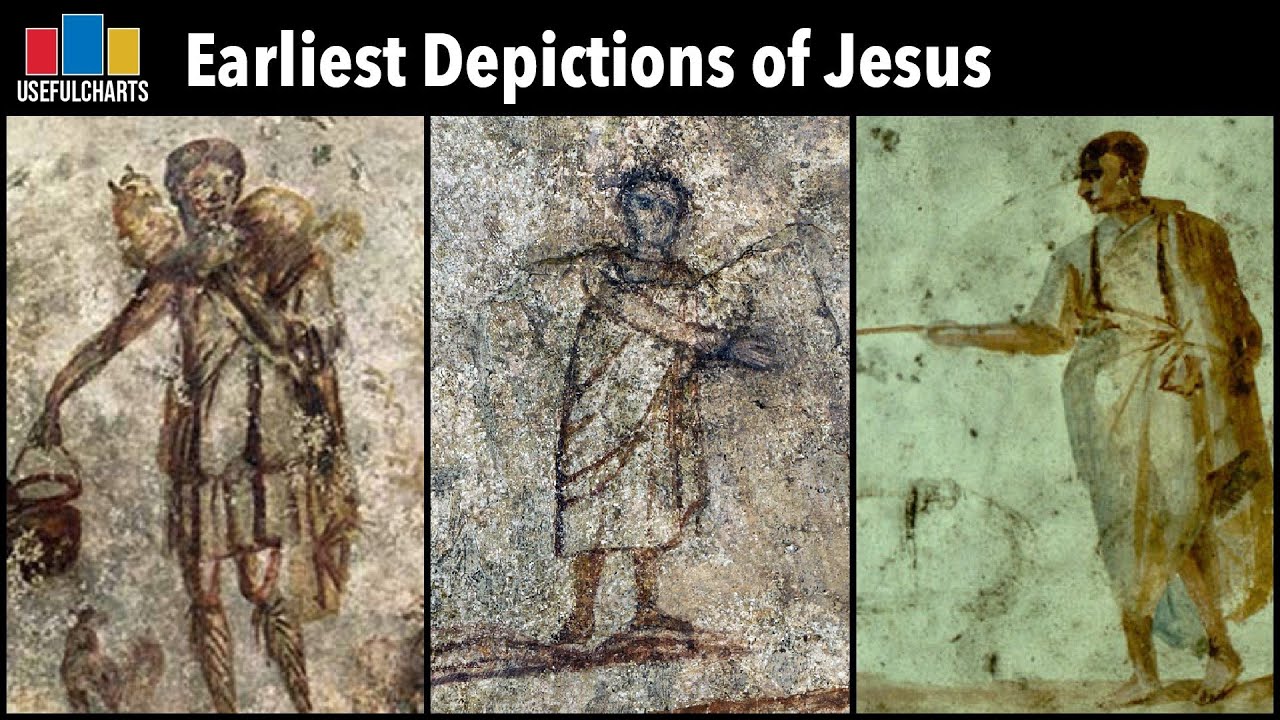
earliest painting of jesus: what it is, why it matters, and where to see it
The phrase earliest painting of jesus invites a deceptively simple question: what is the first surviving image that shows Jesus Christ? The answer opens a fascinating window onto early Christian life, worship, and art. Because so much from the first centuries of Christianity was created in fragile materials or in places that later suffered damage, locating the earliest painting of Jesus depends on careful definitions, archaeological context, and informed interpretation. This guide explains what scholars mean by earliest painting of jesus, introduces the leading contenders, and shows why these works still matter today.
Defining the earliest painting of jesus
Before we point to a single artwork and declare it the earliest painting of jesus, we need to decide what counts. Is a scratched drawing on a wall a “painting”? Do symbolic images (like a shepherd carrying a lamb) qualify if early Christians used them to signify Christ? Should we prioritise a narrative scene where Jesus performs a miracle, or a front-facing, devotional likeness?
Broadly, historians distinguish between several kinds of early Christian images:
- Symbolic motifs: for example, the Good Shepherd, the fish (ichthys), or an anchor. These appear very early and often stand for Christ without showing his face.
- Narrative frescoes: painted scenes in catacombs or house churches that depict Gospel events (miracles, the Resurrection, the women at the tomb). These are crucial to tracing the earliest painting of jesus.
- Panel icons: portable paintings on wood, designed for devotion. The oldest surviving examples date later than the earliest frescoes.
With these categories in mind, the strongest candidate for the earliest painting of jesus, in the sense of a recognisable, narrative depiction, is a set of third-century wall paintings from a modest house church on the edge of the Roman Empire.


Contenders for the earliest painting of jesus
Dura-Europos: a third-century house church on the Euphrates
Many scholars point to the house church at Dura-Europos (in modern Syria) as the earliest painting of jesus in a narrative scene. Dated around 235 CE, the baptistery of this small church preserves painted walls showing several Christian themes. The most famous panel is often read as the Healing of the Paralytic, where a beardless figure—identified as Jesus—commands the healed man to carry his bed. As a recognisable action from the Gospels, it offers convincing evidence for a very early painting of Jesus engaged in his ministry. For an accessible overview, see the entry on the Dura-Europos church and its frescoes.
Other scenes in the same baptistery include the Women at the Tomb, evoking the Resurrection, and a youthful Shepherd carrying a sheep—an image early Christians readily associated with Christ as the Good Shepherd. Although the Good Shepherd motif also appears in Roman catacombs, the Dura-Europos cycle’s clear narrative content makes it a leading candidate for the earliest painting of jesus in a clearly Christian context.
Roman catacombs: symbols and scenes beneath the city
The underground catacombs of Rome preserve a wealth of early Christian imagery in fresco. Some of these paintings pre-date or are roughly contemporary with Dura-Europos. The challenge is that many are symbolic and lack inscriptions naming the figures. The Good Shepherd, for example, appears frequently—some images plausibly represent Christ, others are less specific.
The Catacomb of Priscilla contains some of the best-known early frescoes, including depictions of the Adoration of the Magi and possibly one of the earliest Madonnas. These are central to understanding early Christian art, and they provide invaluable context for the earliest painting of jesus. For details about the site and images, consult the concise article on the Catacomb of Priscilla.
The Sinai Christ: earliest surviving panel icon of Jesus
If by “earliest painting of jesus” one means a surviving panel painting, the famous Christ Pantocrator at St Catherine’s Monastery, Sinai, is the outstanding early example. Painted in the sixth century using encaustic (hot wax) on wood, it is an extraordinary survival from a period when many images were later destroyed during iconoclastic controversies in the Byzantine world. It is not the earliest depiction of Christ overall, but it is among the earliest surviving panel icons. See a detailed description of the Christ Pantocrator at Sinai.
Why “earliest” is trickier than it sounds
Even with these anchors—the Dura-Europos frescoes, the Roman catacombs, and the Sinai icon—pinning down the earliest painting of jesus is not straightforward. Here’s why:
- Dating uncertainties: While archaeologists can often date a painted layer or building phase with reasonable precision, exact years are rare. A broad window (e.g., early third century) is more honest.
- Symbol versus portrait: Early Christians tended to avoid literal portraits at first, preferring symbols and narrative actions. Is a symbolically charged shepherd the earliest painting of jesus, or must the figure be explicitly identified?
- Survival bias: Perishable materials and historical upheavals (including iconoclasm, building reuse, and simple decay) mean that the earliest depictions were almost certainly more numerous than what survives.
For these reasons, scholars speak in terms of “earliest surviving narrative fresco” or “earliest surviving panel icon,” rather than a single, definitive “first painting.” Still, the Dura-Europos scenes around 235 CE remain a remarkably early and compelling depiction, keeping them central to the conversation on the earliest painting of jesus.
How scholars identify and date early Christian images
Because the stakes are high in declaring something the earliest painting of jesus, researchers use multiple lines of evidence:
Archaeological context
Excavations document the layers of a building and what objects were found together. In a house church like Dura-Europos, archaeologists can often correlate wall paintings with a specific phase of use based on construction details, inscriptions, and associated finds.
Material and scientific analysis
Microscopic and chemical analysis of pigments and plaster (e.g., identifying mineral-based reds, carbon blacks, or Egyptian blues) helps date and authenticate frescoes. These methods are essential when asserting that a specific fragment could be the earliest painting of jesus or is contemporaneous with other early third-century works.
Stylistic comparison
Art historians compare the style of figures, drapery, and poses with other dated works from the same region and period. For instance, similarities between Dura-Europos paintings and nearby cultural artefacts support the proposed date.
Textual and epigraphic clues
Inscriptions, graffiti, or even literary texts can offer hints. While there is no inscription reading “Jesus” in every early scene, context—such as liturgical use of a space—can strengthen identification. Occasionally, later copies and references help confirm what earlier images represented.
What those early images emphasise about Jesus
Looking closely at the leading candidates for the earliest painting of jesus reveals what early communities valued. Three themes stand out:
- Christ as healer and saviour: The Healing of the Paralytic highlights mercy and transformation—apt themes for a baptistery, where new Christians experienced a symbolic healing and rebirth.
- Resurrection hope: The Women at the Tomb points to the victory of life over death, a core Christian conviction and a sustaining message amid persecution or marginalisation.
- The Shepherd image: The Good Shepherd resonated with Psalm 23 and Jesus’ own words in John’s Gospel. It conveyed care, guidance, and protection in a gentle, non-Imperial visual language.
Collectively, these choices suggest that the earliest painting of jesus prioritised meaning over strict physical likeness. The theological message mattered more than capturing a facial portrait as we might expect today.
Beyond painting: even earlier depictions and references
Two further items often appear in discussions about the earliest painting of jesus, even though they are not paintings in the strict sense:
- The Alexamenos graffito: A crude sketch found in Rome (late second to early third century), showing a figure on a cross with a donkey’s head and the caption “Alexamenos worships [his] god.” It is a mocking image but still one of the earliest visual references to Christian worship. See the brief article on the Alexamenos graffito.
- Legends of acheiropoieta: Later traditions such as the Mandylion of Edessa or the Veil of Veronica tell of images “not made by human hands.” These are theologically rich but historically difficult to verify as early physical artefacts.
Such examples remind us that the earliest painting of jesus sits within a broader, complex visual and devotional tradition that evolved across centuries and cultures.
From fresco to icon: how Christian art developed
As Christianity moved from house churches and catacombs into public basilicas, and later into the monasteries and sacred spaces of the Byzantine world, images changed in style and purpose. The third-century frescoes connected to baptism and burial emphasised catechesis and consolation. By the sixth century, icons like the Sinai Christ provided a focal point for prayer and contemplation, presenting Jesus as Pantocrator—Lord and Judge—communicating both humanity and divinity in a single, steady gaze.
This evolution helps explain why the earliest painting of jesus looks different from medieval or modern images. Early scenes prioritised signs and stories; later icons stabilised a more formal, frontal type that influenced both Eastern and Western Christian art for centuries.
Common misconceptions about the earliest painting of jesus
Mistakes in popular summaries and on social media can muddy the waters. Here are some pitfalls to avoid when evaluating claims about the earliest painting of jesus:
- Confusing “oldest surviving” with “the original first.” Survival is not proof of primacy; it is simply what remains.
- Assuming every shepherd image is definitively Christ. The Good Shepherd motif can be general; context matters.
- Equating panel icons with the very earliest images. The earliest panel icons are sixth century; the earliest narrative frescoes are older.
- Overlooking location and function. A baptistery scene carries specific theological messaging about cleansing and new life.
- Forgetting that styles varied widely across regions. Syrian, Roman, and Egyptian Christian communities developed distinctive visual languages.
How to view early Christian images today
Original paintings are often in situ (like catacomb frescoes) or preserved in museums and monasteries. Access to catacombs is usually guided and limited to protect delicate surfaces. Many institutions now provide high-quality photographs and reconstructions online, helping more people appreciate the earliest painting of jesus and its close relatives without risking damage to the originals.
When you do visit, remember that these works were not intended as gallery pieces. They lived within worship spaces—baptisteries, burial niches, small chapels—where light flickered, prayers were whispered, and the community gathered around tangible signs of hope.
Putting it together: a working answer
So, what is the earliest painting of jesus? In narrative form, the strongest candidate remains the frescoes of the Dura-Europos house church baptistery (c. 235 CE), especially the Healing of the Paralytic. In symbolic form, the Good Shepherd appears very early in Roman catacombs, and in panel-painting form, the Sinai Christ Pantocrator (sixth century) is the earliest major surviving icon.
This three-part answer respects the evidence while acknowledging the complexity of early Christian art. Each artwork adds a piece to the puzzle, and together they help us see how the first Christians expressed faith in images—carefully, creatively, and often in humble places.
Recommended external resources
- Overview of the Dura-Europos house church and baptistery paintings
- Catacomb of Priscilla: early Christian frescoes in Rome
- Christ Pantocrator at St Catherine’s Monastery, Sinai
- The Good Shepherd in early Christian art
Related articles
- Orthodox vs Catholic: main similarities and differences
- Divine Mercy Chaplet: history and how to pray it
Frequently asked questions about earliest painting of jesus
Is the Dura-Europos fresco definitely the earliest painting of Jesus?
It is the leading candidate for the earliest painting of jesus in a clear narrative scene, dated around 235 CE. However, scholars remain cautious because dating is rarely exact and some Roman catacomb frescoes may be roughly contemporary. “Earliest surviving” is the key phrase.
Why does Jesus look different in early frescoes compared to later icons?
Early Christian art often used symbolic or youthful depictions that stressed pastoral care and salvation rather than royal majesty. Later, especially in Byzantine icons, Christ appears frontally as Pantocrator, an image type that emphasises divine authority and theological clarity. The earliest painting of jesus reflects pastoral catechesis; later images reflect developed Christology and liturgical use.
What about images like the Shroud of Turin or the Mandylion?
They are highly significant in Christian devotion, but they are not securely datable as the earliest painting of jesus. The Mandylion and similar acheiropoieta belong primarily to later tradition, while the Shroud’s date and nature remain debated among researchers. For identifying the earliest painting, scholars rely on securely excavated and dated frescoes and icons.
Were early Christians opposed to images?
Early Christians were careful about images, especially in public, but they were not universally opposed. Many used symbolic and narrative painting in private or semi-private settings (catacombs, house churches). The presence of the earliest painting of jesus in places like Dura-Europos shows that imagery was part of worship and instruction from an early date.
Is the Good Shepherd always a portrait of Christ?
Not always. The Good Shepherd is a widely used motif with deep biblical roots. In many early contexts, Christians understood it as Christological. But in some settings it can be a more general symbol of care or paradise. Context—placement, accompanying scenes, and inscriptions—guides identification.
Where can I see the earliest painting of Jesus today?
The Dura-Europos paintings were removed from the site and fragments are held in museums and archives, while the catacomb frescoes remain underground in Rome. The sixth-century Christ Pantocrator panel is at St Catherine’s Monastery, Sinai. High-quality images and scholarly summaries are available online, including the Dura-Europos church entry and the Sinai icon page.
Conclusion on earliest painting of jesus
When people ask for the earliest painting of jesus, they usually hope for one neat answer. The evidence encourages a richer response. The Dura-Europos baptistery, painted around 235 CE, likely offers the earliest surviving narrative scenes of Christ, including the Healing of the Paralytic and the Women at the Tomb. In Rome’s catacombs, symbolic and biblical imagery from a similar period enriches our understanding of how believers pictured their faith. And the sixth-century Christ Pantocrator at Sinai stands as the earliest major panel icon of Jesus that survives intact.
Together, these works illuminate what the first Christians wanted their images to do: to teach, to comfort, and to invite worship. The earliest painting of jesus is not just a date on a timeline; it is a living testimony to hope expressed with simple pigments on plaster and wood. By seeing how early believers painted Jesus—as healer, shepherd, and risen Lord—we also see what they believed about him, and how their vision continues to shape Christian art and devotion.
However precisely we define it, exploring the earliest painting of jesus draws us into the world of small, faithful communities who used images to tell the story of salvation. That story, still told in churches and galleries today, remains as compelling now as it was in those first, flickering spaces of prayer.
