Daily prayer to the most holy trinity: essential guide, 5 steps
Daily prayer to the most holy trinity: meaning, practice and guidance
For many Christians, daily prayer to the most holy trinity is a simple, steady way to centre the day on God. It is both a devotion and a rhythm: a few quiet minutes to honour the Father, the Son, and the Holy Spirit, to give thanks, ask for help, and seek peace. In this guide, you will find a clear explanation of what daily prayer to the most holy trinity is, why it matters, and how to practise it confidently whether you are just beginning or looking to deepen a long-standing habit.
We will explore basic concepts, practical steps, examples you can adapt, and common mistakes to avoid. You will also find links to trusted resources and related articles if you wish to read more about Christian prayer and tradition. The aim is to help you weave daily prayer to the most holy trinity naturally into your life in a way that feels authentic, sustainable, and spiritually fruitful.
What is daily prayer to the most holy trinity?
Daily prayer to the most holy trinity is a regular practice of addressing God in his triune life—Father, Son, and Holy Spirit—typically each day, often morning and evening. The heart of this devotion is adoration: we praise God for who he is, not only for what he does. Yet it also includes thanksgiving, repentance, and intercession, reshaping our priorities over time and helping us to live more attentively and compassionately.
Some people use formal prayers (such as the “Glory Be”), others use freeform, conversational words, and many combine the two. Daily prayer to the most holy trinity may be very short (a minute at your desk) or longer (ten to fifteen minutes with Scripture). What matters is consistency, sincerity, and a practical pattern that fits your circumstances.


Why daily prayer to the most holy trinity matters
Christians believe that God’s life is communal love: the Father eternally loves the Son; the Son receives and returns that love; and the Spirit is the bond of love uniting them. To pray daily to the Trinity is to be drawn—slowly, gently—into that life of love. Over time, daily prayer to the most holy trinity can:
- Give shape to your day, setting priorities in line with faith.
- Steady the heart in anxiety or uncertainty.
- Nurture humility and gratitude, reducing self-centredness.
- Deepen understanding of the Christian story and its core beliefs.
- Strengthen resilience by lifting your concerns into God’s presence.
Key beliefs underpinning daily prayer to the most holy trinity
The Trinity in brief
The Trinity means one God in three Persons: Father, Son, and Holy Spirit. This belief is expressed across Christian traditions and encapsulated in the great creeds of the Church. For a concise doctrinal outline, see the Catechism of the Catholic Church on the Trinity, and for a historic summary of faith, the Nicene Creed remains a central reference.
Scriptural roots
Christians see hints and declarations of the Trinity throughout Scripture, most famously in the baptismal formula of Matthew 28:19—“in the name of the Father and of the Son and of the Holy Spirit” (readable at Bible Gateway, Matthew 28:19). When you practise daily prayer to the most holy trinity, you are praying in line with this scriptural pattern.
How to start daily prayer to the most holy trinity
Daily prayer to the most holy trinity does not need to be complicated. Begin with a short, repeatable structure that you can sustain. Over time, you can adapt it.
- Choose a time and place. Many people prefer morning and evening. Attach prayer to a stable part of the day, such as after you wake or before bed.
- Begin with a simple sign. If it is your tradition, make the Sign of the Cross. Otherwise, sit still and take a slow breath.
- Address the Trinity. You might say, “Heavenly Father, through Jesus your Son, in the Holy Spirit, I come to you.” This immediately sets the focus.
- Offer praise and thanks. A short doxology (praise) anchors your prayer in adoration.
- Read a verse. A single line of Scripture can guide your reflection.
- Intercede and confess. Share your needs and regrets honestly, asking for grace.
- Close with a Trinitarian prayer. The “Glory Be” is traditional: “Glory be to the Father, and to the Son, and to the Holy Spirit…”
If you appreciate set devotions, you may also enjoy learning how to pray the Divine Mercy Chaplet, a structured prayer that many find helpful as a complement to daily prayer to the most holy trinity.
Short, simple prayers you can use
A one-minute morning prayer
“Father of lights, thank you for this new day. Lord Jesus, guide my choices. Holy Spirit, fill me with wisdom and love. May my thoughts, words, and actions glorify you—one God in three Persons—today and always. Amen.”
A mid-day reset
“Glory be to the Father, and to the Son, and to the Holy Spirit; as it was in the beginning, is now and ever shall be, world without end. Amen.”
An evening examen with Trinitarian focus
“Father, I thank you for your care today. Lord Jesus, forgive my sins and heal what is wounded. Holy Spirit, show me where you were at work and teach me for tomorrow. One God in Trinity, keep me in your peace. Amen.”
A fuller pattern for daily prayer to the most holy trinity
Here is a simple 10–15 minute pattern to try for a week. Adjust as needed.
- Stillness (1 minute): Sit quietly. Breathe gently. Acknowledge God’s presence.
- Opening address (30 seconds): “In the name of the Father, and of the Son, and of the Holy Spirit.” Or a brief spontaneous greeting to the Trinity.
- Praise (2 minutes): Speak words of praise—who God is—before requests.
- Scripture (3 minutes): Read a short passage twice. Notice a phrase that stands out.
- Thanksgiving and confession (3 minutes): Thank God for specific blessings. Confess specific faults.
- Intercessions (3–4 minutes): Pray for family, friends, the church, and the world. Ask for the Spirit’s help to act with love.
- Closing (30 seconds): Pray the “Glory Be” or another doxology. End quietly.
Scripture to support daily prayer to the most holy trinity
Consider rotating a few texts through the week. These encourage a Trinitarian lens:
- Matthew 28:16–20 (the baptismal commission in the triune Name)
- John 14–17 (Jesus speaking of the Father and the Spirit)
- 2 Corinthians 13:13 (a classic Trinitarian blessing)
- Ephesians 1:3–14 (the Father’s plan in Christ, sealed by the Spirit)
- Romans 8 (life in the Spirit, adopted by the Father, united to the Son)
Common mistakes to avoid
Daily prayer to the most holy trinity should be freeing rather than burdensome. These practical warnings can help:
- All-or-nothing thinking: Missing a day does not erase your progress. Simply start again at the next opportunity.
- Rushing without attention: Better two attentive minutes than ten distracted ones. Slow down your pace.
- Overloading with words: Silence is part of prayer. Leave a little unscripted space.
- Skipping Scripture: A single verse can anchor and enrich your prayer.
- Neglecting thanksgiving: Gratitude softens the heart and builds trust.
Adapting daily prayer to the most holy trinity for different seasons of life
For busy professionals
Pair prayer with existing routines: after your commute, before opening email, or during a lunch break. Keep a pocket-sized verse card. If you work in an office, a silent minute and a whispered “Glory be…” can be enough to recentre.
For parents and families
Try a short family moment after dinner: one line of Scripture, each person says one thank-you, and you end together with a Trinitarian prayer. Children often learn best by repetition; daily prayer to the most holy trinity can become a gentle household habit.
For those experiencing stress or grief
Use simple, steady phrases repeated daily. When words are hard, breathing prayers help: slowly inhale “Father,” exhale “Son,” inhale “Holy Spirit,” exhale “have mercy.” The aim is presence, not performance.
How daily prayer to the most holy trinity differs across traditions
Christians across denominations affirm the Trinity, though devotional styles vary. Many Catholics and Orthodox Christians use set prayers and structured liturgies; many Protestants prefer extemporaneous prayer or simple forms of daily prayer. If you’re curious about broader differences in emphasis and practice, see this overview of Orthodox vs Catholic traditions, which can help you understand the shared core and distinct devotional expressions.
The Church of England also provides straightforward patterns you can adapt at home; see A Simple Form of Daily Prayer for a gentle structure that can complement daily prayer to the most holy trinity.
Crafting your own words for daily prayer to the most holy trinity
Many people worry about “getting the words right.” Prayer is not an exam. Speak honestly and keep your focus on God. A helpful template for your own daily prayer to the most holy trinity is ACTS: Adoration, Confession, Thanksgiving, Supplication.
- Adoration: “Father, you are faithful; Jesus, you are my Saviour; Holy Spirit, you are my counsellor.”
- Confession: “Forgive my impatience and pride today; cleanse my heart.”
- Thanksgiving: “Thank you for answered prayers and small mercies.”
- Supplication: “Guide my family; bless my colleagues; heal those who suffer.”
This structure allows your own language to breathe within a stable framework. If you prefer traditional texts, the ancient doxologies and creeds naturally reinforce daily prayer to the most holy trinity.
Building consistency without burnout
Habits grow best when they are small, regular, and rewarding. To keep daily prayer to the most holy trinity sustainable:
- Set a modest goal: Two minutes morning and night is better than an aspirational half-hour that never happens.
- Use anchors: Attach prayer to habits you already have: coffee, journalling, or a walk.
- Track gently: A simple calendar tick can motivate without pressure.
- Review monthly: Adjust your time or pattern as life changes.
Using music and art to enrich daily prayer to the most holy trinity
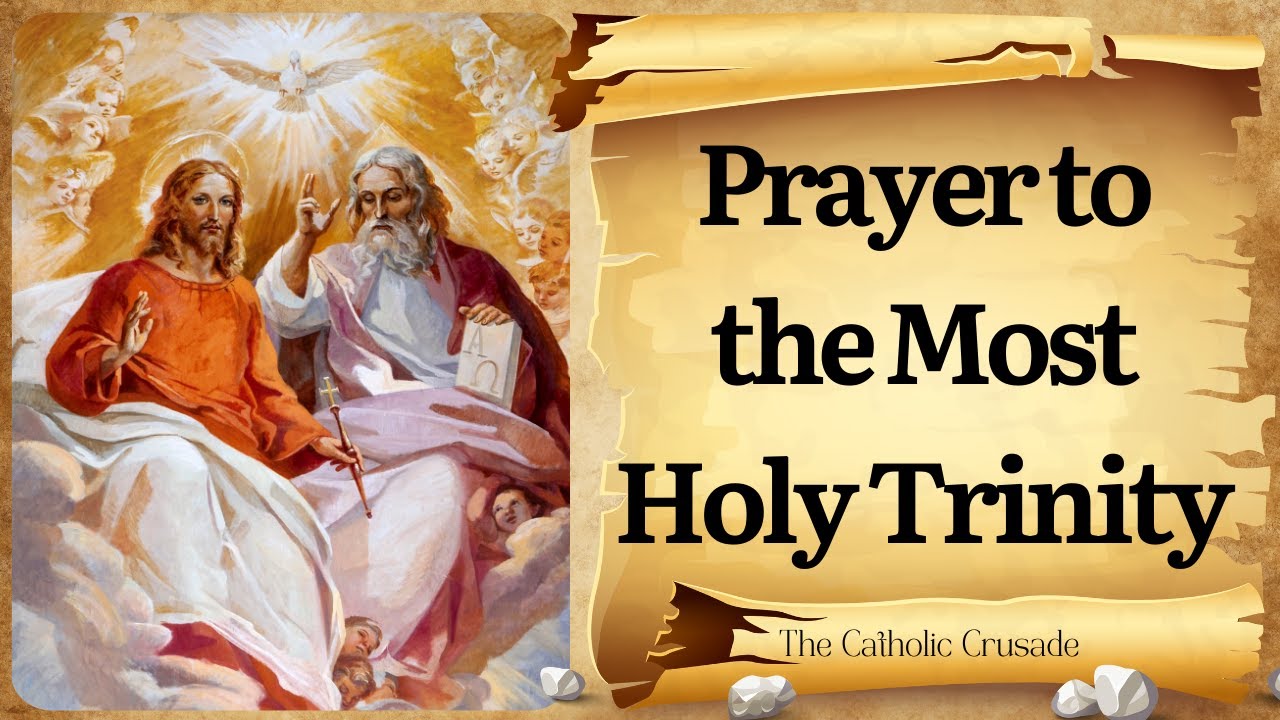
Music and visual art can lift the heart when words feel dry. A short hymn or chorus focused on Father, Son, and Spirit can prime your attention. Sacred art—a small icon of the Baptism of Christ or a depiction of the Trinity—can serve as a quiet focal point. Keep it simple so the aids help rather than distract.
Praying with the Church: creeds, doxologies, and shared language
Linking your personal prayers with the Church’s voice across centuries can be strengthening. The “Glory Be” and the creeds are widely used, uniting your daily prayer to the most holy trinity with countless believers. To review the Nicene Creed and consider its Trinitarian phrases, visit the USCCB’s Nicene Creed page. For a deeper theological foundation, the Catechism sections on the Trinity offer accessible teaching.
When prayer feels dry: keeping going in faith
Most people experience seasons of dryness. When this happens with daily prayer to the most holy trinity, reduce your practice to the essentials and remain faithful. Use a single verse, a short doxology, and a moment of silence. Often, a quieter season gives way to renewed consolation if you keep showing up sincerely.
Internal and external links to go deeper
If you wish to broaden your devotional life alongside daily prayer to the most holy trinity, you may find it helpful to learn a structured devotion such as the Divine Mercy Chaplet prayer. And for context on traditions and how they express Trinitarian faith, this overview of Orthodox vs Catholic perspectives offers a balanced starting point.
For official teaching and historic prayers that reinforce daily prayer to the most holy trinity, the following are reliable resources: the Catechism on the Trinity, the Nicene Creed (USCCB), and Matthew’s baptismal commission at Bible Gateway. If you prefer a very simple structure to pray at home, the Church of England’s Simple Form of Daily Prayer is practical and adaptable.
Recommended external resources
- Catechism of the Catholic Church: The Holy Trinity (official teaching)
- The Nicene Creed with Trinitarian emphasis (USCCB)
- Matthew 28:19 and the Trinitarian formula (Bible Gateway)
- Church of England: A Simple Form of Daily Prayer
Related articles
Frequently asked questions about daily prayer to the most holy trinity
How long should daily prayer to the most holy trinity take?
There is no fixed rule. Many people find two to five minutes realistic on busy days, and ten to fifteen minutes ideal when time permits. Consistency matters more than length. Even a brief, sincere pause focused on Father, Son, and Spirit can recalibrate your day.
Do I have to use set prayers?
No. Set prayers like the “Glory Be” are helpful, but you can also pray extemporaneously. Many combine both: a short doxology, a verse of Scripture, and a minute of personal words. The key is to keep the Trinitarian focus central.
Is daily prayer to the most holy trinity only for Catholics?
No. All mainstream Christian traditions confess the Trinity. While styles of prayer vary, the basic shape—addressing the Father, through the Son, in the Holy Spirit—is widely shared. Adapt the practice to your tradition and comfort level.
What if I get distracted while praying?
Distractions are normal. When you notice your mind has wandered, gently return to a simple anchor phrase, such as “Father, Son, and Holy Spirit, I am here.” You might also reduce the time, slow your breathing, or pray at a quieter moment of the day.
Can I pray daily to the Trinity with my family?
Yes. Keep it very simple: one short Scripture, one sentence of thanks from each person, and a concluding Trinitarian prayer. Children often respond well to routines and brief, repeatable words.
What if I miss a day?
Begin again at the next opportunity. Think in terms of a relationship, not a quota. Regularity will grow over time without guilt or pressure.
Which Bible verses support daily prayer to the most holy trinity?
Matthew 28:19, 2 Corinthians 13:13, John 14–17, Ephesians 1:3–14, and Romans 8 are especially helpful. Choose one and sit with it for a week.
Conclusion on daily prayer to the most holy trinity
At its heart, daily prayer to the most holy trinity is simple: a faithful rhythm of praise, gratitude, honest confession, and loving intercession addressed to the Father, through the Son, in the Holy Spirit. You do not need many words or perfect concentration—only a willing heart and a practical pattern you can sustain.
Begin small. Choose a time, a short prayer, and a verse. Add elements as you grow more comfortable. Draw on the wisdom of the wider Church through creeds and doxologies, and let Scripture ground your reflection. Over time, daily prayer to the most holy trinity will reshape your days with peace and purpose.
Whatever your tradition—Catholic, Orthodox, Anglican, or Protestant—the practice is accessible and unifying. May daily prayer to the most holy trinity lead you deeper into the love of God, and may that love overflow into patience, compassion, and hope in the ordinary patterns of your life.
If you ever feel stuck, return to basics: “Glory be to the Father, and to the Son, and to the Holy Spirit.” Let that small flame of devotion light the way forward, one day at a time.
