Can Catholics Be Cremated? 5 Key Facts You Need to Know
Respuesta Rápida
Yes, Catholics can be cremated. Historically discouraged, the Catholic Church permitted cremation after the Second Vatican Council (1960s), provided it doesn’t deny belief in the resurrection. The Church emphasizes that cremated remains must be treated with reverence, preferably interred in a sacred place like a cemetery or columbarium.
Five key facts about Catholic cremation:
- Permitted, Not Preferred: Burial is still preferred, but cremation is allowed.
- No Denial of Resurrection: Must not be chosen to defy faith in the resurrection.
- Reverent Disposition: Ashes must be kept intact and interred in sacred ground.
- No Scattering/Keeping at Home: Scattering, dividing, or keeping ashes at home is discouraged.
- Funeral Rites: A funeral Mass can be held with the body present before cremation, or with the urn present during the Mass.
It’s one of life’s most difficult moments: saying goodbye to a loved one. And amidst the grief, families often face deeply personal decisions about funeral arrangements. For Catholics, a question that frequently arises is: “Can Catholics be cremated?” You might have heard conflicting information, or perhaps remember a time when the Church strictly forbade it. But what is the official stance today, and how do choices about cremation fit into the profound Catholic beliefs about death and resurrection?
The truth is, the Catholic Church’s position on cremation has undergone a significant evolution, adapting to modern circumstances while remaining steadfast in its core doctrines. It’s a nuanced topic, reflecting both ancient traditions and a compassionate understanding of contemporary needs. Understanding this stance isn’t just about following rules; it’s about appreciating the Church’s reverence for the human body, its unwavering hope in the resurrection, and its guidance for honoring the deceased with dignity and love. It’s like discovering an ancient, cherished tree, whose branches are still growing and adapting to new seasons.
So, let’s delve into this sensitive yet crucial topic. Here at oracioncristiana.org, we believe in providing clear, compassionate guidance to strengthen your faith journey. Let’s uncover the 5 key facts you need to know about whether Catholics can be cremated and how to navigate this deeply personal decision with faith and reverence.

1. Yes, Cremation is Permitted (But Burial is Still Preferred)
Let’s address the central question immediately. Yes, the Catholic Church permits cremation for its faithful, provided it is not chosen for reasons contrary to Christian beliefs, particularly the belief in the resurrection of the body. However, traditional burial remains the preferred practice.
Historically, the Catholic Church strongly discouraged, and for centuries outright forbade, cremation. This prohibition was largely due to two main reasons:
- Denial of Resurrection: Cremation was often associated with anti-Christian movements that denied the resurrection of the body and the afterlife.
- Lack of Reverence: It was seen as an irreverent treatment of the human body, which is believed to be a temple of the Holy Spirit (1 Corinthians 6:19).
However, the Church’s position began to evolve in the 20th century. In 1963, the Sacred Congregation for the Doctrine of the Faith lifted the prohibition, and the Code of Canon Law (Canon 1176 §3) officially permitted cremation. This change was a response to modern realities like urbanization, cost, and sanitation, recognizing that cremation itself does not inherently deny the resurrection.
So, while cremation is now allowed, the Church still states that “the Church earnestly recommends that the pious custom of burying the bodies of the deceased be observed” (Catechism of the Catholic Church 2303). This preference for burial is rooted in imitation of Christ’s own burial and a deep respect for the human body, which awaits resurrection. It’s like having two paths, both acceptable, but one is the ancient, well-trodden way that best reflects our faith’s deepest truths.
2. No Denial of the Resurrection (The Crucial Intention)
The core condition for cremation to be acceptable within Catholic teaching lies in one’s intention. Cremation is only permissible if it is not chosen out of motives that deny Christian doctrines, particularly the belief in the resurrection of the body or a belief in pagan rites.
This is crucial! If someone chooses cremation because they believe “that’s the end of it” and there is no afterlife or resurrection, then that intention is contrary to Catholic faith. The Church emphasizes that the choice for cremation should stem from:
- Practical Reasons: Such as economic factors, environmental concerns, health reasons, or logistical difficulties in transporting a body for burial.
- Personal Preference: If a family simply prefers it, without denying core beliefs.
- Respect for the Body: Even in cremation, the body (and its ashes) must be treated with profound reverence, recognizing its sacredness.
The Church teaches that “the resurrection of the dead is a central truth of Christian faith” (Catechism 991). Cremation does not impede God’s power to raise the dead. God can resurrect a body from ashes just as easily as from dust. It’s like a sculptor who can re-form their work from any material, as long as they intend to create. The key is that the act of cremation must not be a symbolic rejection of what God has promised. This spiritual intention transforms the act from mere disposal to a respectful handling of sacred remains.
3. Reverent Disposition: No Scattering, No Jewelry
If cremation is chosen, the disposition of the ashes is governed by strict guidelines, emphasizing profound respect for the remains. The Church insists that cremated remains (ashes) must be treated with the same reverence and dignity as a body awaiting burial, preferably interred in a sacred place like a cemetery or columbarium, and explicitly prohibits scattering, dividing, or keeping them at home.
This instruction stems from the Church’s belief in the sanctity of the human body—even after death and cremation. The human body is uniquely created in God’s image and is destined for resurrection. Therefore, ashes are not mere waste; they are the sacred remains of a person.
- Sacred Place of Interment: The preferred option is to inter the ashes in a consecrated place, such as a Catholic cemetery, a columbarium (a vault with niches for urns), or a designated area within a church. This provides a communal space for remembrance and prayer.
- Prohibited Practices: The Church specifically forbids:
- Scattering ashes: In the air, on land, or in the sea, as it lacks reverence and removes a permanent resting place.
- Dividing ashes: Separating ashes among family members.
- Keeping ashes at home: Though an urn can be brought home temporarily for a funeral rite, it should ultimately be interred.
- Making “cremation jewelry”: Incorporating ashes into jewelry or other objects is seen as an irreverent reduction of the human remains.
These guidelines ensure that the remains are treated with the dignity due to a person, reflecting the hope in their eventual resurrection, and providing a communal place of memory. It’s like ensuring a precious family heirloom is kept safe and honored in a designated place, rather than left to diminish or be misplaced. This reverent disposition reinforces the sacredness of human life, even in its final earthly form. You can find these directives in the Vatican’s Instruction Ad resurgendum cum Christo.
4. Funeral Rites: Mass Before Cremation, or With the Urn Present
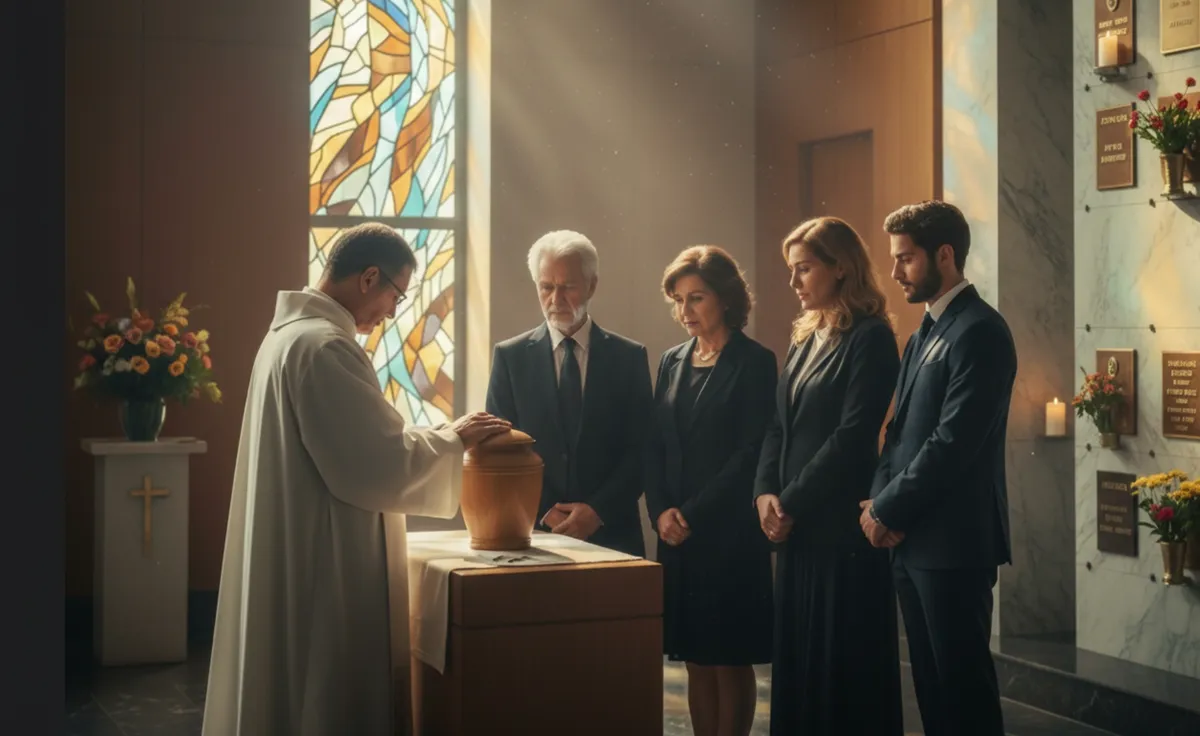
The Catholic Church ensures that proper funeral rites can still be performed for Catholics who choose cremation, integrating the practice respectfully into the liturgical tradition. A Catholic funeral Mass can be held with the body present before cremation, or, if cremation occurs beforehand, with the cremated remains (in an urn) present during the funeral Mass, followed by their reverent interment.
This flexibility allows families to honor their loved ones with the full spiritual support of the Church, regardless of the choice of disposition.
- Body Present for Mass (Preferred Sequence): The most traditional and still preferred sequence is to have the funeral Mass with the body present. After the Mass, the body is then cremated, and the ashes are later interred. This emphasizes the integrity of the human body for the funeral rites.
- Urn Present for Mass: If there are grave pastoral reasons (e.g., distant family travel, delays), the Church permits the cremated remains (in an appropriate urn) to be present during the funeral Mass. They are to be treated with the same dignity as the body.
- Commendation and Interment: Regardless of the sequence, there should always be a final rite of commendation and a Catholic ceremony for the interment of the ashes in a sacred place.
5. Reasons for Choosing Cremation: Practicality and Personal Preference
While the Church maintains a preference for burial, it acknowledges that faithful Catholics may choose cremation for various valid and understandable reasons. Catholics often choose cremation for practical reasons such as cost, environmental concerns, or family logistics, aligning with personal preference without denying core Christian beliefs.
The Church, in its pastoral care, recognizes these very real considerations:
- Cost Considerations: Traditional burial (casket, burial plot, vault) can be significantly more expensive than cremation, easing financial burdens on grieving families.
- Environmental Concerns: Growing environmental awareness leads some to prefer cremation as a more sustainable option, reducing land use and material consumption associated with traditional burial.
- Family Logistics: For families spread across great distances, cremation allows for more flexibility in planning memorial services and interment, facilitating gatherings from different locations.
- Simplicity: Some individuals or families simply prefer the perceived simplicity of cremation.
These reasons are recognized as legitimate, provided they do not stem from motives contrary to Christian faith (e.g., denying the resurrection). The choice for cremation, when made with reverence and understanding of Church guidelines, becomes an act that balances personal and practical needs with unwavering spiritual convictions. It’s like choosing a different path to the same sacred destination, guided by both wisdom and love. This adaptability of the Church reflects its commitment to ministering to its flock in an ever-evolving world.
Comparative Views: How Catholicism Adapts Amidst Other Faiths
The Catholic Church’s evolving stance on cremation stands in interesting comparison to other major world religions, highlighting both shared human needs and distinct theological convictions.
Cremation in Other Abrahamic Faiths:
- Judaism: Historically and traditionally, Judaism strictly forbids cremation. Burial is a fundamental religious obligation, reflecting respect for the body and the belief in resurrection.
- Islam: Islam also strictly forbids cremation. Burial is mandatory, emphasizing the sanctity of the body even after death and the belief in a bodily resurrection for the Day of Judgment.
This stark contrast highlights Catholicism’s significant adaptation, moving from prohibition to permission, while other Abrahamic faiths maintain their traditional stance.
Cremation in Eastern Religions:
- Hinduism: Cremation is the traditional and preferred method of disposition. It’s believed to release the soul from the body, facilitating its journey to the next life in the cycle of reincarnation.
- Buddhism: Cremation is also widely practiced and accepted in many Buddhist traditions, with practices varying across regions and schools of thought.
Recognizing these diverse perspectives illustrates how the Catholic Church has adapted its views on cremation to accommodate modern realities and pastoral needs, while still meticulously upholding its core beliefs about the human body and the resurrection. It’s a testament to its capacity for thoughtful evolution, balancing unchanging truths with changing times.
Making Your Farewell Decision with Faith and Love
The question of “Can Catholics be cremated?” leads us to a compassionate and nuanced answer: Yes, with clear guidelines rooted in reverence for the human body and an unwavering belief in the resurrection. The Catholic Church, while preferring traditional burial, permits cremation when chosen with proper intention and when the cremated remains are treated with dignity and interred in a sacred place.
This adaptability reflects the Church’s commitment to guiding its faithful through life’s most profound moments, offering solace and spiritual meaning even amidst grief. It’s a beautiful testament to a faith that embraces both ancient truth and modern understanding.
May this understanding bring you peace and clarity as you navigate these deeply personal decisions, ensuring that every farewell resonates with love, respect, and enduring faith in Christ’s promises.
Now, I’d love to hear from you. The comments section is open!
→ Which of these 5 key facts about Catholic cremation did you find most clarifying or surprising?
→ How does the Church’s emphasis on the “reverent disposition” of ashes resonate with your own understanding of honoring the deceased?
→ What’s one question you still have about cremation in the Catholic Church, or one aspect you’d like to explore further?
Let’s share our insights and encourage one another in our oracioncristiana.org community, with compassion and respect!
