Calvinist Beliefs: 7 Key Principles You Should Know
Respuesta Rápida
Calvinist beliefs are a set of theological principles from the Protestant Reformation, based on the teachings of John Calvin. They emphasize God’s total sovereignty over all things, including human salvation.
These beliefs are often summarized by the acronym TULIP:
- Total Depravity (humanity is unable to save itself).
- Unconditional Election (God chooses who to save, not based on their merit).
- Limited Atonement (Christ’s death was for the elect).
- Irresistible Grace (God’s call to salvation cannot be resisted).
- Perseverance of the Saints (the truly saved cannot lose their salvation).
Calvinist Beliefs: 7 Key Principles You Should Know
Have you ever heard the term “Calvinist” and wondered what it really means? Maybe you’ve heard it in a history class, or perhaps you know someone who belongs to a “Reformed” or “Presbyterian” church. It’s a branch of Christianity with deep roots and a powerful, and sometimes controversial, view of God and the world.
At its heart, Calvinism is a system of thought that places an immense emphasis on the sovereignty of God. What does that mean? It means seeing God as the ultimate, in-control, all-powerful king of the universe, whose plans cannot be stopped. It’s a view that can be incredibly comforting, but also intellectually challenging.
This isn’t just dry, dusty theology. Calvinist beliefs have shaped nations, sparked revolutions, and fueled a unique and powerful way of living the Christian life. To understand a huge part of the Protestant family, you have to understand the mind of its most famous architect, John Calvin.

So, whether you’re a curious seeker, a fellow Christian from a different tradition, or part of our community here at oracioncristiana.org, let’s explore the 7 key principles that define this influential and enduring faith.
1. The Architect: Who Was John Calvin?
First, let’s meet the man himself. You can’t understand a set of beliefs without knowing the person who so powerfully articulated them. John Calvin (1509-1564) was a French theologian, pastor, and reformer who became one of the most important figures of the Protestant Reformation.
Calvin wasn’t a fiery, bombastic personality like Martin Luther. He was a brilliant, logical, and incredibly disciplined scholar. After being forced to flee Catholic France due to his reformist ideas, he settled in Geneva, Switzerland. There, he didn’t just preach; he completely reshaped the city’s government and society based on his biblical principles. Geneva became a “Protestant Rome,” a refuge for persecuted Protestants from all over Europe.
His most famous and influential work is a massive book called the Institutes of the Christian Religion. Think of it as the ultimate “systematic theology.” In it, Calvin meticulously and logically laid out the entire Christian faith, from the nature of God to the role of the church. According to the Encyclopedia Britannica, the Institutes became the “doctrinal basis of the Reformed churches.” It is the foundational text for what we now call Calvinism.
2. The Core of the Core: The Sovereignty of God
If you want to understand Calvinism in one single idea, it is this: The absolute sovereignty of God. This is the sun around which every other Calvinist belief orbits.
What does “sovereignty” mean? It means God is in complete and total control of everything, all the time, without exception. Nothing happens by “chance” or “luck.” From the spinning of the galaxies to the smallest details of our lives, everything unfolds according to God’s divine plan and purpose.
As the famous Calvinist theologian R.C. Sproul put it, “If there is one single molecule in this universe running around loose, totally free of God’s sovereignty, then we have no guarantee that a single promise of God will ever be fulfilled.”
For Calvinists, this is the ultimate source of comfort. It means that even in suffering, chaos, and pain, God is not absent or surprised. He is working all things together for His ultimate glory and for the good of His people (Romans 8:28). This powerful belief in a sovereign God is the foundation for everything else they believe, especially when it comes to salvation.
3. The Five Points: An Acronym Known as TULIP
This is the most famous, and most controversial, part of Calvinist beliefs. The core doctrines of salvation are often summarized by the acronym TULIP. This acronym was not created by John Calvin himself, but was developed later at the Synod of Dort (1618-1619) to summarize his teachings in response to a group that challenged them.
Let’s break down what each letter stands for.
T – Total Depravity
This sounds harsh, but it’s not what you think. It does not mean that every human is as evil as they could possibly be. Total Depravity means that sin has affected every part of our being—our mind, our will, our emotions, and our bodies. Because of this, we are spiritually “dead” and are completely unable to save ourselves or even to choose God on our own. Our “free will” is in bondage to our sinful nature.
U – Unconditional Election
Because we are totally depraved and cannot choose God, this point teaches that God’s choice to save some people (the “elect”) is based only on His own grace and sovereign will. It is not based on any foreseen faith, good works, or merit in the person He chooses. His choice is “unconditional.” God doesn’t look down the tunnel of time, see who will choose Him, and then “elect” them. He makes the choice from eternity, out of His own good pleasure.
L – Limited Atonement (or Particular Redemption)
This is another tough one. This point teaches that Jesus’s death on the cross was specifically intended to save the elect, and it was 100% successful. The “atonement” (the payment for sin) was “limited” to those God had chosen to save. The alternate view (held by many non-Calvinists) is “unlimited atonement,” which says Christ’s death was for every single person, but it only becomes effective when a person chooses to have faith. Calvinists argue that if Christ died for everyone, but not everyone is saved, then his atonement was not powerful enough to achieve its goal.
I – Irresistible Grace
This point logically follows from the others. When God calls the elect to salvation, that call is irresistible. This doesn’t mean a person is “forced” to believe against their will. It means that God’s grace is so powerful that it works within their heart, changing their will, and making them willing to come to faith. God’s grace overcomes their natural resistance to Him. The Holy Spirit regenerates their heart, and the new, regenerated person freely and joyfully chooses Christ.
P – Perseverance of the Saints
This is the final, comforting point. It means that those who are truly saved will persevere in their faith until the end. A person who is genuinely one of the elect cannot “lose” their salvation. This is often summarized by the phrase “once saved, always saved.” But it’s more than that. It’s not a license to sin. It means that God, by His sovereign power, will preserve His people, keeping them in the faith through all of life’s trials and temptations.
4. Covenant Theology: How God Works in History
How does a Calvinist read the Bible as one, single story? Through something called Covenant Theology.
Covenant Theology is a framework for understanding the Bible based on a series of covenants (or formal agreements) that God has made with humanity. It sees the entire story of scripture, from Genesis to Revelation, as revolving around two main covenants:
- The Covenant of Works: This was made with Adam in the Garden of Eden. The deal was: “Obey, and you will live.” Adam was the representative for all humanity. When he disobeyed, he broke the covenant, plunging all of humanity into sin and death.
- The Covenant of Grace: Because humanity failed, God initiated a new covenant. This is the promise to save a people for Himself, not based on their works, but on His grace. This covenant unfolds over time through a series of smaller covenants (with Noah, Abraham, Moses, David), but they are all expressions of the one, single plan of salvation that is ultimately fulfilled in Jesus Christ.
This is a powerful way to see the Bible as a unified story, with Jesus as the climax. Christ is the “second Adam,” who perfectly fulfilled the Covenant of Works on our behalf, and his death inaugurates the New Covenant, which is the ultimate expression of the Covenant of Grace.
5. The Church: The Visible Community of the Elect
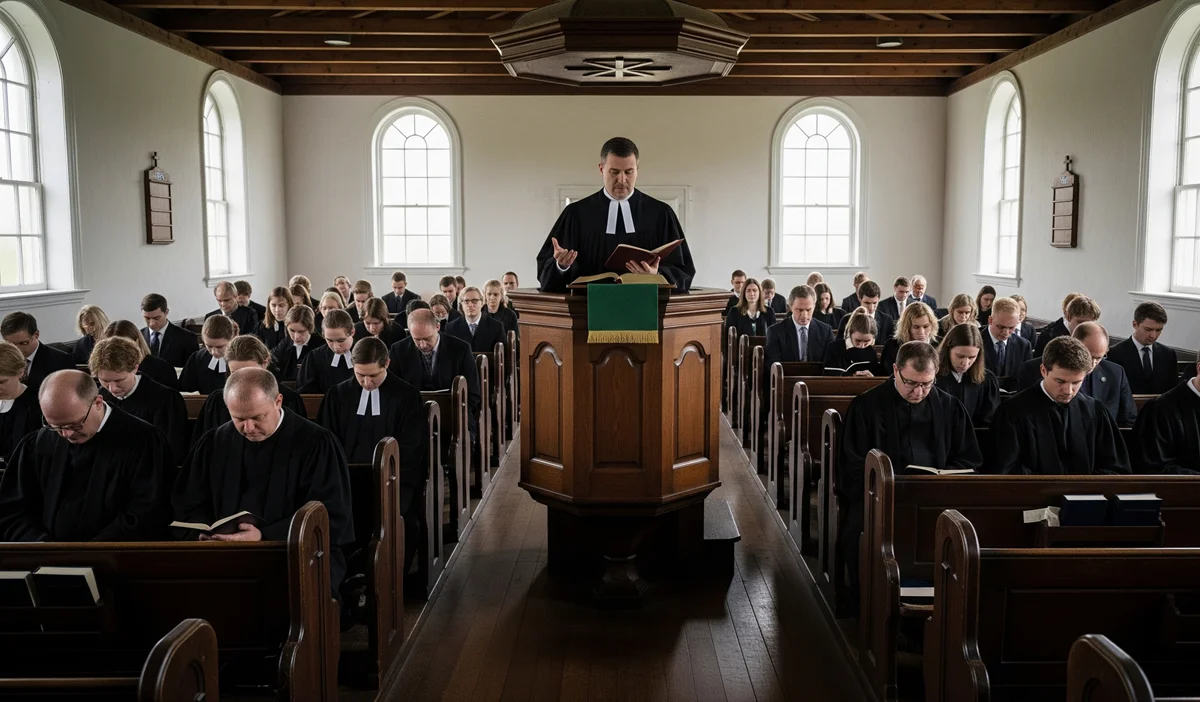
Calvinists have a very high view of the Church. They believe the Church is the visible community where the elect are gathered, nourished, and disciplined.
John Calvin famously said, “He who would have God for his Father must have the Church for his mother.” What did he mean? He meant that the Christian life is not a solo journey. The Church is the context where we grow.
This leads to several key beliefs about the church:
- The Centrality of Preaching: The most important act in a worship service is the preaching of the Word of God. This is the primary way God’s people are fed and built up.
- The Sacraments: They believe in two sacraments—Baptism and the Lord’s Supper. They are not just symbols, but “signs and seals” of the Covenant of Grace, spiritual means by which God nourishes our faith.
- Church Discipline: Like the Anabaptists, Calvinists believe in the importance of holding one another accountable in the community.
This is the foundation for the Presbyterian form of church government, which is a representative system run by “elders” (or presbyters) who are chosen to govern and shepherd the local church.
6. The Impact on the World: A “Protestant Work Ethic”
Calvinist beliefs didn’t stay inside church walls. They profoundly shaped the modern world. The famous sociologist Max Weber, in his 1905 book The Protestant Ethic and the Spirit of Capitalism, argued that Calvinist beliefs helped create the conditions for modern capitalism to thrive.
How?
- The Idea of a “Calling”: Calvinists taught that all work, not just being a pastor, is a sacred “calling” from God. A baker, a banker, or a farmer could glorify God through their work just as much as a minister.
- Hard Work and Discipline: Since you were called by God to your job, you were expected to work at it with diligence, discipline, and excellence, as if you were working directly for God.
- Frugality: Worldly pleasure was seen as a distraction. So, instead of spending their money on luxuries, they were encouraged to save and reinvest it.
This combination of hard work, discipline, and reinvestment created a powerful engine for economic growth. This “Protestant work ethic,” as Weber called it, became a defining feature of societies where Calvinism was strong, like Switzerland, the Netherlands, Scotland, and the early United States.
7. Calvinism Today: The “New Calvinism” Movement
You might think these are just old, 16th-century ideas. But in the 21st century, there has been a massive resurgence of Calvinist thought, especially in the United States. This is often called the “New Calvinism” or the “Young, Restless, and Reformed” movement.
As The Gospel Coalition and other sources have noted, this is a movement led by popular pastors and authors like John Piper, Timothy Keller, and R.C. Sproul. It’s marked by:
- A strong re-emphasis on the “Five Points” of Calvinism.
- A high view of Scripture and a passion for deep, theological preaching.
- A vibrant worship culture that often blends traditional hymns with contemporary music.
- A strong online presence through blogs, podcasts, and conferences.
This movement has introduced a whole new generation to the powerful, God-centered, and intellectually robust world of Calvinist beliefs, proving that these 500-year-old ideas are still very much alive and shaping the future of the church.
What’s Your Take on This Sobering, God-Centered Faith?
Calvinism is not a “feel-good” theology. It’s a sobering, profound, and intensely God-centered view of the world. It presents a God who is awesome in His power, majestic in His sovereignty, and breathtaking in His grace.
It can be challenging, and its doctrines have been debated for centuries. But for millions of Christians, it is the most biblical, most consistent, and most God-glorifying way to understand their faith.
Now, I want to hear your thoughts. The comments section is ready for you!
→ Which of the 7 principles of Calvinism do you find the most compelling or the most difficult?
→ How does the idea of God’s absolute sovereignty make you feel—comforted or concerned?
→ If you’re from a non-Calvinist tradition, what’s one thing you can appreciate about this deep stream of Christian thought?
Let’s discuss with wisdom and respect!
